Meaning Of Pradhanapurusheshwara

योगविदां नेता – he is not only a yogi. He is the leader, neta of all those who know yoga.
Yogavit means one who knows yoga – yoga again does not mean yogasana. One who knows yoga means one who has known, experienced the state of yoga, the state of non-duality.
Neta has two meanings – नयतीति नेता – the leader, or prabhu, the lord. The lord, leader of all those who have experienced the state of yoga samadhi.
In addition to the ashtanga yoga that we discussed, primarily using the body itself to go beyond the limitations of the body, the other three yogas mentioned in the Bhagavad Gita – karma yoga, jnana yoga and bhakti yoga – all of them ultimately lead to the same destination called yoga samadhi.
So he is the leader of all those who practice any or all of these paths, and he is the lord of those who have attained the state of yoga. The leader of yogis.
तेषां नित्याभियुक्तानां योगक्षेमं वहाम्यहम्
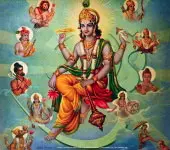
प्रधानपुरुषेश्वरः – there are six major schools of philosophy in Hinduism – sankhya, yoga, vaisesika, nyaya, meemamsa, vedanta.
Sankhya accepts dualism – it says the whole universe consists of various permutations and combinations of matter and consciousness called prakriti and purusha.
Prakriti is primordial matter, also called maya. Then there are derivatives of maya called vikritis. Like a son born out of a father. Father is prakriti and son is vikriti. When the father and son work as a team it is called purusha or jiva. It is neither prakriti nor vikriti. Purusha consists of both prakriti and vikriti but is different from both. The team consists of father and son but as an entity is different from both.
The yoga school of thought, in addition to the above prakriti and purusha, also recognizes an ishvara, a controller of both prakriti and purusha. This is pradhana purusheshwara – प्रधानं माया प्रकृतिः, पुरुषः जीवः – तयोरीश्वरः प्रधानपुरुषेश्वरः.
Another perspective is that pradhana means the saguna world and purusha means the nirguna parabrahma. He is ishvara of both saguna and nirguna – hence called pradhana purusheshwara. The terminology is the same, but can vary in meaning and import when you go from one system of thought to another.
To briefly touch the other four schools – vaisesika deals with atomic theory. Nyaya school differentiates between right knowledge and wrong knowledge and attributes all suffering to wrong knowledge. Nyaya also tells us how to arrive at right knowledge. Meemamsa emphasizes on the eternality and infallibility of the Vedas and is primarily a ritualistic school of thought. Vedanta, developed through the Brahma Sutras and Upanishads, focuses on jnana and gives less importance to the ritualistic side of religion.
प्रधानपुरुषेश्वरः – ishvara of both pradhana and purusha.
प्रधानस्य बन्धहेतोः प्रकृतेः बध्यमानानां पुरुषाणां च नियामकः
Who get attached? Purusha – men.
What attaches? Prakriti, also called pradhana.
Controller of both – प्रधानपुरुषेश्वरः.
-
What does it mean to be a knower of yoga rather than just a yogi?
A knower of yoga has realized inner union, not just practiced techniques. It is about stable non-duality in daily life, not only postures or breathwork. -
Is yoga only about asanas?
No. Asanas are a small part. Yoga is a state of quiet, single-pointed awareness where the mind stops scattering and rests in the Self. -
How do karma, jnana, and bhakti yogas differ and still lead to the same goal?
Karma focuses on selfless action, jnana on clear seeing, bhakti on loving surrender. Each trains the ego to loosen. All converge in the same stillness. -
What does it mean that someone is the leader of yogis?
It means the highest guide who sets the path, supports the effort, and accomplishes the final protection of the seeker’s aim. -
Why do some schools say there is only matter and consciousness, while others add Ishvara?
Sankhya explains the world through prakriti and purusha. Yoga adds Ishvara to account for guidance, order, and liberation. Both describe the same field from different angles. -
What exactly is prakriti and what is purusha?
Prakriti is the entire changing setup: body, senses, mind, and world. Purusha is the witness that never changes and knows the change. -
What are vikritis and why do they matter?
Vikritis are modifications of prakriti like mind, intellect, and ego. They shape our experience. When we mistake them for the Self, suffering starts. -
How can purusha be spoken of as a team of father and son?
It is a teaching device. It shows that functions can combine to act, yet the combined identity is distinct from its parts. -
Why call Ishvara the lord of both pradhana and purusha?
Because Bhagavan governs both material processes and conscious beings. Nothing falls outside that governance, so help is available at every level. -
If Ishvara controls both, do I still have free will?
Yes. Your choices operate within divine law, like sailing within wind and currents. Freedom grows as clarity grows. -
What is meant by pradhana as saguna and purusha as nirguna?
Pradhana points to the world with attributes. Purusha points to the attributeless absolute. Bhagavan bridges both, so worship and wisdom can meet. -
Can worship of the saguna help realize the nirguna?
Yes. Devotion steadies the mind and purifies motives, making it fit to see the attributeless truth directly. -
How does one actually approach samadhi in normal life?
Keep a simple routine: steady ethics, daily practice, study, and service. Reduce noise, watch the mind, return to a chosen focus, persevere. -
What does ‘yoga-kshema vahamyaham’ mean for me day to day?
When you stay devoted and consistent, your inner growth is protected and supported. Efforts do not go to waste. -
How does nyaya’s idea of right knowledge reduce suffering?
Wrong labels create fear and craving. Testing a belief with valid means of knowing corrects the label, and the mind relaxes. -
Do rituals still matter if vedanta emphasizes knowledge?
Well-done rituals train attention, humility, and gratitude. They prepare the mind so vedantic insight can take root. -
Is there a contradiction between dualism and non-dual realization?
No. Dual frameworks help organize practice. Non-dual realization is the culmination where the seeker sees through the framework. -
How do I know which path to choose among karma, jnana, and bhakti?
Start where your heart is strongest. Keep the other two as supports. Over time they naturally blend. -
What does attachment by pradhana look like in real terms?
Identification with roles, possessions, and mental stories. You think ‘this is me’ or ‘this alone will save me’. Awareness loosens that grip. -
How do I test whether I am progressing toward the yoga state?
Fewer compulsions, quicker recovery from upset, kinder responses, steady practice, and a quiet joy that does not depend on circumstances.





English
Vishnu Sahasranama
Click on any topic to open
7
30
Astrology
Bhagavad Gita
Bhagavatam
Bharat Matha
Devi
Devi Mahatmyam
Ganapathy
Garuda Puranam
Glory of Venkatesha
Hanuman
Kathopanishad
Mahabharatam
Mantra Shastra
Mystique
Practical Wisdom
Purana Stories
Radhe Radhe
Ramayana
Rare Topics
Rigveda Explained
Rituals
Sages and Saints
Shiva
Spiritual books
Sri Suktam
Story of Sri Yantra
Temples
Vedas
Vishnu Sahasranama
Yoga Vasishta
26
17
10
0


