The 36 Tatwas
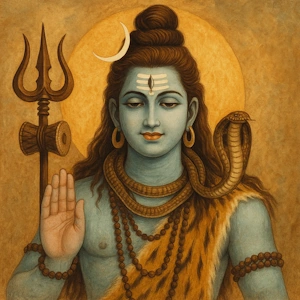
Many say – turn inwards, then only you will know the truth, know self, know Atma.
But, the fact is that if you don’t understand what is outside, apparently outside, and turn inwards, it will be another kind of illusion — which a lot of people are going through in the name of meditation.
This is what is being taught – you will see a green light or blue light in the middle of your forehead, you will feel energy shooting up through the spine.
Basically, understand that these are all just nerve currents, playing — in your body.
Inner consciousness, inner awareness – there are so many pet names for these. Some are even branded.
You learn this mudra or meditation from this institution – you will get this level of awareness.
Go for advanced course – you will get a higher state of awareness.
Rs.5,000/- for the entry level awareness and 10,000/- for higher level of awareness.
In this way, you can go on paying — like how you pay toll on a highway — and go farther and farther or higher and higher.
Anyway – unless you understand what is outside, you will not know what is inside, or what is beyond inside.
Shaiva Siddhanta gives a deep and clear understanding of the world as it is — as we see it and beyond how we see it.
It is not an approach of negation — saying that this is all an illusion.
It is an approach of assimilation, integration.
This is the system of 36 Tatwas.
The whole universe as we see it – as manifested universe, as we experience it, all that supports this manifested universe, all that was before this manifested universe, all that is beyond this universe, all that which will be thereafter the universe is gone — these are all explained in terms of 36 Tatwas.
So in one way, you can call these 36 Tatwas as the building blocks of existence.
In another way, you can say that this is a hierarchy of awareness or truth.
Starting from the most gross – gross means – one that we see or experience directly. This is the physical world.
There are 20 Tatwas in this, in sets of five:
Pancha Bhutas
Pancha Tanmatras
Pancha Karmendriyas
Pancha Jnanendriyas
The first sets – Pancha Bhutas – Prithvi, Jalam, Agni, Vayu, and Akasha —
Solid substance, liquid substance, energy, gaseous substance, and space.
Take any physical object – it will have all these five in it.
Take a log of wood – some solid, some liquid, burn it – some gas will come out. Burn it – energy will come out. And the space that it occupies.
From substance to substance, from object to object, the proportion will vary.
Energy is there in every substance. By nuclear fission, matter gets converted into energy.
Agni means all forms of energy — not just fire.
Veda says – fire is Agni, wind is Agni, light is Agni.
So, Agni is a common name for all kinds of energy.
The Pancha Tanmatras —
With each of these elements, the Pancha Bhutas, a sensation is associated.
Without sensation, there is no experience.
Prithvi with smell
Jala with taste
Agni with vision
Vayu with touch
Akasha with hearing
These are the five Tanmatras – shabda, sparsha, roopa, rasa, and gandha.
Our world experience is through these five only.
Anything beyond this is commonly called sixth sense — which in reality does not exist physically. It is internal.
These five only exist physically.
You can compare the Bhuta and the Tanmatra as a water pipe and the water flowing through it.
Pipe is the medium through which water flows.
Likewise, Prithvi is the medium through which smell travels.
But then, smell travels through air, not earth — this is what we think.
That is because air is not pure air.
Air that we have around is a mix of all the five elements.
It has all the other elements also in it in smaller proportions — the predominant one being air itself.
This is the connection between Bhuta and Tanmatra.
This is apparently the external world.
Now your interaction with this external world —
These Tanmatras together with their corresponding Bhutas keep on transmitting some signal or the other to you — giving you information, giving you knowledge — as smell, taste, images, touch, and sound.
You should look at these Tanmatras as containers containing shabda, sparsha, roopa, rasa, and gandha.
That means they are not sound waves or light waves.
They are containers into which sound, light etc. are put and transmitted through their corresponding medium.
Now, you have to receive these signals.
That is what your Jnanendriyas are for.
These are your receivers.
Nose for smell, tongue for taste, eyes for vision, skin for touch, and ears for hearing.
These are the organs through which, ordinarily, you receive the corresponding signals.
There are special skills — a blind man touching a picture and saying what it is. Possible. That works at a different level.
What we are talking about is how it normally works.
The external world sends you signals, and you receive and process them.
Then there is another kind of interaction with the external world — through the five Karmendriyas – through organs of action.
Vak – with the speech organs, you speak. These are your primary organs of communication.
Pani – hands – you take objects, you throw objects, you cut objects, you bend objects, you peel objects — with the hands.
Pada – legs – for movement, primary organs for movements from one place to another.
Payu – when you want to eject material from the inside of your body to the external world, it is achieved through the excretory organs.
When you want to take in — it is done with the help of hands. Hand only puts food in the mouth.
Air goes in through the action of the prana force which is inside the body. It sucks in air.
Upastha is for pleasure — the genitals are for experiencing pleasure through action.
You should understand the difference.
Skin can only receive signals. It doesn’t act.
In the case of genitals, there is action involved. That is why they are called Karmendriyas.
They don’t experience pleasure. They work to create pleasure.
These are the 20 Tatwas that constitute the external world and your own physical body — if you want to see them separately.
Signals coming to you, the five kinds of medium through which these signals come, or even where these signals are generated.
When a person speaks, his Karmendriyas are working.
Then that sound — through space, which is of course filled with air — through space, the sound comes to you.
You receive it through your ears and process it. Understand it.
So both generation and transmission.
Then your own Karmendriyas through which you interact with the external world.
You can signal with your hand. You can gesture with your hand. That is also communication.
But, in the physical world, there cannot be anything beyond these twenty Tatwas.
Now, the Antah Karana – or the internal organs.
Manaha, Buddhi, and Ahamkara.
Manaha – When you put a sweet in your mouth, it is your mind that experiences the sweetness.
The tongue only receives the signals.
The experience of pleasure happens in the mind.
It is your mind which is getting pampered.
It is like your mobile phone – it receives the signals, but you are the one who is using those signals.
So, the organ inside you which is experiencing the pleasure is the mind.
The organ inside you which is experiencing the pain is the mind.
When you touch a hot object, you will feel pain at the skin — that is what you think.
But a person in coma, if you put a hot object to his skin, he will not feel it.
Skin is still there. So skin doesn’t feel.
In a person in coma, mind is absent — that’s why he doesn’t feel the pain.
You can say that this internal organ called mind is spread over the brain and the nervous system.
Mind acts through them.
Mind desires — I want this, I want that, longs for experiences — this is the work of the mind.
Mind makes you work to achieve this.
When the mind sees that there is a sweet in front of you, it will prompt your hands to pick it up and put it in your mouth — because the mind wants to experience pleasure.
Mind loves and hates — loves some people and dislikes some other people, also similarly places and objects.
Mind contains memory. It remembers, it identifies.
These are some of the activities of the mind.
Then comes Buddhi – the twenty-second Tatwa, part of Antah Karana — the internal organs.
When the mind sees that sweet, and before prompting the hands to pick it up and put it in the mouth, the mind will ask the Buddhi —
Should I or should I not?
Buddhi will say — Why not? You won’t get it again. Someone else will come and take it.
Or — You have diabetes. No sweets for you.
This is what Buddhi does — intelligence or discretion.
Buddhi is the decision maker.
This is one difference between man and animal.
Man’s Buddhi is far more developed.
Animals act purely on impulses — mainly on impulses.
They see food, they are hungry, they eat.
They have mind — mind will prompt them to eat — they will go for it.
The pet dog will not know that the doctor has advised not to give him salt.
He doesn’t understand that.
That you have to do for him — because he doesn’t have Buddhi or his Buddhi is less.
The third Antah Karana — Ahamkara — which makes you feel that I am different from the external world, I am separate from the external world.
These are the three internal organs.
Some schools of thought add a fourth organ to it called Chitta — anyway, it is a matter of classification.
Then it is called Antah Karana Chatushtaya.
Here for Tatwas, it is three — Manaha, Buddhi and Ahamkara.
The next two Tatwas are — Prakriti and Purusha.
The physical world, comprising both objects and actions — they at the macro level are made of the three Gunas — Rajoguna of creation, Satwa Guna of sustenance, and Tamo Guna of elimination.
From these, the physical world comes or is formed.
And the three Gunas come from Prakriti Tatwa.
So, from Prakriti Tatwa down to the Pancha Bhutas is the process of creation of the world, its sustenance, and dissolution.
Prakriti is the resource and Purusha is its controller, administrator.
Here ends the physical, objective world and all your interactions with it.
So understand one thing — your normal living, even your elevated thoughts, such as dharma, righteousness, sense of justice, right and wrong, experiences in your meditation, peace, tranquility, supernatural powers, mind reading, siddhis — they are all within this.
Within these twenty-five.
There are eleven more beyond this.
Now, to give us this experience of a physical world, certain restrictions are imposed on us.
Your vision is limited to a few meters. You can’t read a book from one kilometer away.
You can see the sky and stars which are light years away — but still you are seeing a few, not all — there are stars still beyond.
This is because — if your vision is unlimited, if every light-emitting body in the universe sends signals to your eyes and your eyes accept all of them — then like how the system crashes when mega sales happen, your system will also crash.
Too much of input — system crashes. It will not work.
So inputs have to be restricted. Otherwise, system crashes — there is no experience anymore.
Vision restricted to a few meters, few kilometers, few light years.
For accuracy — less distance. If you don’t want accuracy — more distance.
Sound — only certain frequency range — 20 Hz to 20 KHz. More than that, less than that — you can’t hear.
If you hear all the sound in the world, if you hear all the conversations in the world happening simultaneously — trillions and trillions of conversations — then you won’t understand anything.
So, your power of hearing has been restricted.
So that you can make sense out of what you hear.
There are five such restrictions imposed on you:
Niyati – in terms of space
Kaala – in terms of time
Raga – in terms of attachment and non-attachment, what you consider as related to you or unrelated
Vidya – in terms of knowledge, not what you learn — knowledge as in perception. Your senses are limited to five. There are beings with many other modes of perception.
Kalaa – limitation in terms of action. You can’t do everything that you want. You can’t lift the Himalaya and throw it into the ocean.
These are the five kinds of limitation.
And who imposes all these limitations? — the thirty-first Tatwa called Maya.
So Maya is not illusion.
Maya is a limitation imposed on us to make us function in the world.
When we don’t understand that there is stuff beyond this restricted world experience of ours, it is called Ajnana or ignorance.
It doesn’t mean that you can experience all that is beyond.
Why should nature allow that? The restrictions are there with a purpose.
Why should nature remove them for you, unless you qualify for it?
But not to understand this is called ignorance.
These five plus Maya which imposes these five restrictions — are together called Shat Kanchukas.
Now from here, the spiritual journey begins.
This section is beyond words. Words cannot describe what is beyond these.
Whatever we say beyond these, will not be even a near approximation of what it is.
The effort will be just like trying to measure the distance between Earth and Sun with a six-inch scale.
What is beyond these, we cannot describe.
But our Acharyas, from their own genuine experience of these states, out of mercy, have given us some hints — so that we are not totally in the dark, so that we are inspired.
The thirty-second Tatwa is Shuddha Vidya.
When someone is in this state of awareness, it is the state of starting to realize.
Realisation comes and goes. It is not stable.
At times you feel — I am Shiva, this world is not everything, I am beyond this.
This comes and goes.
The next Tatwa – Ishwara – in this state, you will feel that the world is you yourself, expanded.
World is just an extension of yours.
In Sadashiva Tatwa – you feel that I am myself this world, I am myself this universe.
This would explain why we are talking about ears and nose and hands and legs — when we discuss the structure of the universe, the external world.
Because this is what we ultimately have to realize — that I am myself this universe.
So it is not negation of the external world as unreal. It is more than that.
The last two Tatwas – Shakti Tatwa and Shiva Tatwa – they are interdependent.
In these, it is pure I, Aham.
Not – this universe is my expansion.
Not – this universe is me, myself.
Even beyond.
Pure I.
And between these two — Shakti is penultimate and Shiva Tatwa is the ultimate.
Unchanging, immutable.
From Shakti Tatwa, action begins.
In Shiva Tatwa, it is pure I.
So see, where all He is there.
In Shiva Tatwa as the purest of the pure.
Then Ishwara – that is also Him.
Sadashiva – that is also Him.
As the Lord of Tamo Guna in Prakriti.
As its controller, as Purusha.
In the Pancha Bhutas – as Agni – Rudra – Agni.
In Maya – He is Kaala, time – Kaala Bhairava.
Each of these Tatwas is just a glimpse of Him in various aspects.
There is so much — and we call ourselves Shiva Yogis, know-alls, realized beings, Jeevan Muktas — what not.





English
Shiva
Click on any topic to open
7
30
Astrology
Bhagavad Gita
Bhagavatam
Bharat Matha
Devi
Devi Mahatmyam
Ganapathy
Garuda Puranam
Glory of Venkatesha
Hanuman
Kathopanishad
Mahabharatam
Mantra Shastra
Mystique
Practical Wisdom
Purana Stories
Radhe Radhe
Ramayana
Rare Topics
Rigveda Explained
Rituals
Sages and Saints
Shiva
Spiritual books
Sri Suktam
Story of Sri Yantra
Temples
Vedas
Vishnu Sahasranama
Yoga Vasishta
26
17
10
0


