How Analogies Reveal the Infinite
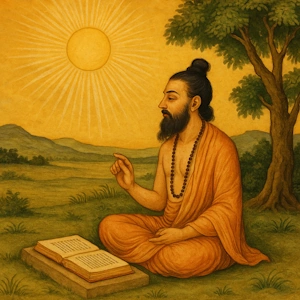
The 18th Sarga of Mumukshu Vyavahara Prakarana of Yoga Vasishta.
श्रीवसिष्ठ उवाच ।
१. अस्यां वा चित्तमात्रायां प्रबोधः संप्रवर्तते।
बीजादिव सतो व्युप्तादवश्यंभावि सत्फलम्॥
In the silent field of consciousness, awakening begins to stir.
The seed of truth, once placed in the fertile heart, must yield fruit.
Even if buried deep in habit and sleep, it pushes upward through effort and grace.
Awakening is not an event but the law of purity fulfilling itself.
Where sincerity has taken root, enlightenment is certain.
२. अपि पौरुषमादेयं शास्त्रं चेद्युक्तिबोधकम्।
अन्यत्त्वार्षमपि त्याज्यं भाव्यं न्याय्यैकसेविना॥
Truth is to be received from anyone whose words hold reason and balance.
Even the speech of an ancient sage loses worth if it strays from logic and fairness.
The seeker of dharma bows only to clarity.
Neither age nor authority can sanctify ignorance.
Only that which reflects justice and reason deserves reverence.
३. युक्तियुक्तमुपादेयं वचनं बालकादपि।
अन्यत्तृणमिव त्याज्यमप्युक्तं पद्मजन्मना॥
Reasonable words, even from a child, must be cherished.
Untrue words, even from Brahma, must be left aside like dry grass.
Wisdom is not tied to status; it shines wherever truth resides.
The heart trained in discernment sees light even in small voices.
Purity of logic is the fragrance of the divine mind.
४. योऽस्मत्तातस्य कूपोऽयमिति कौपं पिबत्यपः।
त्यक्त्वा गाङ्गं पुरस्थं तं को नाशास्त्यतिरागिणम्॥
A man drinks from his father’s well, calling it sacred,
while the Ganga flows before him, clear and endless.
Attachment blinds him to freedom that waits nearby.
The well stands for narrow pride; the river, for the vast current of truth.
Clinging to what is ‘mine’ and ignoring what is true leads only to ruin.
५. यथोषसि प्रवृत्तायामालोकोऽवश्यमेष्यति।
अस्यां वा चित्तमात्रायां सुविवेकस्तथैष्यति॥
When dawn rises, light follows without effort.
When awareness awakens in the mind, discrimination is born unasked.
The journey from darkness to clarity is built into the nature of consciousness.
The moment attention turns inward, light begins its work.
True insight is not granted — it dawns, inevitable as morning itself.
६. श्रुतायां प्राज्ञवदनाद्बुद्ध्वान्तं स्वयमेव च।
शनैः शनैर्विचारेण बुद्धौ संस्कार आगते॥
Truth, once heard from the lips of the wise, settles deep into the mind.
Not by force, but drop by drop — through patient reflection.
Like gentle rain softening the soil, inquiry shapes understanding into habit.
Over time, the mind stops reacting and starts resonating.
This is not memory — it is samskara, truth etched into the very nerves of discernment.
७. पूर्वं तावदुदेत्यन्तर्भृशं संस्कृतवाक्यता।
शुद्धयुक्ता लतेवोच्चैर्या सभास्थानभूषणम्॥
First comes the rising of refined, noble speech from within.
It is pure, balanced, graceful — like a creeper that winds upward toward light.
In gatherings of wisdom, such speech becomes the ornament, the crown.
This isn’t poetry — it’s the fragrance of inner clarity.
What flowers inside will speak through the tongue without trying.
८. परा नागरतो देति महत्त्वगुणशालिनी।
सा यया स्नेहमायान्ति राजानोऽमरा अपि॥
Then rises a higher intellect — refined, regal, full of excellence.
She draws even kings and devas with her charm.
Not by beauty, but by quiet strength and the magnetism of depth.
This is para buddhi — the majestic clarity that melts ego without raising its voice.
Those who possess it need no throne — their presence is its own kingdom.
९. पूर्वापरज्ञः सर्वत्र नरो भवति बुद्धिमान्।
पदार्थानां यथा दीपहस्तो निशि सुलोचनः॥
The one who attains this becomes a seer of before and after.
Like a torchbearer in the dark, he moves with clear sight.
Objects do not deceive him; time does not confuse him.
Past, future, meaning, shadow — all become visible to that sharpened vision.
Such a man no longer walks; he guides the walk of others.
१०. लोभमोहादयो दोषास्तानवं यान्त्यलं शनैः।
धियो दिशः समासन्नशरदो मिहिका यथा॥
Cravings and delusions begin to fade, little by little.
Like mist dissolving from the autumn sky, when the sun rises close.
The mind clears itself — not by effort alone, but by nearness to truth.
When the inner sun draws close, the fog cannot stay.
Where wisdom shines, desire shrinks and vanishes without a fight.
११. केवलं समवेक्ष्यन्ते विवेकाध्यासनं धियः।
न किंचन फलं धत्ते स्वाभ्यासेन विना क्रिया॥
Mere watching or clever thinking brings no fruit.
Without steady practice, even the finest ideas remain shadows.
Discrimination (viveka) must ripen through repetition —
as a seed grows only when tended, not by being admired.
Understanding must be lived again and again till it becomes nature.
१२. मनः प्रसादमायाति शरदीव महत्सरः।
परं साम्यमुपादत्ते निर्मन्दर इवार्णवः॥
When reflection matures, the mind becomes calm —
like a great lake in autumn, still and clear.
Peace settles without strain; ripples fade, depths shine.
At that moment, sameness arises — the stillness that neither prefers nor rejects.
It is the ocean without waves, vast and self-contained.
१३. निरस्तकालिमारत्नशिखेवास्ततमःपटा।
प्रति ज्वलत्यलं प्रज्ञा पदार्थप्रविभागिनी॥
Wisdom then glows like a jewel cleansed of all darkness.
Its light pierces every veil, showing each thing as it is.
No confusion survives before that flame.
Awareness becomes crystalline — cutting through illusion as diamond cuts glass.
Truth stands naked, shining in its own brilliance.
१४. दैन्यदारिद्र्यदोषाढ्या दृष्टयो दर्शितान्तराः।
न निकृन्तन्ति मर्माणि ससंनाहमिवेषवः॥
Poverty, pain, and humiliation glance off such a mind.
They strike but cannot pierce — like arrows hitting armor.
Inner dignity turns suffering into observation.
The wise see these blows from a distance, untouched within.
Strength lies not in hardness, but in clarity that nothing can wound.
१५. हृदयं नावलुम्पन्ति भीमाः संसृतिभीतयः।
पुरःस्थितमपि प्राज्ञं महोपलमिवेषवः॥
The heart no longer trembles before the terrors of the world.
Even when samsara stands close with all its storms,
the awakened one remains unmoved — like a mountain struck by arrows.
Fear shatters upon his calm, unable to find a crack.
Courage here is not defiance — it is the quiet majesty of knowing the Self.
१६. कथं स्यादादिता जन्मकर्मणां दैवपुंस्त्वयोः।
इत्यादि संशयगणः शाम्यत्यह्नि यथा तमः॥
Doubts once clustered like clouds —
‘What is fate? What is effort? Why birth, why action?’ —
now dissolve like darkness before daylight.
Questions that once felt urgent, that knotted the mind with anxiety,
fade not by answers, but by the clarity that no longer needs them.
Light enters, and the shadows forget to exist.
१७. सर्वदा सर्वभावेषु संशान्तिरुपजायते।
यामिन्यामिव शान्तायां प्रजालोक उपागते॥
Peace begins to bloom everywhere — in every state, in every moment.
Like the stillness of night giving way to dawn, calm pervades the being.
Whether among people or alone, in pain or joy, a steady light remains.
Restlessness has no grip now.
Even the noise of the world arrives, but does not stay.
१८. समुद्रस्येव गाम्भीर्यं धैर्यं मेरोरिव स्थितम्।
अन्तः शीतलता चेन्दोरिवोदेति विचारिणः॥
The thoughtful one now carries ocean-like depth — unmoving, immense.
His steadiness stands like Meru — unshaken by storm or time.
Inside, he is cool like the moon — no flame of anger, no heat of craving.
Such grace doesn’t speak — it radiates.
This is not control; it is natural majesty, born of clear seeing.
१९. सा जीवन्मुक्तता तस्य शनैः परिणतिं गता।
शान्ताशेषविशेषस्य भवत्यविषयो गिराम्॥
This is jivanmukti — liberation while living —
growing silently like a ripening fruit.
Words fall short. Nothing remains to describe, nothing needs division.
Everything is quiet. Everything just is.
Speech searches for metaphors, but the experience lies beyond form and quality.
२०. सर्वार्थशीतला शुद्धा परमालोकदास्यधीः।
परं प्रकाशमायाति ज्योत्स्नेव शरदैन्दवी॥
His mind becomes utterly pure, cool with clarity —
like moonlight in an autumn sky, steady and full.
A radiance rises within that no lamp can match.
It doesn’t blind — it blesses.
Such a one sees with no distortion. Sees with light alone.
२१. हृद्याकाशे विवेकार्के शमालोकिनि निर्मले।
अनर्थसार्थकर्तारो नोद्यन्ति किल केतवः॥
When the inner sky is lit by the sun of discrimination, and the eyes are washed in the stillness of peace,
the flag-bearers of calamity no longer rise.
There is no parade of confusion, no chaos marching across thought.
Just as weeds cannot grow in clean sunlight,
so too, delusions cannot bloom where viveka shines without shadow.
२२. शाम्यन्ति शुद्धिमायान्ति सौम्यास्तिष्ठन्ति सून्नते।
अचञ्चले जलेऽतृष्णाः शरदीवाभ्रमालिकाः॥
Restlessness fades. Purity arrives. Gentle moods settle like petals in quiet stillness.
In the unmoving lake of awareness, desires no longer chase reflections.
Just like clouds in the autumn sky — silent, delicate, motionless —
the impressions of the mind no longer disturb or thirst.
Stillness itself becomes satisfaction.
२३. यत्किंचनकरी क्रूरा ग्राम्यता विनिवर्तते।
दीनानना पिशाचानां लीलेव दिवसागमे॥
That wild, crude village-mind — ever grasping, ever harsh — now retreats.
Like ghouls who vanish when day breaks,
those inner goblins of cruelty, restlessness, and ignorance lose their power.
The light of wisdom doesn’t fight them — it simply arrives,
and their drama collapses into nothing.
२४. धर्मभित्तौ भृशं लग्नां धियं धैर्यधुरं गताम्।
आधयो न विधुन्वन्ति वाताश्चित्रलतामिव॥
When the mind is anchored in dharma and yoked to the burden of courage,
no sorrow can shake it.
Just as winds cannot uproot a creeper firmly bound to a stone wall,
the thoughts that used to tremble now hold firm.
Stability is no longer effort — it is character.
२५. न पतत्यवटे ज्ञस्तु विषयासङ्गरूपिणि।
कः किल ज्ञातसरणिः श्वभ्रं समनुधावति॥
The wise do not fall into the chasm called sense-attachment.
Why would one who knows the straight road chase the edge of a cliff?
Temptation loses its pull once the destination is clear.
He who sees the path doesn’t chase mirages.
Knowledge becomes both the lantern and the hand that holds it steady.
२६. सच्छास्त्रसाधुवृत्तानामविरोधिनि कर्मणि।
रमते धीर्यथाप्राप्ते साध्वीवान्तःपुराजिरे॥
The wise one rejoices only in actions that don’t clash with dharma,
with scriptures, with the lives of the noble and saintly.
He accepts only what flows rightly into his life — no greed, no grasping.
Like a noble woman, content in her courtyard, dignified and serene,
he delights in what is his by purity, not by conquest.
Restraint becomes pleasure, not repression.
२७. जगतां कोटिलक्षेषु यावन्तः परमाणवः।
तेषामेकैकशोऽन्तःस्थान्सर्गान्पश्यत्यसङ्गधीः॥
In the trillions upon trillions of worlds,
in the endless stream of particles,
the detached mind begins to see — not just forms,
but creation happening within each atom.
The seeker who has stilled attachment perceives the cosmic wheel
even in dust.
He sees Brahma dancing silently inside every speck of matter.
२८. मोक्षोपायावबोधेन शुद्धान्तःकरणं जनम्।
न खेदयति भोगौघो न चानन्दयति क्वचित्॥
The one whose heart has been washed in the clarity of moksha-path
neither suffers from sense-pleasure nor is thrilled by it.
The flood of experiences doesn’t sway him.
He isn’t tortured by pain, nor seduced by delight.
Joy and sorrow become shadows on a clear wall — visible, but without grip.
Freedom here means: no high, no crash — just steady flame.
२९. परमाणौ परमाणौ सर्ववर्गा निरर्गलाः।
ये पतन्त्युत्पतन्त्यम्बुवीचिवत्तान्स पश्यति॥
Forms fall and rise freely in every particle —
unbound, ceaseless, like waves on water.
The sage watches them as one watches rain on a pond:
no surprise, no resistance, no naming.
The movement of the universe becomes transparent —
not controlled, not denied — just seen.
३०. न द्वेष्टि संप्रवृत्तानि न निवृत्तानि काङ्क्षति।
कार्याण्येष प्रबुद्धोऽपि निष्प्रबुद्ध इव द्रुमः॥
He doesn’t hate what begins, nor long for what ends.
Work happens through him — yet he stands still,
like a tree: living, rooted, unmoved.
Awakened in essence, yet outwardly still and ordinary,
he acts without agitation, without self-claim.
This is wisdom without drama — clear, solid, unshakable.
३१. दृश्यते लोकसामान्यो यथाप्राप्तानुवृत्तिमान्।
इष्टानिष्टफलप्राप्तौ हृदयेनापराजितः॥
The knower walks like any other man — appears ordinary, blends into life.
He performs what comes to him, accepts both gain and loss.
Pleasure doesn’t swell him. Pain doesn’t sink him.
Though he meets with joy and sorrow like all men,
his heart remains undefeated — calm in success, undisturbed in failure.
He’s not acting detached — he is unshaken.
३२. बुद्ध्वेदमखिलं शास्त्रं वाचयित्वा विविच्यताम्।
अनुभूयत एवैतन्न तूक्तं वरशापवत्॥
Don’t just read this scripture. Don’t merely repeat or analyze it.
Live it. Feel it. Become it.
This is not to be recited like a story of boons and curses.
Wisdom here is not information — it is a fire to sit near,
a path to walk barefoot, a mirror to see your own bondage crack.
३३. शास्त्रं सुबोधमेवेदं सालंकारविभूषितम्।
काव्यं रसमयं चारु दृष्टान्तैः प्रतिपादितम्॥
This scripture shines with clarity —
ornamented with metaphors, flowing with poetic flavor.
It is kavya, but not merely for the ears.
It is rasa, but not only for emotion.
Its beauty lies in how it strikes the heart and sharpens the intellect —
sweet like honey, sharp like fire, deep like the ocean.
३४. बुध्यते स्वयमेवेदं किंचित्पदपदार्थवित्।
स्वयं यस्तु न वेत्तीदं श्रोतव्यं तेन पण्डितात्॥
One who knows the meanings of even a few core words —
with sincerity and reflection —
can understand this text by himself.
But if one does not yet grasp even that,
let him go to a knower — a true pandita — and listen.
Truth is not denied to anyone, but must be approached with humility.
३५. यस्मिन्श्रुते मते ज्ञाते तपोध्यानजपादिकम्।
मोक्षप्राप्तौ नरस्येह न किंचिदुपयुज्यते॥
Once this is truly heard, understood, and realized —
all other means become unnecessary.
No austerity, no meditation, no japa —
none of them are required if this knowledge is internalized.
Liberation becomes natural — not because action is denied,
but because the goal is already attained.
The fire has already burned the rope — the limbs are still, but the bond is gone.
३६. एतच्छास्त्रघनाभ्यासात् पौनःपुन्येन वीक्षणात्।
पाण्डित्यं स्यादपूर्वं हि चित्तसंस्कारपूर्वकम्॥
By repeatedly immersing in this scripture,
by reading, reflecting, and seeing it again and again,
a light never known before begins to grow.
Learning here is not memory — it is transformation.
The mind, polished by constant touch with truth,
turns brilliant like gold refined in fire.
Pāṇḍitya — true mastery — is nothing but the fragrance of deep habit of wisdom.
३७. अहं जगदिति प्रौढो द्रष्टृदृश्यपिशाचकः।
पिशाचोऽर्कोदयेनेव स्वयं शाम्यत्ययत्नतः॥
The ghost that whispers ‘I’ and ‘world’ — the specter of duality —
vanishes when the sun of awareness rises.
This phantom, the drashta–drishya pishacha —
the haunting sense of ‘me’ seeing ‘that’ —
fades on its own, without struggle, without effort.
When light comes, shadows have no say.
The end of delusion doesn’t need action — only dawn.
३८. भ्रमो जगदहं चेति स्थित एवोपशाम्यति।
स्वप्नमोहः परिज्ञात इव नो भ्रमयत्यलम्॥
Once understood, the illusion of ‘I’ and ‘world’ loses power.
It remains as appearance, but cannot bind.
Just as a dream, once known to be a dream,
cannot deceive the awakened mind,
so too this universe continues to shimmer —
seen, but no longer believed.
Knowledge doesn’t erase the image; it erases its grip.
३९. यथा संकल्पनगरे पुंसो हर्षविषादिता।
न बाधते तथैवास्मिन्परिज्ञाते जगद्भ्रमे॥
In a city built of imagination,
joy and sorrow seem real to the dreamer,
but vanish when he wakes.
Likewise, once the illusion of the world is recognized,
the waves of pleasure and pain lose their bite.
The dream of life remains, but it no longer commands.
Freedom doesn’t end experience — it ends disturbance.
४०. चित्रसर्पः परिज्ञातो न सर्पभयदो यथा।
दृश्यसर्पः परिज्ञातस्तथा न सुखदुःखदः॥
A painted serpent cannot frighten the one who knows its nature.
So too, the world — though full of motion and form —
cannot cause pleasure or pain to the realized.
The snake remains visible, yet its bite is gone.
The wise still see the play,
but their heart no longer trembles at its hiss.
४१. परिज्ञानेन सर्पत्वं चित्रसर्पस्य नश्यति।
यथा तथैव संसारः स्थित एवोपशाम्यति॥
When knowledge dawns, the snake disappears — not from the wall,
but from the mind.
The painted serpent was never real — only fear made it bite.
In the same way, samsara doesn’t need to end —
it just needs to be seen through.
Once the illusion is known, the world remains,
but its power to disturb vanishes.
४२. सुमनःपल्लवामर्दे किंचिद्व्यतिकरो भवेत्।
परमार्थपदप्राप्तौ नतु व्यतिकरोऽल्पकः॥
Crushing a flower petal may cause a faint stir —
a slight disturbance, soft and passing.
But in supreme realization,
even that much friction doesn’t arise.
Truth is untouched.
Once the absolute is reached,
not even the gentlest ripple stains the stillness.
४३. गच्छत्यवयवः स्पन्दं सुमनःपत्रमर्दने।
इह धीमात्ररोधस्तु नाङ्गावयवचालनम्॥
When a flower is touched, its parts tremble slightly.
But in the body of one rooted in wisdom,
there is no such movement —
because awareness is not a limb.
The mind may pause, the breath may settle,
but realization doesn't ripple like the body —
it simply is.
४४. सुखासनोपविष्टेन यथासंभवमश्नता।
भोगजालं सदाचारविरुद्धेषु न तिष्ठता॥
Seated in comfort, eating with simplicity,
the wise one partakes of life without grasping.
He enjoys what is present,
never touching what goes against dharma.
Even pleasure is filtered through restraint.
What comes cleanly, stays peacefully.
४५. यथाक्षणं यथादेशं प्रविचारयता सुखम्।
यथासंभवसत्सङ्गमिदं शास्त्रमथेतरत्॥
Let one study this scripture —
with peace in the moment,
with reflection suited to place and time.
Enjoy the warmth of inquiry.
Keep the company of the wise as much as possible,
and allow the teaching to settle naturally —
not forced, not rushed, just real.
४६. आसाद्यते महाज्ञानबोधः संसारशान्तिदः।
न भूयो जायते येन योनियन्त्रप्रपीडनम्॥
When supreme knowledge is attained, the storm of samsara falls silent.
The wheel of birth no longer turns.
There is no return to wombs, no re-entry into suffering.
The machinery of rebirth — with its chains of desire and karma — breaks apart.
This wisdom is not relief; it is release.
No more bondage, no more return — only stillness without end.
४७. एतावत्यपि येऽभीताः पापा भोगरसे स्थिताः।
स्वमातृविष्ठाकृमयः कीर्तनीया न तेऽधमाः॥
Even with such wisdom laid bare before them,
some cling fearlessly to pleasure like worms in filth —
living in the mother’s excrement, unaware of light.
They are not just fallen — they are to be named,
so others may not follow their path.
This verse doesn’t curse — it warns.
To choose ignorance over liberation, knowing the cost — that is true adharma.
४८. श्रृणु तावदिदानीं त्वं कथ्यमानमिदं मया।
राघव ज्ञानविस्तारं बुद्धिसारतरान्तरम्॥
Listen now, O Raghava —
what I am about to unfold is no longer just truth,
but the unfolding of truth — layer by layer, root to tip.
This is where wisdom stretches its limbs,
where the essence of intellect (buddhi-sāra) blooms into realization.
Not more information — but deeper seeing.
४९. यथेदं श्रूयते चास्त्रं तामापातनिकां श्रृणु।
विचार्यते यथार्थोऽयं यथा च परिभाषया॥
What seems like a simple scripture at first glance —
listen now as it is peeled open, layer by layer.
This is not a surface read.
This is the aparoksha — the lived clarity that only inquiry can reveal.
We are entering the realm where words are keys,
and silence holds the truth.
५०. येनेहाननुभूतेऽर्थे दृष्टेनार्थेन बोधनम्।
बोधोपकारफलदं तं दृष्टान्तं विदुर्बुधाः॥
When the unseen is made known through what is seen —
that is a drishtanta, a true example.
It doesn’t just explain — it causes awakening.
The wise don’t give definitions; they give vision.
Through what is visible, they crack open the invisible,
leaving behind both concept and doubt.
५१. दृष्टान्तेन विना राम नापूर्वार्थोऽवबुध्यते।
यथा दीपं विना रात्रौ भाण्डोपस्करणं गृहे॥
O Rama, new truths cannot be grasped without examples.
Just as you cannot see vessels in a dark house without a lamp,
you cannot recognize unfamiliar wisdom
without the light of lived comparison.
The mind needs a bridge — and metaphor becomes that torch.
५२. यैर्यैः काकुत्स्थ दृष्टान्तैस्त्वं मयेहावबोध्यसे।
सर्वे सकारणास्ते हि प्राप्यन्तु सदकारणम्॥
Every example I give you, O scion of Kakutstha,
has a reason behind it — none are random.
Each one is a gateway to deeper cause.
From the outer image, walk inward to the essence.
Let every comparison pull you toward that formless clarity.
५३. उपमानोपमेयानां कार्यकारणतोदिता।
वर्जयित्वा परं ब्रह्म सर्वेषामेव विद्यते॥
All analogies — all pairs of example and meaning —
are built on cause and effect.
But Brahman stands apart.
It is the one thing to which no comparison truly applies.
Beyond example, beyond effect —
only That remains untouched.
५४. ब्रह्मोपदेशे दृष्टान्तो यस्तवेह हि कथ्यते।
एकदेशसधर्मत्वं तत्रान्तः परिगृह्यते॥
When I speak of Brahman using an example,
know that it is partial — only to help the mind.
The comparison holds a shared trait — not a full equivalence.
Only a slice of the formless can be gestured toward
through the formful.
That is the mercy of language — not its perfection.
५५. यो यो नामेह दृष्टान्तो ब्रह्मतत्त्वावबोधने।
दीयते स स बोद्धव्यः स्वप्नजातो जगद्गतः॥
Every metaphor used to explain Brahman —
each one should be taken like a dream,
arising from the world of illusion itself.
They serve their purpose, then dissolve.
Understand the pointer — but do not mistake it for the moon.
Even the subtlest example arises in the same realm as the illusion it reveals.
५६. एवं सति निराकारे ब्रह्मण्याकारवान्कथम्।
दृष्टान्त इति नोद्यन्ति मूर्खवैकल्पिकोक्तयः॥
‘If Brahman is formless, why speak of forms?’ —
only the confused raise such objections.
To explain the ungraspable, language must bend.
The wise know that examples are not claims —
they are gentle steps for the seeker.
The fool clings to logic like a child clings to smoke —
and misses the fire behind it.
५७. अन्यासिद्धविरुद्धादिदृग्दृष्टान्तप्रदूषणैः।
स्वप्नोपमत्वाज्जगतः समुदेति न किंचन॥
All accusations against examples —
that they are flawed, contradictory, or unfitting —
crumble when we realize the world itself is dream-like.
What can truly be "wrong" in a dream?
If the jagat itself is unreal,
then so are the flaws seen in the metaphors describing it.
Illusion cannot disprove another illusion.
५८. अवस्तु पूर्वापरयोर्वर्तमाने विचारितम्।
यथा जाग्रत्तथा स्वप्नः सिद्धमाबालमागतम्॥
The object that appears between the past and future —
that seems real for the moment — is also unreal.
Just as dream and waking both are seen to be passing illusions,
this truth has been accepted by the wise,
from children to sages.
The line between real and unreal doesn’t lie in form —
but in permanence.
५९. स्वप्नसंकल्पनाध्यानवरशापौषधादिभिः।
यथार्था इह दृष्टान्तास्तद्रूपत्वाज्जगत्स्थितेः॥
Dreams, imaginations, meditations, boons, curses, medicines —
all serve as fitting examples
because the world itself behaves like them.
They are not metaphorical —
they are mirrors.
Just as a curse alters fate in a dream,
so too does intention shape experience here.
The jagat carries the same surreal substance.
६०. मोक्षोपायकृता ग्रन्थकारेणान्येऽपि ये कृताः।
ग्रन्थास्तेष्वियमेवैका व्यवस्था बोध्यबोधने॥
All scriptures composed by sages,
intended as tools for liberation,
follow this one rule:
use illusion to break illusion.
Structure the teaching such that what cannot be spoken
becomes somehow known.
This is the only valid system —
to awaken using the very sleep one is caught in.
६१. स्वप्नाभत्वं च जगतः श्रुते शास्त्रेऽवबोध्यते।
शीघ्रं न पार्यते वक्तुं वाक्किल क्रमवर्तिनी॥
The dream-like nature of this world is declared in the shruti,
and made clearer through this very shastra.
But words must move in sequence — they can’t flash all at once.
Truth may be immediate, but speech is slow.
The river of wisdom runs deep,
but language dips its pot only one drop at a time.
६२. स्वप्नसंकल्पनाध्याननगराद्युपमं जगत्।
यतस्त एव दृष्टान्तास्तस्मात्सन्तीह नेतरे॥
This world resembles dreams, imaginations, meditations, magic cities.
Hence, all apt examples arise from those — not from fixed realities.
The comparisons aren’t chosen for poetic charm.
They arise because the world is like that —
flickering, unreal, moving like a mirage.
Only illusions can explain an illusion.
६३. अकारणे कारणता यद्बोधायोपमीयते।
न तत्र सर्वसाधर्म्यं संभावत्युपमाश्रमैः॥
When the example is used to explain causeless cause —
like Brahman or jagat —
don’t expect full similarity.
A single trait, a shared essence, is enough.
The rest may differ — and that’s fine.
An analogy is a light, not a replica.
६४. उपमेयस्योपमानादेकांशेन सधर्मता।
अङ्गीकार्यावबोधाय धीमता निर्विवादिना॥
The wise accept that only one quality of the example
needs to match the truth it reveals.
That partial sameness is enough to awaken understanding.
They don’t argue about the rest — they see.
Like recognizing fire from its heat alone.
६५. अर्थावलोकने दीपादाभामात्रादृते किल।
न स्थानतैलवर्त्यादि किंचिदव्युपयुज्यते॥
To see light, the glow alone is enough.
You don’t need to examine the lampstand, oil, or wick.
In the same way, to grasp the truth,
you only need the shining idea.
The props can be left behind — they served their moment.
६६. एकदेशसमर्थत्वादुपमेयावबोधनम्।
उपमानं करोत्यङ्ग दीपोऽर्थप्रभया यथा॥
An analogy reveals the unknown by echoing just one part of it.
Like a lamp, it doesn't show the whole room in detail —
it simply lets the eye catch what it needs.
You don’t study the lamp — you use its light.
Similarly, a good upamana offers a spark, not a sculpture.
It helps the truth shine, not mimic.
६७. दृष्टान्तस्यांशमात्रेण बोध्यबोधोदये सति।
उपादेयतया ग्राह्यो महावाक्यार्थनिश्चयः॥
When a single feature of the example causes the inner light to rise,
that is enough to take it as valid.
Whether from sruti, story, or symbol —
if it helps unlock the meaning of the mahavakyas,
then it is worthy.
Truth isn’t honored by completeness — it is honored by illumination.
६८. न कुतार्किकतामेत्य नाशनीया प्रबुद्धता।
अनुभूत्यपलापान्तैरपवित्रैर्विकल्पितैः॥
The awakened mind is not rattled by shallow logic.
It cannot be broken by clever doubts,
nor by arguments that deny lived experience.
Truth is not shaken by tricks.
The clarity born of realization
cannot be undone by the noise of untested thought.
६९. विचारणादनुभवकारिवैरिणोऽपि
वाङ्मयं त्वनुगतमस्मदादिषु।
स्त्रियोक्तमप्यपपरमार्थवैदिकं
वचो वचःप्रलपनमेव नागमः॥
Even if scripture outwardly clashes with direct experience,
those who truly inquire — like us —
follow experience as the root.
Even if a woman says something not found in the Vedas,
if it flows from truth, it is agamavachana — valid speech.
What matters is not the speaker, but whether the light of realization
burns through the words.
७०. अस्माकमस्ति मतिरङ्ग तयेति सर्व–
शास्त्रैकवाक्यकरणं फलितं यतो यः।
प्रातीतिकार्थमपशास्त्रनिजाङ्गपुष्टा–
त्संवेदनादितरदस्ति ततः प्रमाणम्॥
This is our conclusion, dear one —
the unity of all shastras lies in that which brings direct experiential clarity.
Even if something lies outside scriptural wording,
if it is strengthened by the limbs of true inner vision,
it is pramana — valid knowledge.
Not because the book says so —
but because Being confirms it through luminous certainty.
- The world is dream-like, and this understanding arises clearly through scriptures and deep inquiry.
- Just as a lamp reveals what’s in a dark room, analogies help uncover subtle truths that the intellect alone can't access.
- A good metaphor works by sharing just one key trait with what it explains — not by being identical in all ways.
- Brahman, being beyond cause and effect, cannot be fully captured by any metaphor — but a partial resemblance is useful.
- The unreality of the world, like a dream, makes arguments against metaphors pointless; illusion cannot invalidate illusion.
- Waking and dreaming share the same essence — both are projections within consciousness, differing only in intensity.
- The examples drawn from dreams, cities of imagination, boons, curses, or medicines are valid because the world behaves just like them.
- The entire purpose of scripture is to guide liberation by using familiar illusions to untangle the deeper illusion.
- A single flash of shared meaning between example and truth is enough to produce awakening.
- Knowledge gained through direct insight is stronger than debate or scriptural literalism; it stands on its own authority.
- If even a non-vedic or unexpected source reveals direct experiential truth, it is still valid and to be accepted.
- All scriptures aim toward experiential clarity, not dry conceptual agreement; truth confirmed through direct awareness is the final proof.
What is the value of metaphor in understanding subtle truths?
Metaphors reveal the unknown by highlighting one shared feature with something familiar. They act like a lamp showing what is already present but unseen. They’re not exact copies but tools to provoke insight.
Why do spiritual teachers rely so heavily on analogies?
Because some truths can't be grasped directly by logic — analogies help the mind bridge that gap. They prepare the ground for experience to blossom.
Aren’t metaphors just poetic devices with no practical truth?
No. Their worth lies in the awakening they cause, not their literal structure. If one quality sparks inner recognition, they’ve fulfilled their role.
Why can’t Brahman be fully captured by any example?
Because Brahman is beyond cause, effect, and form. No example can represent it entirely. Only a partial similarity can point toward it.
Then why use examples at all for Brahman?
To help the mind orient itself. Without a pointer, even silence becomes confusing.
Isn’t it misleading to compare the Absolute with worldly things?
Not if the listener understands it's only a pointer. Misunderstanding arises from clinging to form, not from the act of pointing.
Why is the world called dream-like in this teaching?
Because it behaves like a projection — appearing real, but dissolving upon scrutiny. It changes, deceives, and vanishes — like a dream.
How does understanding the dream-nature of the world help?
It loosens attachment. You stop reacting to every joy and sorrow as if they’re final.
But we live, eat, and suffer here — isn’t it real enough?
So does the dreamer in his dream — until he wakes. Perceived intensity doesn’t equal reality.
Why do critics reject scriptural metaphors as inconsistent?
Because they apply logic meant for real objects to teachings meant to dissolve illusion. In a dream-world, all logic is itself part of the illusion.
How do we defend metaphors from these criticisms?
By exposing the critic’s assumptions — if the world itself is unreal, how can it be used to judge examples meant to explain that unreality?
Does this mean all reasoning is false?
No. It means reasoning is valid within the illusion — but cannot be used to disprove insights that pierce it.
Why is direct realization considered higher than scriptural debate?
Because it removes doubt from the root. Scriptures guide, but direct experience seals.
If someone outside the tradition expresses deep truth, should we reject it?
No. Truth, when shining from within, validates itself — no matter where it appears.
Should we blindly follow experience over scripture?
No — but when both align, and experience confirms what was heard, it becomes unshakable.
What is the final test of a spiritual teaching?
Whether it leads to freedom and clear awareness. That is the shared core of all true scriptures.
Can contradictory shastras still point to the same truth?
Yes, if they lead to the same experiential clarity. The surface may differ, but the fruit is what matters.
How do we verify if something is truly pramana (valid means of knowledge)?
If it produces unshaken clarity and aligns with direct knowing, it stands as valid — even if it falls outside tradition.





English
Yoga Vasishta
Click on any topic to open
7
30
Astrology
Bhagavad Gita
Bhagavatam
Bharat Matha
Devi
Devi Mahatmyam
Ganapathy
Garuda Puranam
Glory of Venkatesha
Hanuman
Kathopanishad
Mahabharatam
Mantra Shastra
Mystique
Practical Wisdom
Purana Stories
Radhe Radhe
Ramayana
Rare Topics
Rigveda Explained
Rituals
Sages and Saints
Shiva
Spiritual books
Sri Suktam
Story of Sri Yantra
Temples
Vedas
Vishnu Sahasranama
Yoga Vasishta
26
17
10
0


