How a Pregnant Woman's Actions Influence Her Unborn Child's Health
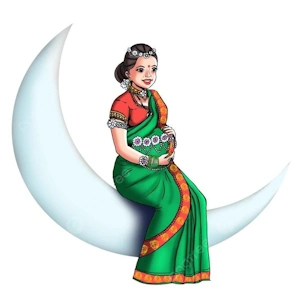
A pregnant woman's behavior influences the health and traits of her unborn child. Ancient texts, especially in Ayurveda and Dharma Shastra, emphasize that a mother's diet, emotions, and habits during pregnancy affect the child's physical and mental development. Specific actions, like sleeping positions or consuming certain foods, are said to result in particular defects or qualities in the child. These beliefs highlight the deep connection between a mother’s lifestyle and the well-being of the fetus, reflecting both medical and spiritual perspectives.
- Sleeping on her back: Can cause the umbilicus to wind around the throat of the fetus.
- Sleeping without cover or going nude: Can cause the child to be insane.
- Being quarrelsome: Can result in an epileptic child.
- Lustful: Can lead to an ugly, shameless child.
- Perpetually upset: Can result in a fearful, emaciated, or short-lived child.
- Strong desires: Can cause the child to be jealous, or cause pain to others.
- Being dishonest: Can lead to a child who is a drudge, injurious, or idle.
- Impatient: Can result in a fierce, cheating, or discontent child.
- Always asleep: Can cause a sleepy, foolish, or dyspeptic child.
- Consuming alcohol: Can lead to a child who drinks heavily, has a short memory, or is mentally disturbed.
- Eating pork: Can result in a child with red eyes, dyspnea, and very shaggy hair.
- Always eating fish: Can cause the child to blink infrequently or have fixed eyes.
- Always eating sweets: Can result in a child with a urinary disorder, or one who is stout or mule-like.
- Always eating sour foods: Can lead to a child with blood-bile sickness or skin and eye diseases.
- Eating too much salt: Can cause the child to wrinkle early, or become grey or bald soon.
- Always eating pungent foods: Can result in a weak son, deficient in semen, or without children.
- Always eating bitter foods: Can lead to a child who is dehydrated, weak, or underdeveloped.
- Always taking astringents: Can cause the child to be dark-complexioned, constipated, or sickly.
To safeguard your child's health and traits, avoid negative behaviors like quarrelsomeness, dishonesty, and impatience, and be mindful of your diet and habits to prevent unwanted physical and mental effects.
- How do ancient texts like Ayurveda and Dharma Shastra view the maternal-fetal connection?
These texts view the connection as deeply holistic, intertwining the physical, mental, and spiritual states of the mother with the developing fetus. While modern science explains this through epigenetics and the uterine environment, the ancient perspective uniquely emphasized that every emotion and dietary choice possessed a direct, almost mysterious power to shape the child's destiny and character. - Why do the texts link specific tastes, like excessive sweets or sour foods, to specific physical defects in the child?
In the ancient Ayurvedic framework, tastes correspond to specific bodily energies or doshas. Consuming excess sweets was believed to disrupt metabolic balance, hence the association with urinary disorders or physical heaviness. While we now know eating sweets does not literally make a child mule-like, the underlying principle correctly anticipates modern concerns about gestational diabetes and maternal nutrition affecting fetal development. - What is the hidden significance behind linking a mother's quarrelsomeness to an epileptic child?
The ancient texts posited that a mother's severe emotional distress directly altered the child's neurological development. Though linking arguments specifically to epilepsy is a medical misconception, the broader principle points to an overlooked truth: high levels of maternal stress hormones, like cortisol, can cross the placenta and genuinely impact fetal brain development and nervous system regulation. - Is there a scientific basis for the text warning against sleeping on the back to prevent the umbilical cord from winding around the throat?
While the specific claim about the umbilical cord winding around the neck is a physical misconception, the advice itself holds practical wisdom. Modern medicine also advises against pregnant women sleeping on their backs, particularly in the later stages, because the weight of the uterus can compress the inferior vena cava, reducing blood flow to the fetus. The ancient text identified the risk, even if it attributed it to a different hidden mechanism. - How does the ancient view on consuming alcohol during pregnancy compare to modern understanding?
The ancient texts explicitly state that consuming alcohol leads to a child who is mentally disturbed or has a short memory. This is a profound and accurate early recognition of what we now call Fetal Alcohol Spectrum Disorders. The greatness of this principle lies in its early identification of neurotoxins crossing the placental barrier, well before modern clinical studies confirmed these severe cognitive impacts. - Why are moral behaviors, like being dishonest or lustful, included alongside dietary guidelines?
The ancient worldview did not separate physical health from moral and spiritual purity. It was believed that a mother's psychic state imprinted onto the child's soul. While science measures physical inputs, these texts suggest a more mysterious epigenetic inheritance where behavioral patterns and emotional environments shape a child's psychological resilience and baseline temperament. - What underlying pattern unites the warnings against eating too much salt, pungent, or bitter foods?
The unifying principle is the danger of excess and the necessity of moderation. Extreme diets were thought to prematurely age the child, causing early graying or physical weakness. The overlooked wisdom here is the recognition of nutritional balance; extremes in maternal diet can create nutrient deficiencies or toxicities that genuinely compromise fetal organ development and vitality. - What does the warning about sleeping without a cover and its link to insanity suggest about ancient psychiatric views?
The texts often used physical exposure or vulnerability as metaphors for psychological disturbance. Going without a cover might have symbolized a lack of protection or boundaries, exposing the mother to negative environmental or spiritual elements. While not literally causing insanity, it highlights the ancient belief that maternal vulnerability and a lack of physical comfort can translate into the child's mental fragility. - What is the hidden meaning behind claiming that eating pork causes shaggy hair or eating fish causes fixed eyes?
These claims rely on a concept called sympathetic magic, where the physical traits of the food are thought to transfer directly to the consumer. A fish's unblinking eyes or a boar's bristly coat were believed to imprint on the fetus. Though medically inaccurate, this illustrates a deeply poetic and symbolic worldview where humans and nature are intimately interconnected. - Does this text primarily serve to restrict women, or is there a greater principle of empowerment hidden within?
While the extensive list of restrictions can seem burdensome by modern standards, the underlying philosophical greatness is one of profound maternal agency. It positions the mother as the primary architect of her child's future, suggesting that through mindful living, emotional regulation, and conscious habits, she possesses the remarkable power to safeguard and elevate the next generation.






Children's Section
Parenting
Click on any topic to open
7
30
Astrology
Bhagavad Gita
Bhagavatam
Bharat Matha
Devi
Devi Mahatmyam
Ganapathy
Garuda Puranam
Glory of Venkatesha
Hanuman
Kathopanishad
Mahabharatam
Mantra Shastra
Mystique
Practical Wisdom
Purana Stories
Radhe Radhe
Ramayana
Rare Topics
Rigveda Explained
Rituals
Sages and Saints
Shiva
Spiritual books
Sri Suktam
Story of Sri Yantra
Temples
Vedas
Vishnu Sahasranama
Yoga Vasishta
26
17
10
0


