He Was Calm Until He Chose Not To Be
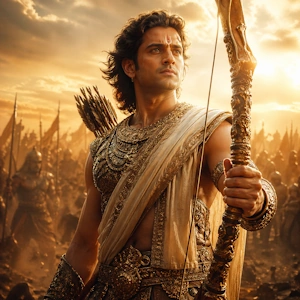
This is one of the most misunderstood transformations.
People think a calm person will always remain calm.
That is not how it works.
Calm is not weakness.
Calm is controlled strength.
And when that control shifts, the impact is very different.
1. The nature of a calm person
A calm person is not empty.
They are holding back.
Holding reactions.
Holding anger.
Holding impulses.
Not because they cannot act.
But because they choose not to.
They value balance.
They value restraint.
Like Yudhishthira.
He is known for patience.
For dharma.
For stability.
Even in pressure, he does not react easily.
2. Why calm people tolerate more
They do not react to everything.
They observe.
They absorb.
They wait.
Others think nothing is happening.
But something is building.
Layer by layer.
Every ignored moment.
Every held reaction.
It does not disappear.
It stays.
3. The breaking point
There comes a moment.
One more push.
One more trigger.
And the internal balance shifts.
Not slowly.
Immediately.
4. The shift is not emotional. It is decisive
This is not uncontrolled anger.
This is clarity.
A calm person does not lose control.
They stop holding back.
5. Why this anger is different
Normal anger is scattered.
But this is focused.
Straight.
Clear.
Directed.
That is why it is powerful.
6. The visible change shocks everyone
People are used to calm.
Now they see intensity.
A steady person becomes unstoppable.
7. What this reveals
Calm people are not harmless.
They are controlled.
And control means capacity.
8. The real lesson
Do not mistake silence for weakness.
Strength is knowing when to act.
9. The actual context behind this insight
This comes from the battlefield of the Mahabharata.
The Pandava army begins to break.
The Madra king Shalya dominates the field.
At that moment, Yudhishthira reaches a decision point.
He becomes firm.
Either he will defeat Shalya.
Or he will fall.
The calm king becomes a decisive warrior.
10. What happened after that
The collapse stops.
The battle centers around him.
His intensity forces a direct confrontation.
And he defeats Shalya.
With that, the Kaurava side loses its last major commander.
The war moves toward its end.
One who never gets angry is not strong.
One who knows when to stop holding back is strong.
That is the shift.
That is the outcome.
What is the real difference between a calm person and a weak person
A calm person has the ability to react but chooses not to. A weak person cannot react even if needed. Calmness is stored power under control. Weakness is absence of power. The difference becomes visible only when action is required.
Why does suppressed reaction not disappear even in a calm person
Every held response becomes part of the inner structure. It does not vanish. It stays as potential energy. When the right trigger comes, it converts into clear action. This is why the shift looks sudden from outside but is built over time inside.
Why is the anger of a calm person more effective than ordinary anger
Ordinary anger is scattered and reactive. It wastes energy. The anger of a calm person is directed and precise. It is backed by restraint and clarity. So when it is released, it moves straight toward the objective without confusion.
What is the hidden risk of remaining calm for too long
If action is delayed beyond the right point, damage accumulates. Situations can worsen. Calmness without timely action can allow disorder to grow. The principle is not to react to everything, but also not to ignore the moment that demands action.
What deeper principle does the transformation of Yudhishthira reveal
It shows that dharma is not passive. It adapts to the situation. A person committed to dharma may remain gentle in normal times, but becomes firm when required. The same person can hold peace and intensity without contradiction.
Why do some say that anger always leads to harm
They assume all anger is uncontrolled. That is not correct. The example shows that controlled and purposeful anger can restore balance. It is not the emotion but the lack of control that creates harm.
Why do some argue that a truly wise person should never become aggressive
They see wisdom as constant softness. That is incomplete. Wisdom includes knowing when firmness is required. Inaction in the face of disorder is also a failure of understanding.
Why do some people say this transformation is just emotional breakdown
From outside it looks sudden. But the text shows it is a decision, not a breakdown. There is planning, clarity, and direction. That is not loss of control. That is deliberate action.
Why do critics say that calm people turning intense is dangerous
It is dangerous only if it is uncontrolled. In this case, the intensity is guided by purpose. It is not random. It is aligned with responsibility. That is what makes it effective rather than destructive.
Why do some dismiss this as just a war story with no real relevance
The situation is a battlefield, but the principle is universal. Pressure, restraint, breaking point, and decisive action exist in every area of life. The outer setting is war, but the inner mechanics apply everywhere.





English
Mahabharatam
Click on any topic to open
17


