He Begged The God To Kill Him
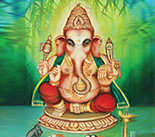
Today, I want to share a story from the Mudgala Purana. It’s a story about Lord Ganesha, but it’s more than just a battle between a god and a demon. It’s a story about perception, humility, and how an act of humiliation can be transformed into the highest form of devotion.
It all begins in the court of a powerful and arrogant demon king named Gajasura, the elephant demon. He was basking in his glory when a familiar figure appeared – the celestial sage, Narada. Now, Narada is known for being a bit of a cosmic instigator. He travels the realms, carrying news that often sparks great events. After being welcomed by the demon king, Narada leans in and says, 'O great Gajasura, I bring you important news. In the forest, the gods and sages are all gathered. They are fervently worshipping Ganesha, who has taken birth as the son of the sage Parashara. And why are they worshipping him? For one reason only: to bring about your death.'
Having planted this seed of pure poison, Narada vanishes. Gajasura is consumed by rage. How dare they? He gathers his entire, formidable demon army and marches to where the gods and sages are meditating. He is about to unleash slaughter upon them all when, in that moment of terror, the gods desperately pray to Ganesha. And just the mere thought of Ganesha is enough to shift the air. A new idea enters the demon's mind. He thinks, 'Killing them is too easy. They are under my power. I will break their spirit first. I will punish them.'
So, Gajasura declares his cruel decree. 'Listen, all of you! If you want to live, you will do exactly as I say. Every single day, you will come before me, and near my feet, you will hold your ears with your hands and knock your head on the ground. Do this, and I will let you live. Refuse, and I will cut off all your heads.'
The gods are horrified. Vishnu, speaking for them all, devises a plan. Remembering Ganesha, he says diplomatically, 'We agree to your punishment. Just release us now, and we will go get Ganesha. We will bring him here, and we will all perform this act together at your feet.' Deluded by Ganesha's divine Maya, or illusion, Gajasura agrees, giving them five days to return.
The desperate gods rush to Ganesha and tell him everything, weeping. 'How can we do this? Death is better than bowing before such a vile creature!'
And here, the story takes its brilliant turn. Ganesha doesn’t just roar and promise to avenge them. He smiles. He says, 'Do not worry. I will slay this demon. But first, you must do as I say. This punishment that the demon has invented… this act of holding your ears and knocking your head… it is, in fact, a form of worship that is incredibly dear to me. Do it not for him, but for me. Perform this very act, right here, at my feet, with all your devotion.'
The gods are stunned, then relieved. Shiva himself steps forward, holds his ears, and bows, making a soft, sweet sound with his head. Ganesha is overjoyed. Seeing this, all the gods and sages perform the same act, no longer as a sign of humiliation, but as an offering of love. Filled with this power of devotion, Ganesha mounts his divine mouse and rides out for battle.
A terrible war ensues. Gajasura's army is vast and powerful, but Ganesha's presence inspires the gods. Ganesha himself finally unleashes his divine axe, a weapon of annihilation, which destroys the entire demon army. But Gajasura, protected by a special boon, remains unharmed.
The demon king charges Ganesha directly. And in that moment, Ganesha reveals his true cosmic form. A being of infinite light, shining like a million suns, vast as the sky itself. Gajasura is stopped in his tracks. He tries to grab the form, but it's like trying to hold the air. And in that instant, everything changes for him.
He realizes this is no mere boy-god. This is Brahman, the ultimate reality. This is the source of all creation. And a profound understanding washes over him. His arrogance dissolves into awe. He thinks, 'My life is blessed. My ancestors are blessed. For I am about to die at the hands of God himself. The liberation that great yogis seek for lifetimes, I have found without even trying.'
Filled with a sudden, pure devotion, Gajasura bows. He prays, 'O Lord, kill me. This is the only boon I ask. Having seen you, I have no desire for anything else. To be killed by you is the highest salvation.'
Hearing this sincere prayer, Ganesha strikes him down. And at the moment of his death, Gajasura is not just defeated; he is liberated. He achieves Sayujya, a complete merging with the divine.
The gods rejoice, and after praising Ganesha, they once again perform the special act of reverence. Ganesha, pleased, makes a final declaration. 'This act you have performed shall forever be a sacred form of worship. Any of my devotees who perform it with true feeling will have all their wishes fulfilled, for it is exceptionally dear to me.'
So, the next time you see someone performing this ritual—holding their earlobes and bowing—remember the story of Gajasura. Remember that it is a symbol of a powerful truth: that with the right perspective and true devotion, an act of utter humiliation can be transformed into a direct line to the divine. It’s a story that tells us that the greatest power isn't in avoiding submission, but in choosing who we submit to.





English
Ganapathy
Click on any topic to open
7
30
Astrology
Bhagavad Gita
Bhagavatam
Bharat Matha
Devi
Devi Mahatmyam
Ganapathy
Garuda Puranam
Glory of Venkatesha
Hanuman
Kathopanishad
Mahabharatam
Mantra Shastra
Mystique
Practical Wisdom
Purana Stories
Radhe Radhe
Ramayana
Rare Topics
Rigveda Explained
Rituals
Sages and Saints
Shiva
Spiritual books
Sri Suktam
Story of Sri Yantra
Temples
Vedas
Vishnu Sahasranama
Yoga Vasishta
26
17
10
0


