Greatness of Ekadashi Vrata
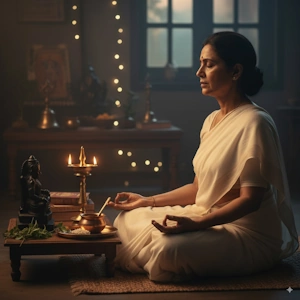
Today we will look at the meaning of the divya nama satyah and... also see something related to ekadashi.
सत्यः –
सत्यं ज्ञानमनन्तं ब्रह्म
The supreme truth. Satyam means yathartham, what is for real. A rope is a fact. You see it in the night and think that it is a snake; that is unreal.
A vast majority of what we think are unreal, even though we don’t realize it. They are conditional; they are dependent on the existence or non-existence of so many other factors.
Simple things like – you say fruits are healthy. There are so many people who are allergic to so many fruits. Citrus fruits taken in excess can give you acidity; fruits such as jackfruit can give indigestion to many people.
If you are a diabetic, your sugar shoots up if you take more fruit. The statement ‘fruits are healthy’ is true only if it satisfies so many conditions, such as moderate quantity, season, and your body’s acceptance. So you can’t say it is a truth. But we accept it as a truth. We don’t dispute the statement.
We don’t say that fruits are unhealthy. With so many ifs and buts can you say that the statement is true, absolutely true? No.
This is the difference between real and unreal. Real is actually real, and unreal is a perception, how you see it.
It need not be even the individual consciousness; it could be the collective consciousness.
अवितथरूपत्वात् सत्यम् – truth is something that not even one person can dispute, for whatever reason. This supreme truth is the nature of Brahman, Sri Hari. Perceptions change – you may think someone is good today and not so good tomorrow. Truth doesn’t change.
मूर्तामूर्तात्मकत्वाद्वा – because he exists in both those with forms and the formless. A stone has a form. A flower has a form. A thought doesn’t have a form, a wish doesn’t have a form. But they also exist.
A perception, even if not correct, exists. It has an existence. Sri Hari exists in both those with forms and the formless. He is the energy in thought.
सदिति प्राणाः तीत्यन्नम् यमित्यसावादित्यः – says Aitareya aranyakam. In the word satyam – ‘sat’ means pranas, energy; ‘tee’ means annam, food; and ‘yam’ means Surya – the life force energy provided by Surya, entering the body through food.
सत्सु साधुत्वात् सत्यः – he is nice towards nice people, hence satya.
Galav muni had a son called Bhadrasheela. Right from a young age, Bhadrasheela started observing ekadashi vrata. Muni never told him to do this.
Once muni asked him where he picked this from. Bhadrasheela said, I have been doing this since many births.
See the awareness. Normally no one remembers the past birth. Till the time you are there in the mother's womb, you will remember your past births. But just before birth, this memory is erased. But Bhadrasheela, even as a boy, remembered his past birth.
This is the power of the tapas in the form of ekadashi vrata that he had been observing. He said it all started during a birth when he was a king called Dharmakeerthi.
Dharmakeerthi was very cruel. He was a terror upon his subjects. Nobody liked him. There was no sin that he did not do.
Once he went hunting along with his soldiers. He saw a deer and told his soldiers to surround that deer from all sides and told whoever allows the deer to escape, his whole family will be killed.
The deer heard this and thought: poor soldiers, I will not allow any harm to happen to any of them. They are in this for their livelihood.
The deer escaped right through the side of the king. The king started chasing the deer. By the time it was sunset he was deep inside the thick forest, all alone; the deer was not to be seen anywhere.
He spent the night under a tree. He had not eaten anything throughout the day. He could hear growls of dangerous animals from all around. He could not sleep. He started praying to Sri Hari Paramatma, spontaneously. Then towards dawn, he died.
Yama dootas came and took him to Dharmaraja for his verdict. He asked: why did you bring him here? His place is in Vaikuntha by the side of Lord Mahavishnu.
‘But your majesty, he is an absolute sinner.’ ‘No, that's all gone. He is pure now.’
The day he died was ekadashi. He did fasting throughout the day and kept awake in the night remembering Sri Hari. All his sins are gone; he has become pure.
Yamaraja himself called for a golden chariot and sent the king to Vaikuntha. When people came to know about this on earth, they all became all the more enthusiastic to observe ekadashi.
Krishna paksha ekadashi is very important for forefathers. It is a good day to do shraddha for them. If, due to any reason, you are not able to do shraddha on the particular tithi of demise, then you can do it on the next krishna paksha ekadashi.
Krishna paksha is the daytime in Pitruloka. In Pitruloka, the duration of a day is 15 human days and the duration of the night is also 15 human days. The daytime for them is the 15 days of krishna paksha on earth.
By the time it is ekadashi, for them, two-thirds of the day is over. About 2 pm, which is their time for food. Krishna paksha ekadashi on earth is the time when forefathers take food in Pitruloka. That is the ideal time to offer them food and water.
There is one difference between ekadashi for Vaishnavas and Non-Vaishnavas. Vaishnavas observe all the ekadashis. But Non-Vaishnavas, if they are married and have children, then they are allowed to observe only those krishna paksha ekadashis between Devashayani Ekadashi and Devotthana Ekadashi, which is chaturmasya.
There is one more rule for observance of upavasa by married women. They should not do complete fasting; they should do phalahara even during fasting. Men can do complete fasting; there is no problem for them. But women should do phalahara. That too with the consent of the husband. Otherwise it will not yield any benefit.
पत्यौ जीवति या नारी उपोष्य व्रतं आचरेत् ।
आयुष्यं हरते भर्तुः सा नारी नरकं व्रजेत् ।। ४.१७ ।।
अपृष्ट्वा चैव भर्तारं या नारी कुरुते व्रतम् ।
सर्वं तद्राक्षसान्गच्छेदित्येवं मनुरब्रवीत् ।। ४.१८ ।।
This is from Parashara smriti.
We have two ways to chant Vishnu sahasra nama: one as stotra – vishwam...; second as namavali – om vishwasmai namaha, om vishnave namaha.
The stotras comprise divya namas in the prathama vibhakti – vishwam vishnuh vashtkaraha. This is nama sankeerthanam.
But the same name, when you change into chaturthi vibhakti, vishwam becomes vishwasmai, vishnuh becomes vishnave. This is how it is in namavali.
Then if you add omkara as a prefix and namaha as a suffix, it acquires the status of a moola mantra.
Vishwam is a divya nama. Om vishwasmai namaha is a moola mantra of Bhagawan.
So in the namavali we have 1000 moola mantras of Bhagawan. What is the pramana for this?
This is the reason why we can do homa using the namavali by again adding swaha at the end.
-
How does chanting connect me to what is absolutely true rather than my changing opinions?
Chant the name ‘Satyah’ from the Vishnu sahasranama. Do it as namavali: ‘om satyaya namah’. This anchors the mind in the unchanging reality of Bhagavan, which is not dependent on personal moods or social trends. -
I get confused between facts and perceptions in daily life. What is a practical way to steady my mind?
Do nama japa of ‘om vishnave namah’ for a fixed count morning and night. The steady rhythm cuts through mental noise and brings clarity about what is real and what is only a passing perception. -
Why does ekadashi matter if Bhagavan is beyond form and formless?
Ekadashi is obedience to a time-honored discipline that pleases Vishnu. Combine it with ‘om satyaya namah’ and ‘om achyutaya namah’. The vrata sets the body in order; the nama aligns the soul to the Lord who is the same in all states. -
Is there any point in ekadashi if I cannot fast fully due to health?
Yes. Follow phalahara under medical advice and keep continuous nama japa of ‘om narayanaya namah’ or ‘om vishnave namah’. The intention and remembrance matter, not bravado. Health is a trust; protect it. -
I have diabetes and feel weak while fasting. What is a safe devotional routine?
Take doctor-approved fruits or simple foods as phalahara, hydrate well, and do slow, attentive japa of ‘om achyutaya namah’ after each small intake. Keep the mind in remembrance rather than counting how little you ate. -
How can a householder family observe ekadashi without friction at home?
Decide a simple menu together, set japa times after morning bath and at sunset, and end the day with family chanting of a set of namavali: ‘om vishvasmai namah, om vishnave namah, om achyutaya namah, om satyaya namah’ for equal counts. -
Why is remembering forefathers linked with ekadashi in the dark fortnight?
It aligns with a traditional time-cycle for offering. Do tarpana or simple water-offering with the Lord’s names on your lips — ‘om narayanaya namah’ — and then share sattvic food at home. The nama purifies the offering. -
If I missed a shraddha date, is chanting enough to make up?
On the next krishna paksha ekadashi, offer water and simple food with steady japa of ‘om vishnave namah’. Follow your family’s samskara, keep it clean, and do the chanting with focus. -
Does sleepless remembrance at night really matter?
Yes. If health permits, reduce stimulation, sit quietly, and chant soft japa of ‘om satyaya namah’ before sleep. Even a short vigil done with sincerity carries weight when the Lord’s name fills the mind. -
What name should I pick when my thoughts feel scattered and anxious?
Use ‘om achyutaya namah’. Achyuta means unfailing. Repeat it with slow breathing. It steadies the nervous system and keeps the mind from slipping into panic. -
Is homa possible with sahasranama, or must I learn complex mantras first?
Traditional practice allows homa with namavali by adding ‘svaha’. With guidance from a competent priest, offer with names like ‘om vishnave svaha’, ‘om satyaya svaha’. Keep it simple and correct rather than elaborate and careless. -
How do I turn routine chanting into a living bond with the Lord?
Fix a sankalpa: specific name, specific count, specific time. For a month, chant ‘om satyaya namah’ at dawn. Log it, keep the place clean, and keep speech gentle through the day. Consistency invites grace. -
What if family members have different capacities or rules for fasting?
Respect varying needs. Let each keep the common thread of nama japa. One may do full upavasa; another may take phalahara. All can meet for a shared round of ‘om vishnave namah’ in the evening. -
Can chanting support physical health without turning devotion into a wellness hack?
Yes. Make japa the center. Around it, keep light sattvic meals on ekadashi, good hydration, and a short walk while repeating ‘om narayanaya namah’. The body cooperates better when the mind rests in the Lord. -
How do I keep pride away when a vrata goes well?
End the day with kshama-prarthana and a humble set of names: ‘om vishnave namah, om achyutaya namah, om satyaya namah’. Offer the merit back to Bhagavan. Pride fades when the Giver is remembered more than the gift. -
What is one crisp daily stack that ties all this together?
Morning: bath, 108 japa of ‘om satyaya namah’.
Midday: brief mental japa before food, ‘om vishnave namah’.
Evening: family round of 108 namas across 4 names (27 each).
Ekadashi: same stack with phalahara as needed, plus an extra round at night.
How can you call fruits ‘not truth’? Everyone knows fruits are healthy.
Healthy for whom, and in what quantity? A diabetic person’s sugar shoots up. Citrus in excess causes acidity. Jackfruit upsets digestion. A statement that needs so many conditions is not absolute truth. Truth cannot have ‘ifs and buts.’
You say truth is what nobody can dispute. But isn’t everything open to dispute?
Perceptions can be disputed. Some say a person is good, others say he is bad. But can anyone dispute the sun rising? Can anyone deny that fire burns? That which stands above opinion is truth.
If truth is beyond dispute, how do you prove Sri Hari is truth?
Because he is existence itself. A stone exists, a thought exists. Existence cannot be denied. Existence is Brahman, and Brahman is Hari.
Why bring in ekadashi fasting as purifying? Isn’t that just accidental timing of the king’s death?
Accident does not erase sin. The king fasted unintentionally, stayed awake, and prayed to Hari on ekadashi. That combination is the vrata. It triggered purification. It is not accident; it is cause and effect.
But he was a criminal. How can one day of fasting erase years of crime?
Because the vrata is not about calorie count. It is about aligning with cosmic law. On ekadashi, even unintentional vrata has multiplied effect. Just as a spark burns a heap of cotton, this vrata can burn heaps of sin.
Isn’t it unfair that ordinary sinners are punished but he got liberation?
The law works by alignment, not by favoritism. He stepped into the law at the right time in the right way. Anyone else who does so gets the same result.
What evidence do you have that ancestors eat during Krishna paksha ekadashi?
Evidence is in shruti and smriti texts. They say a day in Pitruloka equals 15 human days. When it is Krishna paksha ekadashi here, it is their mealtime there. That is why shraddha offered then reaches them.
Why are women asked not to fast completely? Isn’t that discrimination?
Not discrimination, but recognition of physiology and household dharma. A woman’s fasting without consent was said to shorten her husband’s life. The rule is framed to protect harmony of family, not to punish women.
How can chanting names become ‘moola mantras’? Isn’t that just wordplay?
It is grammar plus sanctity. ‘Vishwam’ is a name. Add ‘om’ and ‘namaha,’ it becomes a mantra. Just as electricity flows when you connect wires to a source, mantra power flows when the name is set in its proper form.
Why say homa can be done with namavali? Homa needs real mantras, not names.
The namavali is 1000 moola mantras. Each ends with namaha. When you add swaha, it becomes a homa mantra. Structure makes it valid. It is not casual names; it is coded sound-units with ritual authority.





English
Vishnu Sahasranama
Click on any topic to open
7
30
Astrology
Bhagavad Gita
Bhagavatam
Bharat Matha
Devi
Devi Mahatmyam
Ganapathy
Garuda Puranam
Glory of Venkatesha
Hanuman
Kathopanishad
Mahabharatam
Mantra Shastra
Mystique
Practical Wisdom
Purana Stories
Radhe Radhe
Ramayana
Rare Topics
Rigveda Explained
Rituals
Sages and Saints
Shiva
Spiritual books
Sri Suktam
Story of Sri Yantra
Temples
Vedas
Vishnu Sahasranama
Yoga Vasishta
26
17
10
0


