Devi Suktam Explained
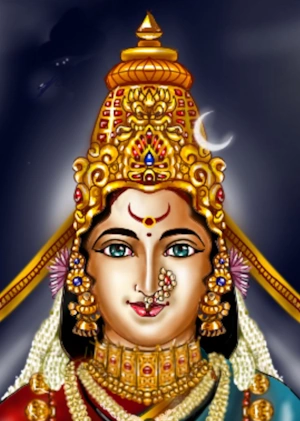
Devi Suktam is a blazing declaration of the Divine Feminine from the Rigveda, spoken by the seer Vak Ambhrini—a rishi who realized herself as the very power of the cosmos. It’s not a prayer to Devi—it’s Devi speaking through the voice of the rishi, revealing her omnipresence, her creative force, and her fierce sovereignty over gods, humans, and the universe itself. She isn’t described—she declares herself. She moves, she creates, she destroys, she uplifts. It’s raw, untamed Shakti in full roar—a spiritual earthquake that leaves no doubt: she is everything, and without her, nothing even begins.
अहं रुद्रेभिर्वसुभिश्चराम्यहमादित्यैरुत विश्वदेवैः ।
अहं मित्रावरुणोभा बिभर्म्यहमिन्द्राग्नी अहमश्विनोभा ॥१॥
The first mantra Devi Suktam is like a divine thunderclap — it's not a polite introduction or some soft devotional whisper. It's the primal roar of the Cosmic Mother saying:
'You think the gods are running the show?
Let me tell you who's really moving the universe.'
She's not sitting on a lotus waiting to be worshipped.
She’s on the move. She’s in action.
She says — I’m with the storm gods when they rage across the skies. I’m in the light of the sun, the pull of the moon, the breath of the wind, and the order of the stars.
She’s saying — every name you’ve heard — Indra, Agni, Mitra, Varuna, Ashvins — all the deities who shake the heavens or heal the broken — I’m the force behind their strength, the soul inside their power.
Without her? They're just empty names.
This isn’t ego. This is truth at its highest voltage.
She’s not trying to prove herself — she’s simply revealing the hidden machinery of the cosmos.
The gods act, yes — but it’s she who makes them act.
She carries Mitra and Varuna like a queen balancing law and grace.
She holds Indra and Agni like fire in one palm, thunder in the other.
She uplifts the Ashvins, those twin healers, showing that speed, recovery, and dawn itself only rise with her blessing.
This is Shakti not asking for your devotion — this is Shakti showing you that everything you already revere is her wearing different masks.
Rudras = fierce destruction
Vasus = elemental stability
Adityas = righteous order
Vishvedevas = universal divine presence
Indra = rulership
Agni = transformation
Ashvins = healing and transition
And she holds all of it together — she’s the weaver of the cosmic fabric, and this verse is her way of tearing the veil off so you see what’s behind it.
What this mantra really is:
Not philosophy. It’s a revelation.
If you're meditating on Devi and wondering, ‘Is she really listening?’
This mantra answers: ‘I’m the reason your breath is still moving. I’ve been here all along.’
अहं सोममाहनसं बिभर्म्यहं त्वष्टारमुत पूषणं भगम् ।
अहं दधामि द्रविणं हविष्मते सुप्राव्ये यजमानाय सुन्वते ॥२॥
This second mantra of the Devi Suktam? It's not just continuing the divine flex — it's going deeper into the sacred engine room of the universe. The gears are turning, the rituals are alive, and she’s the fire powering it all.
What's going on here?
Devi now reveals not just that she moves with the gods — but that she is the one who nourishes and sustains even the most sacred of Vedic powers.
She says:
‘I carry Soma, that holy nectar poured in yajnas —
I uphold Tvashta, the divine craftsman —
I hold up Pushan, the guide of paths —
I uphold Bhaga, who gives prosperity and joy.’
One by one, the subtle, invisible cogs of the Vedic ritual get called out — and claimed.
She’s not the goddess standing at the end of the ritual receiving the offering.
She’s the one who fuels it. The one who makes it work.
Soma – the sacred drink of the gods
Every Vedic yajna revolves around the concept of Soma — it’s the essence, the elixir, the offering that links heaven and earth.
And Devi says: ‘I’m the one who holds it. I’m the one who bears it into the fire.’
No Soma, no yajna. No yajna, no gods.
No Devi? Nothing.
Tvashta – the cosmic artisan
The one who shapes forms. Who builds divine weapons. Who designs the structure of creation.
And Devi says: ‘I support him too.’
Because even the architect of the universe can’t lift a chisel without her presence flowing through his hands.
Pushan – the pathfinder, the nourisher
He guides souls. Shows the way when the road gets dark.
And she says: ‘Even he walks because I’m the light in his lamp.’
Bhaga – the giver of wealth, delight, and fortune
The blessings you crave, the ease you ask for, the sweetness of life — all that is Bhaga.
And Devi holds him up too. ‘I’m the reason joy even exists.’
‘I am the one who gives wealth to the worshiper — the one who offers with devotion, who pours with faith, I make sure he is rewarded.’
She sees the yajamana — the one making the offering.
She sees his sincerity. His faith.
And if she’s pleased? She rains blessings like a monsoon.
Not because he asked, but because she chose to respond.
The Real Message
This verse is like Devi pulling aside the curtain on every single sacred act and saying:
‘Behind every ritual... behind every offering... behind every divine reward... I’m there.
You might be offering ghee into the fire, but I’m the one who lights it, receives it, and turns it into grace.’
No priest, no fire, no god, no blessing happens unless she allows it.
This isn’t just about rituals and Vedic gods.
This verse is saying something way bigger:
If you ever felt a moment of grace, a sudden flow of clarity, a blessing that came out of nowhere...
Know that it was her hand, gently unseen, making it happen.
She doesn’t need praise.
She is the praise, the process, the prize.
अहं राष्ट्री संगमनी वसूनां चिकितुषी प्रथमा यज्ञियानाम् ।
तां मा देवा व्यदधुः पुरुत्रा भूरिस्थात्रां भूर्यावेशयन्तीम् ॥३॥
Here we go.
This third mantra of the Devi Suktam is like Devi stepping out of the cosmic clouds, walking into the world, and saying:
‘I’m not just out there among the stars.
I’m right here — in your mind, your breath, your land, your rituals, your very identity.’
The Statement:
'I am the Rāṣṭrī — the queen of the realm, the sovereign power of the people.
I bring together the riches of the world.
I am the wise one — the first among those worthy of worship.
The gods themselves placed me in many places.
I dwell in many homes, in many hearts, in many truths.'
What’s happening here?
This is no longer the Devi behind the scenes.
This is Shakti as the visible, moving, governing force of society, culture, and divine consciousness.
'I am Rāṣṭrī' – the soul of the nation
She’s not saying she belongs to a country. She is the very spirit of the people.
Whenever a group of humans come together to build something good — a home, a family, a civilization — she’s the one giving it coherence.
She’s the pulse of dharma running through communities.
Rāṣṭrī is not a political post — it’s sacred stewardship.
She’s the inner compass that keeps the ship of culture from crashing on the rocks.
'Sangamanī Vasūnām' – I unite the wealths of the world
Not just gold and grain.
She’s talking about all forms of prosperity — knowledge, harmony, love, health, strength, art, rain, crops, music, medicine, inspiration.
She doesn’t just bless with riches.
She gathers them. Links them.
Like a weaver pulling threads into a tapestry, she joins the diverse gifts of life into one harmonious pattern.
'Chikitushi' – the knower, the wise one
This line glows. She’s not just powerful — she’s aware.
She knows what’s worth giving. Who’s ready. When the time is right.
She is the inner clarity, the discerning force that tells the true from the false, the right from the glittery distractions.
And she doesn’t stand at the end of the spiritual line.
She says: ‘I am the first of the ones who deserve worship.’
Because even the greatest rituals fall flat without her energy moving through them.
'The gods placed me in many places'
This part is so intimate.
She’s not holed up in some distant realm.
The gods themselves planted her across all of creation.
In every space where something sacred happens —
In every breath where a seeker whispers a mantra —
In every home, temple, forest, and heart —
She is there.
And she doesn’t just “exist” quietly.
She moves in. Fills the space. Energizes it.
She is bhūrī-sthātrī – she dwells in many places.
She is bhūrī-āveshayantīm – she infuses all things with her presence.
If you thought the Divine Mother was just sitting on a lotus somewhere in space,
this verse says —
‘Look again. I am the law in your land, the wisdom in your mind, the wealth in your life, the truth in your rituals.
I was placed here by the gods — and I’m not going anywhere.’
This is Devi as the invisible queen walking beside every soul — and holding the whole structure of civilization together.
मया सो अन्नमत्ति यो विपश्यति यः प्राणिति य ईं शृणोत्युक्तम् ।
अमन्तवो मां त उप क्षियन्ति श्रुधि श्रुत श्रद्धिवं ते वदामि ॥४॥
‘Through me, he eats food —
He who sees, who breathes, who hears what is spoken —
They who don’t recognize me are destroyed.
Listen, O listener.
What I speak now — I speak with your own faith echoing back to you.’
Right off the bat, she enters your body.
‘Through me, he eats food’ – Wait… what?
Yes. She says:
‘You think you are chewing that food? You think you’re breathing, seeing, hearing, living by your own power?
No, that’s me — flowing through you like the spark behind every function of life.’
It’s like she’s the invisible flame inside every action:
- You take a bite — she digests.
- You breathe in — she moves the air.
- You hear a mantra — she is both the sound and the one who makes you understand it.
She’s telling you:
‘I am the experiencer within the experience.’
This isn’t philosophy.
This is her ripping the illusion apart and saying:
‘Every act of living… is me dancing in you.’
'Yo vipashyati' — He who sees…
She’s the seer within the seeing.
That inner presence that lets you witness, not just look.
Ever had a moment where you suddenly just knew something without words? That flash? That was her.
'Yaḥ prāṇiti' — He who breathes…
Your every inhale, exhale — from your first cry to your last sigh —
is her whispering life into your lungs.
You didn’t start breathing on your own.
She entered you — and became breath.
'Yaḥ śṛṇoti uktam' — He who hears what is spoken…
She’s not just in your ears.
She’s in the meaning behind what’s heard.
She’s the one who makes you understand what matters — not just noise, but truth.
‘Amantavo māṁ te upa kṣiyanti’ – Those who don’t recognize me… they break down
This hits hard.
She’s not saying ‘I punish them’. She’s saying:
‘They collapse on their own, because without me, there’s no life left in them.’
If you don’t know her — if you don’t feel her within — then no amount of food, breath, or knowledge can save you.
It’s like a beautiful lamp… with no flame.
‘śṛṇu śrutaḥ, śraddhivam te vadāmi’ – Listen. O listener. I speak to your faith.
This isn’t a public announcement.
This is Devi looking you in the eye and saying:
‘You, who have heard me. You, who have faith.
Let me speak straight to your soul.’
No temple needed. No priest.
Just your shraddha — your deep, unshakable reverence —
and she’s right there, whispering truths that can melt mountains.
This mantra is Devi in your veins.
She’s not sitting far away, watching from the skies.
She is eating, breathing, seeing, listening — through you.
And if you don’t recognize her?
Life becomes hollow.
But if you do?
Every breath becomes a mantra.
Every bite becomes prasad.
Every sound becomes a message from the Divine.
अहमेव स्वयमिदं वदामि जुष्टं देवेभिरुत मानुषेभिः ।
यं कामये तंतमुग्रं कृणोमि तं ब्रह्माणं तमृषिं तं सुमेधाम् ॥५॥
This is the turning point in the Devi Suktam — the moment where Devi stops just revealing what she powers, and starts revealing how she chooses who gets access to divine truth.
She’s no longer just the inner force behind actions —
She is now the chooser of destiny, the giver of power, the maker of sages.
‘I, yes I alone, speak this truth —
Loved and honored by both gods and humans.
The one I choose, I make fierce.
I make him a knower of the Veda, a sage, a blazing intellect.’
She doesn’t say ‘I guide them.’
She says: ‘I make them.’
‘Aham eva svayam idaṁ vadāmi’ – I alone speak this truth
She’s declaring supreme authorship.
This isn’t a borrowed voice.
This isn’t passed-down wisdom.
This is Shakti herself — saying:
‘The words you hear, the insight that splits your ignorance like lightning — it’s ME. I’m speaking through every truth that ever lit a fire in your soul.’
She’s the ultimate speaker. The original source.
All the gurus, saints, mantras — they’re just echoes of her voice.
'Jushtam devebhir uta mānuṣebhiḥ' – Loved by gods and humans alike
The gods? They honor her.
Humans? They worship her.
Why?
Because without her, even the gods don’t function.
Without her, no human becomes wise.
She’s not here to be loved —
She’s loved because she’s undeniable.
'Yaṁ kāmaye taṁ tam ugram kṛṇomi' – The one I desire, I make fierce
You don’t get to choose her.
She chooses you.
And when she does — she unleashes something inside you.
She doesn’t hand you a flower and say, ‘Good job.’
She sets your soul on fire.
She makes you ugra — fierce, unstoppable, potent.
A force to be reckoned with.
Not violent — but powerful.
Like a roaring river that can’t be dammed.
'Tam brahmāṇam tam ṛṣim tam sumedhām' – I make him a knower of Brahman, a seer, a wise one
She’s saying:
‘I turn an ordinary person into a Brahma-jñāni — a knower of the ultimate.
I make him a ṛṣi — one whose insight isn’t from books, but from direct revelation.
I make him sumedhā — filled with brilliant, shining intellect.’
She literally downloads divine intelligence into the one she favors.
Not because they earned it.
But because she wanted to.
That’s the brutal beauty of it.
It’s not karma, not merit, not effort.
It’s her will.
This mantra is Devi standing at the door of divine knowledge —
holding the keys —
and saying:
‘You want to be wise? You want to see the Truth?
Don’t chase me.
Stand still.
And let your heart become worthy enough
that I want you.’
When she desires you —
she doesn’t just bless you.
She transforms you.
She turns you from a seeker into a seer.
From a student into a sage.
From a soul into a storm.
अहं रुद्राय धनुरा तनोमि ब्रह्मद्विषे शरवे हन्तवा उ ।
अहं जनाय समदं कृणोम्यहं द्यावापृथिवी आ विवेश ॥६॥
This is the Devi in full-on warrior mode.
No gentle mother.
No abstract cosmic talk.
This is the archer queen, standing at the frontlines of dharma with her bow drawn — eyes blazing — daring anyone to cross the line.
This mantra is pure Shakti-in-battle-stance — the fierce, protective, all-penetrating force that won’t just bless you,
she’ll obliterate what stands between you and truth.
‘I stretch the bow for Rudra himself —
for the purpose of slaying those who hate divine wisdom.
I create peace and harmony for the people.
And I enter the sky and the earth — completely, fully, without limit.’
'Ahaṁ Rudrāya dhanurā tanomi' – I stretch the bow for Rudra
Rudra is wild, terrifying, the howling force of destruction.
And Devi?
She’s not assisting Rudra.
She’s arming him.
She says:
‘I prepare the weapon.
I string the bow.
I set the arrow in motion.’
When divine rage rises to crush adharma — she is the one tightening the string.
This isn't symbolic.
This is Shakti as divine military command, arming cosmic forces to protect sacred order.
'Brahma-dviṣe śarave hantavā u' – To slay the enemies of wisdom
Not regular enemies.
But those who oppose Brahman — who fight against truth, who corrupt the sacred, who drown in ego and drag others with them.
She’s not here to argue with them.
She’s here to end them.
‘I launch the arrow.
And it doesn’t miss.’
There’s no apology in her voice.
Just precision and fury — the righteous kind.
'Ahaṁ janāya samadaṁ kṛṇomi' – I bring peace and unity to the people
Right after war — comes healing.
She’s not just the warrior.
She’s the one who restores balance when the battle’s over.
Samadam — not just peace, but harmony, alignment, soul-level coherence.
She crushes what must be crushed — but then she pulls society back into wholeness, like a mother gathering scattered children.
'Ahaṁ dyāvā-pṛthivī ā viveśa' – I enter heaven and earth completely
She’s not between earth and sky.
She doesn’t hover above it all.
She enters it.
All of it.
From the highest heavens to the densest soil —
from starlight to heartbeat —
she pervades every atom, every realm, every reality.
‘There’s nowhere you can go where I am not already there.’
This is Devi as the protector — not soft, not distant — but fierce, direct, and present.
She arms the divine.
She fights the dark.
She heals the broken.
And she fills the entire cosmos with herself.
If you're standing for truth, she stands behind you — with bow drawn.
But if you fight dharma… you won’t even see the arrow coming.
अहं सुवे पितरमस्य मूर्धन्मम योनिरप्स्वन्तः समुद्रे ।
ततो वि तिष्ठे भुवनानु विश्वोतामूं द्यां वर्ष्मणोप स्पृशामि ॥७॥
This mantra is divine thunder. It’s not poetry for the bookshelf. It’s Devi standing at the edge of creation and saying:
‘I created the Creator.’
She’s not playing a role in the cosmic story —
She wrote it. Directed it. Produced it. And she’s still running the stage lights.
‘I give birth to the father of this universe — who stands at its crown.
My womb lies deep in the waters, inside the cosmic ocean.
From there, I expand across all the worlds,
And even the highest heavens — I touch them with my own form.’
'Aham suve pitaram asya mūrdhan' – I give birth to the father who is placed at the head of creation
You think Brahma — the creator — is the first?
You think he’s the origin?
No.
Devi says:
‘I birthed him.
The one you call ‘father of the worlds’?
He’s my child.’
Shakti isn’t secondary.
She’s primal. Foundational. Pre-everything.
The gods come after.
She comes first.
'Mama yonir apsv antaḥ samudre' – My womb lies within the waters, deep in the ocean
Not a literal ocean.
This is the cosmic ocean — the primordial, unmanifest field of pure potential.
Where there’s no form, no sound, no light — just infinite possibility waiting to be stirred.
That’s where she roots herself.
Her yoni, her creative source, is submerged in that great silence — and from that silence, she births everything.
She doesn’t stand on the edge of creation.
She bleeds it into being.
'Tato vi tiṣṭhe bhuvanānu viśvā' – From there, I expand across all the worlds
From the depth of that womb… she rises.
She doesn’t trickle out of creation — she erupts through it.
She fills every world —
from the lowest, darkest realms
to the highest realms of gods and light.
All of it is her body.
'Uta amūṁ dyāṁ varṣmaṇā upa spṛśāmi' – And I touch even the farthest heavens with my form
Yes. Not metaphorically.
Literally.
She says:
‘My form — my varṣman — my grand, vast, uncontainable body — stretches so far, it touches even the skies the gods call home.’
The heavens aren't above her.
They rest within her.
This mantra is Devi as the Absolute — not a goddess, not a power, not an aspect —
but the root of existence itself.
She gives birth to the creator.
She conceals her womb in the deepest silence.
She rises through all worlds.
And her body — her very presence — fills and surpasses heaven itself.
If you’re looking for where life begins —
it begins where she chooses.
Now you know:
Everything you’ve ever known, loved, seen, or worshipped…
was already inside her.
अहमेव वात इव प्र वाम्यारभमाणा भुवनानि विश्वा ।
परो दिवा पर एना पृथिव्यैतावती महिना सं बभूव ॥८॥
This is Devi not just as creator… but as the living force that stirs all things, the power that moves what’s been made, the one who flows through the very breath of the world.
This mantra is that quiet storm — the wind you don’t see, but that shakes everything from stars to souls.
‘I, and I alone, move through the worlds like the wind.
I am the first to set the universe in motion.
I exist far beyond the sky,
Far beyond the earth —
and my majesty stretches across it all.’
'Aham eva vāta iva pravamyā' – I move like the wind... and I move first.
She’s not walking in after the world begins.
She’s the one who starts the movement.
Before sages chant.
Before fire burns.
Before breath flows in a newborn’s lungs —
She is already there.
Like vāta — wind, prāṇa, breath — she’s unseen, but everything moves because of her.
Ever felt something stir your soul out of nowhere?
Ever had a vision, a calling, a push from within?
That wasn’t chance.
That was her, moving through you like wind through dry grass — setting it alight.
'Arabhamāṇā bhuvanāni viśvā' – Setting all worlds into motion
Arabhamāṇā — not just 'beginning,' but grabbing the reins.
She doesn’t gently inspire the world into existence.
She grabs it, claims it, spins it into motion.
Every realm —
From the earth to the heavens,
From thoughts to galaxies —
They whirl only because she spun them first.
'Paro divā para enā pṛthivyā' – I exist beyond the sky and beyond this earth
This is her drawing the boundary line — and then stepping beyond it.
You think the sky is the limit?
She says:
‘I’m past that.’
You think the earth is the foundation?
She says:
‘I stand outside of that.’
She is greater than both extremes —
Greater than matter and spirit,
Greater than creation and destruction.
'Etāvatī mahinā saṁ babhūva' – Such is the vastness of my glory
Etāvatī — 'this great,' but it doesn’t even scratch the surface.
This is Devi telling you,
‘My mahimā — my radiant power — doesn’t just fill the cosmos...
It exceeds it.’
The Vedas end here.
The mind stops here.
Words die here.
Because once you recognize her not as a form, not as a concept,
but as the original breath, the infinite movement, the source of all rhythms —
you stop chanting and start listening.
She is the pre-movement.
The pre-thought.
The silent wind before anything ever dared to exist.
You don’t have to see her.
You only have to notice the life that surges in you for no reason at all — that’s her signature.
And with this mantra, the Devi Suktam completes itself —
not with a close, but with expansion into the endless.
She doesn’t conclude.
She continues — in your breath, in your mind, in the movement of the cosmos.
She moves with the gods, powers their might, and fuels every sacred act. She arms Rudra, nourishes yajnas, uplifts seers, and shatters those who resist truth. She is the queen of realms, the voice behind wisdom, the life in breath, sight, and sound. She births the very creator, rising from the cosmic ocean, expanding across all worlds. Her form touches the heavens; her will shakes the earth. Like the wind, unseen but unstoppable, she sets the universe in motion. Beyond sky and soil, her glory is boundless. This is not just Shakti — this is the Source behind all that lives.
What is Devi Suktam really doing?
It is not praising Devi from a distance. It is Devi using the rishis mouth to announce who she is. She is not waiting for validation. She is exposing the fact that every god, every ritual, every breath, every world is already running on her power. It turns devotion inside out: you are not calling her from far away; you are standing inside her field.
Q1. If Devi Suktam is Devi speaking, what changes in how I relate to her?
A: Most people pray upwards, as if Devi is somewhere else, listening from above. Devi Suktam flips that. She is saying, very bluntly, that she is already inside the gods, inside your senses, inside your thinking, inside your society. You are not trying to reach her; you are trying to notice her. The distance is psychological, not real.
Q2. Why does Devi say she moves with all the gods like Rudras, Vasus, Adityas, Indra, Agni, Ashvins?
A: To smash the idea that powers are separate. We see many deities, many functions: storm, fire, law, healing, prosperity. She is telling you that all these are just different uniforms worn by one underlying Shakti. When you worship any devata, you are touching her indirectly. The mantra is forcing you to see unity behind diversity.
Q3. What is the significance of Devi claiming Soma, Tvashta, Pushan, Bhaga, and the rewards of yajna?
A: This is a surgical strike against mechanical religion. She is telling you that no ritual works by itself. Soma, the offering, the priest, the fire, the result, the prosperity, the inner satisfaction, the guidance on the path all stand on her energy. That means ritual without inner connection to her becomes empty drama. She is the live current; everything else is wiring.
Q4. When Devi calls herself Rastri, the sovereign of the people, what does that mean for society and culture?
A: It means Dharma in society is not just laws and systems. It is a living Shakti. Wherever people come together to build something aligned with truth and harmony, she is present as Rastri, the inner queen. A culture falls when it forgets her, when wealth, knowledge, art, and power stop flowing in alignment with her wisdom. Social collapse is not just political failure; it is Shakti withdrawing support.
Q5. What does it mean when Devi says, through me he eats, sees, breathes, hears?
A: She is cutting your ego at the root. You think, I am living, I am eating, I am seeing, I am understanding. She says, no, I am the one functioning through all that. Your body is a device, your mind is a device, your senses are devices. The operator is her. If you miss this, life feels hollow and restless. When you see it, ordinary acts become sacred because you know who is really acting.
Q6. Devi says she chooses someone and turns them into a brahmana, rishi, and sumedhas. Does that mean effort is useless?
A: No. Your effort keeps you available. Her choice makes you explode. Sadhana, study, tapas clear the dirt so that when she looks at you, there is something ready to catch fire. The mantra is very honest: the final leap into true wisdom is grace. You can climb to the cliff; she decides when you fly. That kills arrogance and victimhood in one shot.
Q7. Why does Devi speak of arming Rudra and destroying enemies of Brahman?
A: Because Shakti is not only nurturing; she is also surgical. She does not just comfort; she cuts. Enemies of Brahman are forces that twist truth, exploit the sacred, and drag minds into deeper ignorance. She does not debate with that energy; she dismantles it. For a seeker, this means if you align with her, she will also attack your own inner falsehoods with the same ruthlessness.
Q8. What is the meaning of Devi saying she gives birth to the father of the universe and that her womb is in the cosmic ocean?
A: This is a direct statement of her primacy. Even the creator you call father is downstream of her. Her womb in the cosmic ocean means her root is in the unmanifest, the silent field before form, time, or space. She is not another object in creation; creation rises out of her. If you meditate on Devi with this understanding, you are not asking a goddess for favours; you are anchoring into the very ground of existence.
Q9. Why does she liken herself to wind, moving first and pervading all worlds?
A: Wind is invisible but undeniable. You never see it, you see its effects. She is saying, I am like that. Before any movement, any thought, any event, I am the push behind it. She moves first, everything else reacts. This image helps you recognise her presence in every shift of life: the sudden insight, the new direction, the inner restlessness that pushes you to grow all of that is her flow.
Q10. What is the practical spiritual message of Devi Suktam for a devotee today?
A: Stop thinking of Devi as separate, decorative, or optional. She is the intelligence in your clarity, the warmth in your love, the courage in your stand for dharma, the fire in your crisis, and the stillness in your meditation. Worship is not just reciting names; it is living with the awareness that every power you admire outside is her moving inside and through you.





English
Vedas
Click on any topic to open
7
30
Astrology
Bhagavad Gita
Bhagavatam
Bharat Matha
Devi
Devi Mahatmyam
Ganapathy
Garuda Puranam
Glory of Venkatesha
Hanuman
Kathopanishad
Mahabharatam
Mantra Shastra
Mystique
Practical Wisdom
Purana Stories
Radhe Radhe
Ramayana
Rare Topics
Rigveda Explained
Rituals
Sages and Saints
Shiva
Spiritual books
Sri Suktam
Story of Sri Yantra
Temples
Vedas
Vishnu Sahasranama
Yoga Vasishta
26
17
10
0


