A Father’s Collapse: Dasharatha Before Rama’s Exile
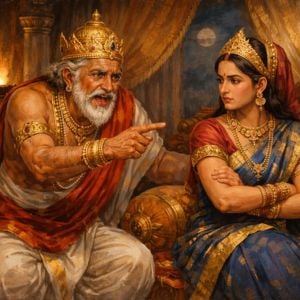
Ayodhya Kanda Sarga 13 unfolds in the silent aftermath of Kaikeyi’s terrible demand. Rama has been ordered into exile. The coronation is destroyed before it begins. In this sarga, the focus shifts inward, away from court politics and into the private chamber of King Dasharatha. What we witness here is not royal decision-making, but a father collapsing under the weight of truth, vows, and unbearable loss. This chapter captures Dasharatha’s longest night — a night of grief, regret, pleading, and helplessness — where dharma is upheld, but at a devastating personal cost.
Shloka 1
अतदर्हं महाराजं शयानमतथोचितम् ।
ययातिमिव पुण्यान्ते देवलोकात्परिच्युतम् ॥
atadarham maharajam shayanam atathochitam |
yayatim iva punyante devalokat parichyutam ||
King Dasharatha lay there in a condition unworthy of a great ruler, in a manner unbecoming of his position, like King Yayati who had fallen from the heavenly world after his merit was exhausted.
Shloka 2
अनर्थरूपा सिद्धार्था ह्यभीता भयदर्शिनी ।
पुनराकारयामास तमेव वरमङ्गना ॥
anartharupa siddhartha hyabhita bhayadarshini |
punar akarayamasa tameva varamangana ||
That queen, whose fulfilled desire had taken the form of calamity, fearless and causing fear, once again reminded him of that very boon.
Shloka 3
त्वं कथंसे महाराज सत्यवादी दृढव्रतः ।
मम चेमं वरं कस्माद्विधारयितुमिच्छसि ॥
tvam katham se maharaja satyavadi dridhavratah |
mama cheman varam kasmad vidharayitum ichchhasi ||
She said, ‘O great king, you are known as one who speaks truth and stands firm by his vows. Why then do you hesitate to grant this boon of mine?’
Shloka 4
एवमुक्तस्तु कैकेय्या राजा दशरथस्तदा ।
प्रत्युवाच ततः क्रुद्धो मुहूर्तं विह्वलन्निव ॥
evam uktastu kaikeyya raja dasharathas tada |
pratyuvacha tatah kruddho muhurtam vihvalann iva ||
Thus addressed by Kaikeyi, King Dasharatha, shaken and distressed for a moment, replied to her in anger.
Shloka 5
मृते मयि गते रामे वनं मनुजपुङ्गवे ।
हन्तानार्ये ममामित्रे सकामा सुखिनी भव ॥
mrite mayi gate rame vanam manujapungave |
hanta anarye mama amitre sakama sukhini bhava ||
‘When I am dead and Rama, the foremost among men, has gone to the forest, then, O unrighteous woman, my enemy, may you have your desire fulfilled and live happily.’
Shloka 6
स्वर्गेऽपि खलु रामस्य कुशलं दैवतैरहम् ।
प्रत्यादेशादभिहितं धारयिष्ये कथं बत ॥
svarge api khalu ramasya kushalam daivatair aham |
pratyadeshad abhihitam dharayishye katham bata ||
‘Even if the gods themselves were to assure me that Rama is safe in heaven, how could I possibly hold on to such consolation?’
Shloka 7
कैकेय्याः प्रियकामेन रामः प्रव्राजितो मया ।
यदि सत्यं ब्रवीम्येतत्तदसत्यं भविष्यति ॥
kaikeyyah priyakamen ramah pravrajito maya |
yadi satyam bravimyetat tad asatyam bhavishyati ||
‘If it were true that I sent Rama into exile merely to satisfy Kaikeyi, then my conduct would become false and unrighteous.’
Shloka 8
अपुत्रेण मया पुत्रः श्रमेण महता महान् ।
रामो लब्धो महाबाहुः स कथं त्यज्यते मया ॥
aputrena maya putrah shramena mahata mahan |
ramo labdho mahabahuh sa katham tyajyate maya ||
‘I, who once had no son, obtained this great, mighty-armed Rama after immense effort. How can I now abandon him?’
Shloka 9
शूरश्च कृतविद्यश्च जितक्रोधः क्षमापरः ।
कथं कमलपत्राक्षो मया रामो विवास्यते ॥
shurash cha kritavidyash cha jitakrodhah kshamaparah |
katham kamalapatraksho maya ramo vivasyate ||
‘How can I send into exile Rama, who is brave, learned, master of anger, forgiving, and lotus-eyed?’
Shloka 10
कथमिन्दीवरश्यामं दीर्घबाहुं महाबलम् ।
अभिराममहं रामं प्रेषयिष्यामि दण्डकान् ॥
katham indivarashyamam dirghabahum mahabalam |
abhiramam aham ramam preshayishyami dandakan ||
‘How can I send my beloved Rama, dark like the blue lotus, long-armed and immensely strong, to the Dandaka forest?’
Shloka 11
सुखानामुचितस्यैव दुःखैरनुचितस्य च ।
दुःखं नामानुपश्येयं कथं रामस्य धीमतः ॥
sukhanam uchitasyaiva duhkhair anuchitasya cha |
duhkham nama anupashyeyam katham ramasya dhimatah ||
‘How can I witness suffering in Rama, who deserves happiness and is unfit for sorrow, who is wise and discerning?’
Shloka 12
यदि दुःखमकृत्वाऽद्य मम सङ्क्रमणं भवेत् ।
अदुःखार्हस्य रामस्य ततः सुखमवाप्नुयाम् ॥
yadi duhkham akritva adya mama sankramanam bhavet |
aduhkharhasya ramasya tatah sukham avapnuyam ||
‘If my passing today could occur without causing Rama any pain, then that alone would bring me peace, for Rama does not deserve suffering.’
Shloka 13
नृशंसे पापसङ्कल्पे रामं सत्यपराक्रमम् ।
किं विप्रियेण कैकेयि प्रियं योजयसे मम ॥ १३ ॥
nrishamse paapa-sankalpe ramam satya-paraakramam |
kim vipriyena kaikeyi priyam yojayase mama || 13 ||
'O cruel woman of sinful intent, Rama is truly heroic and steadfast in truth. Kaikeyi, why are you trying to secure something pleasing for yourself by doing what is hateful to me?'
Shloka 14
अकीर्तिरतुला लोके ध्रुवः परिभवश्च मे ।
तथा विलपतस्तस्य परिभ्रमितचेतसः ॥ १४ ॥
akeertir atula loke dhruvah paribhavash cha me |
tatha vilapatas tasya paribhramita-chetasah || 14 ||
As he lamented like this, his mind reeling, he felt sure that unparalleled disgrace in the world and certain humiliation were now his.
Shloka 15
अस्तमभ्यगमत्सूर्यो रजनी चाभ्यवर्तत ।
सा त्रियामा तथaaartasya चन्द्रमण्डलमण्डिता ॥ १५ ॥
astam abhyagamat suryo rajani cha abhyavartata |
sa triyaamaa tathaa aartasya chandra-mandala-manditaa || 15 ||
The sun set and night arrived. That three-watch night, decorated by the circle of the moon, came upon him while he remained in anguish.
Shloka 16
राज्ञो विलपमानस्य न व्यभासत शर्वरी ।
तथैवोष्णं विनिश्वस्य वृद्धो दशरथो नृपः ॥ १६ ॥
raajno vilapamaanasy na vyabhaasata sharvari |
tathaiva ushnam vinishvasya vriddho dasharatho nripah || 16 ||
To the king who kept wailing, the night brought no comfort at all. The aged King Dasharatha kept breathing hot, pained sighs again and again.
Shloka 17
विललापार्तवद्दुःखं गगनासक्तलोचनः ।
न प्रभातं तयेच्छामि निशे नक्षत्रभूषणे ॥ १७ ॥
vilalaapa aartavad duhkham gaganaasakta-lochanah |
na prabhaatam taya icchhami nishe nakshatra-bhooshane || 17 ||
With eyes fixed up toward the sky, he cried out in distress, 'O night adorned with stars, I do not want dawn to come.'
Shloka 18
क्रियतां मे दया भद्रे मयaaayam रचितोऽञ्जलिः ।
अथवा गम्यतां शीघ्रं नाहमिच्छामि निर्घृणाम् ॥ १८ ॥
kriyataam me daya bhadre mayaa ayam rachito anjalih |
athavaa gamyataam sheeghram naaham ichchhami nirghrinaam || 18 ||
'O gentle one, show me mercy. I have folded my hands before you. Otherwise, go away quickly. I do not want to see a heartless woman.'
Shloka 19
नृशंसां केकयीं द्रष्टुं यत्कृते व्यसनं महत् ।
एवमुक्त्वा ततो राजा कैकेयीं सम्यताञ्जलिः ॥ १९ ॥
nrishamsaam kekayeem drashtum yat-krite vyasanam mahat |
evam uktvaa tato raja kaikeyim samyataanjalih || 19 ||
Saying he could not bear to see Kaikeyi, through whom this great calamity had come, the king then addressed Kaikeyi again, with folded hands.
Shloka 20
प्रसादयामास पुनः कैकेयीं चेदमब्रवीत् ।
साधुवृत्तस्य दीनस्य त्वद्गतस्य गतायुषः ॥ २० ॥
prasaadayamaasa punah kaikeyim chedam abraveet |
saadhu-vrittasya deenasya tvad-gatasya gataayushah || 20 ||
Once again he tried to soften Kaikeyi and said this: 'I am upright in conduct, now miserable, dependent on you, and my life is slipping away.'
Shloka 21
प्रसादः क्रियतां देवि भद्रे राज्ञो विशेषतः ।
शून्ये न खलु सुश्रोणि मयेदं समुदाहृतम् ॥ २१ ॥
prasaadah kriyataam devi bhadre raajno visheshatah |
shoonye na khalu sushroni mayedam samudaahritam || 21 ||
'O Devi, O good one, grant your favor to the king, especially now. O fair-hipped queen, I am not saying these words without reason.'
Shloka 22
कुरु साधु प्रसादं मे बाले सहृदया ह्यसि ।
प्रसीद देवि रामो मे त्वद्दत्तं राज्यमव्ययम् ॥ २२ ॥
kuru saadhu prasaadam me baale sahridayaa hyasi |
praseeda devi ramo me tvad-dattam raajyam avyayam || 22 ||
'O young one, do show me kindness, you do have a heart. Be pleased, O Devi. Let my Rama have the undiminishing kingdom that you grant.'
Shloka 23
लभतामसितापाङ्गे यशः परमवाप्नुहि ।
मम रामस्य लोकस्य गुरूणां भरतस्य च ।
प्रियमेतद्गुरुश्रोणि कुरु चारुमुखेक्षणे ॥ २३ ॥
labhataam asitaapaange yashah param avaapnuhi |
mama ramasya lokasya guroonam bharatasya cha |
priyam etad guru-shroni kuru chaaru-mukhekshane || 23 ||
'O dark-cornered-eyed one, gain renown and attain the highest fame. O noble-hipped, charming-faced queen, do what will be dear to me, to Rama, to the people, to the elders, and also to Bharata.'
Shloka 24
विशुद्धभावस्य हि दुष्टभावा
ताम्रेक्षणस्याश्रुकलस्य राज्ञः ।
श्रुत्वा विचित्रं करुणं विलापं
भर्तुर्नृशंसा न चकार वाक्यम् ॥ २४ ॥
vishuddha-bhaavasya hi dushta-bhaavaa
taamrekshanasya ashru-kalasya raajnah |
shrutvaa vichitram karunam vilaapam
bhartur nrishamsaa na chakaara vaakyam || 24 ||
Though her husband was pure-hearted, with copper-reddened eyes and tears flowing, when that cruel woman heard his strange and piteous lament, she did not speak a single word.
Shloka 25
ततः स राजा पुनरेव मूर्छितः
प्रियामदुष्टां प्रतिकूलभाषिणीम् ।
समीक्ष्य पुत्रस्य विवासनं प्रति
क्षितौ विसञ्ज्ञो निपपात दुःखितः ॥ २५ ॥
tatah sa raajaa punar eva moorchhitah
priyaam adushtaam pratikoola-bhaashineem |
sameekshya putrasya vivaasanam prati
kshitau visanjno nipapaata duhkhitah || 25 ||
Then the king fainted again. Looking at his beloved queen, who was not kindly disposed and spoke against him regarding his son’s exile, he fell on the ground unconscious, overwhelmed by grief.
Shloka 26
इतीव राज्ञो व्यथितस्य सा निशा
जगाम घोरं श्वसतो मनस्विनः ।
विबोध्यमानः प्रतिबोधनं तदा
निवारयामास स राजसत्तमः ॥ २६ ॥
itee va raajno vyathitasya saa nishaa
jagaama ghoram shvasato manasvinah |
vibodhyamaanah pratibodhanam tadaa
nivaarayaamaasa sa raaja-sattamah || 26 ||
Thus that night passed terribly for the tormented king, the high-minded ruler who kept heaving heavy breaths. When people tried to wake him and bring him back to awareness, that best of kings kept resisting their attempts.
1. What is the emotional core of this chapter?
This is pure dad grief. Dasharatha is wrecked. Hes not just sad — he's in despair, feeling like he's been cast down from dignity itself. He's replaying every happy memory of Rama and cant make sense of how Kaikeyi’s demand could actually be true. He's literally seeing his world collapse. This is raw human pain, not some polished bhakti moment yet.
2. Why does Dasharatha question Kaikeyi so sharply?
Because he genuinely believed in her goodness. He trusted her. And that trust gets shattered here. This isn't just political fallout, its a betrayal of personal faith. He's asking bluntly: ‘How could you, who were supposed to be virtuous, do this to me and to Rama?’ Its like a father trying to understand a blow he cant wrap his head around.
3. Does this sarga tell us anything about Rama’s character?
Indirectly, yes. Dasharatha’s anguish is rooted in the fact that Rama is virtuous, strong, wise, and beloved by all — a son no king should have to send away. All the nice qualities Dasharatha lists about Rama tell you just how rare and precious Rama is to him. If this were any ordinary prince, the king wouldn't be this devastated. Rama’s greatness is felt even in his absence.
4. If you were in Dasharatha’s place, what would you take away from this chapter?
Be honest — this hits close to home. We all feel powerless in the face of cruel turns of fate. The takeaway is not to pretend sorrow isn't real. Dasharatha doesn't hide it; he expresses it fully. That lets him grieve. And human grief, when acknowledged, eventually leads to acceptance and growth. Rama’s journey will test Dasharatha further, but this is the necessary storm before peace.





English
Ramayana
Click on any topic to open
7
30
Astrology
Bhagavad Gita
Bhagavatam
Bharat Matha
Devi
Devi Mahatmyam
Ganapathy
Garuda Puranam
Glory of Venkatesha
Hanuman
Kathopanishad
Mahabharatam
Mantra Shastra
Mystique
Practical Wisdom
Purana Stories
Radhe Radhe
Ramayana
Rare Topics
Rigveda Explained
Rituals
Sages and Saints
Shiva
Spiritual books
Sri Suktam
Story of Sri Yantra
Temples
Vedas
Vishnu Sahasranama
Yoga Vasishta
26
17
10
0


