Contents of the Mahabharata
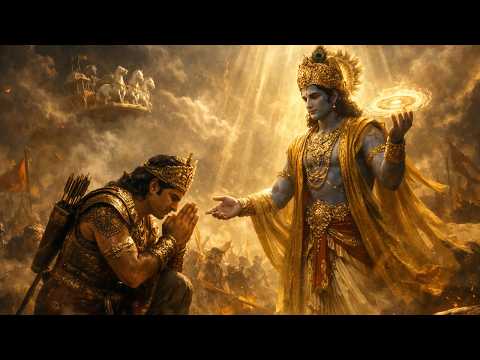
The Mahabharata is divided into eighteen parts called parvas.
- Adi Parva – It begins with the story of the snake sacrifice at Takshashila. There, Sauti Ugrashravas hears the Mahabharata story from Vaishampayana and later narrates it to the sages at Naimisharanya. It covers the history of the Bhrigu and Kuru dynasties, the birth and childhood of the Pandavas, and the beginning of Duryodhana’s hatred towards them.
- Sabha Parva – Describes the building of Indraprastha for the Pandavas, the Rajasuya yajna performed by Yudhishthira, his rule, the game of dice, and the Pandavas' loss.
- Vana Parva – The Pandavas live in the forest for twelve years after losing the dice game.
- Virata Parva – The Pandavas live incognito in the kingdom of Virata. Arjuna defeats the Kauravas alone when they try to steal Virata’s cattle.
- Udyoga Parva – Peace efforts fail. Preparations for war begin.
- Bhishma Parva – The Kurukshetra war begins under Bhishma's command. This parva includes the Bhagavad Gita.
- Drona Parva – The war continues under Dronacharya’s leadership.
- Karna Parva – Karna takes command of the Kaurava army.
- Shalya Parva – Shalya leads the Kauravas. Duryodhana is killed. The war ends.
- Sauptika Parva – Ashwatthama kills most of the remaining warriors on the Pandava side while they are asleep. Only seven Pandavas survive. Only three Kauravas remain.
- Stri Parva – The women mourn the dead. Gandhari curses Krishna.
- Shanti Parva – Yudhishthira is crowned king. Bhishma gives him guidance on ruling.
- Anushasana Parva – Bhishma continues his advice. Eventually, he gives up his life.
- Ashwamedhika Parva – Yudhishthira performs the Ashwamedha Yajna. Arjuna conquers all regions. Includes the Anugita.
- Ashramavasika Parva – Dhritarashtra, Vidura, Gandhari, and Kunti live in a Himalayan ashram and pass away there.
- Mausala Parva – The Yadava dynasty is destroyed completely.
- Mahaprasthanika Parva – The Pandavas and Draupadi begin their final journey toward the Himalayas. All except Yudhishthira fall along the way.
- Swargarohana Parva – Yudhishthira reaches heaven in his body; the others attain heaven in their spiritual forms.
Harivamsa – This is considered an appendix (khila parva) to the Mahabharata. It describes the life and deeds of Krishna.
- What is the deeper purpose of dividing the Mahabharata into eighteen parvas ?
The eighteen parvas show that human life itself passes through many stages such as birth, growth, struggle, temptation, loss, wisdom, renunciation, and liberation. The structure teaches that dharma is tested repeatedly and understanding develops gradually rather than suddenly. - Why does the Mahabharata begin with the narration at Naimisharanya instead of directly starting the war story ?
The beginning reminds us that knowledge survives through listening, remembrance, and tradition. It shows that truth is preserved by seekers and sages, indicating that wisdom is more important than events themselves. - What hidden lesson is contained in the dice game described in Sabha Parva ?
The dice game reveals that even righteous people may fall when attachment and pride cloud judgment. It teaches that adharma often enters life quietly through weakness rather than open evil. - Why is the forest exile in Vana Parva spiritually important for the Pandavas ?
The exile represents inner purification. Away from power and comfort, the Pandavas gain patience, discipline, and spiritual strength, showing that suffering can become a path toward wisdom. - What deeper meaning lies in the incognito life during Virata Parva ?
Living without identity teaches humility. Great individuals must sometimes hide their greatness to overcome destiny, reminding us that true strength does not depend on recognition. - Why do peace efforts fail in Udyoga Parva despite sincere attempts ?
This shows that when greed and ego dominate the mind, even divine guidance cannot prevent conflict. Dharma offers opportunities for peace, but human choice determines the outcome. - What makes Bhishma Parva and the Bhagavad Gita the spiritual center of the Mahabharata ?
The battlefield becomes a place of inner awakening. The teaching reveals that life itself is a field of duty where action must be guided by wisdom rather than attachment to results. - What mysterious truth is revealed through the deaths of great warriors in later war parvas ?
The fall of powerful heroes shows that skill, strength, and fame cannot protect anyone from time. The Mahabharata teaches that moral choices shape destiny more than power. - Why is mourning emphasized in Stri Parva after victory is achieved ?
The sorrow of women reveals that war never produces true winners. It reminds humanity that violence destroys families and society, making compassion an essential principle of dharma. - What is the ultimate message conveyed through the final journey and ascent to heaven ?
The Mahaprasthanika and Swargarohana Parvas teach that worldly success ends, but righteousness accompanies the soul. Yudhishthira reaching heaven with his body symbolizes the triumph of truth, integrity, and unwavering dharma over all temporary achievements.





English
Mahabharatam
Click on any topic to open
7
30
Astrology
Bhagavad Gita
Bhagavatam
Bharat Matha
Devi
Devi Mahatmyam
Ganapathy
Garuda Puranam
Glory of Venkatesha
Hanuman
Kathopanishad
Mahabharatam
Mantra Shastra
Mystique
Practical Wisdom
Purana Stories
Radhe Radhe
Ramayana
Rare Topics
Rigveda Explained
Rituals
Sages and Saints
Shiva
Spiritual books
Sri Suktam
Story of Sri Yantra
Temples
Vedas
Vishnu Sahasranama
Yoga Vasishta
26
17
10
0
Copyright © 2026 | Vedadhara | All Rights Reserved. | Designed & Developed by Claps and Whistles


