Children Have a Knack for Getting Into Trouble
The purpose of Vairagya prakarana of Yoga Vasishta is to make you aware of the triviality of so many things that we give over-importance in life. To free the mind of raga or passion.
We say she is passionate about her work. But passion is not good for the mind. It may be good for the work or output of the work. But for the mind it is not good. Because it leaves you open to so many dangers. If your work does not come out well you are disappointed. If your work is not appreciated you will get disappointed, sad. This is the problem with passion, attachment.
As Geetha says, do your work very well for the sake of doing it well, not for anything else. You should be concentrating in the process. If you are going to make a pointing focus in the process of the painting, not on the output. Naturally, if you do the work well, the output also will be good. But your focus should be in the process, not in the result. This is for the sake of your mental health.
This is what Lord Rama is teaching us through Vairagya prakarana. By calling the bluff of so many misconception we have about everything. Unless the disease is diagnosed, it can not be cured. Lord is identifying why we are miserable so that a cure can be thought about. So, understand this clearly Vairagya prakarana is not about painting a negative picture about life.
Now we are discussing about infancy and childhood. People say childhood is a period of happiness, whereas it is not so in reality. Several aspects of childhood we have already covered in the earlier episodes.
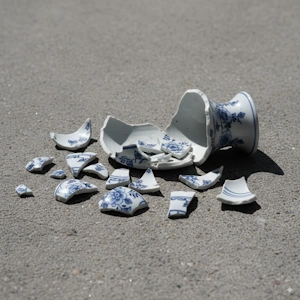
A child has a knack for falling into trouble. It is like there is something inside the child that pushes him towards trouble. Food getting stuck in the throat, slipping and falling, crossing the road without paying attention, falling from height, consuming poisonous stuff. A child will be the first one in the house to catch a flu. These are all built into the child. Getting himself bruised, cut, burned.
A child takes everything very seriously. A doll for the child is a living being. Even if a stranger calls him, come here, he will go rushing. And land in trouble. Because of all these the child gets scolded throughout the day.
Is this the happy period in life that people are talking about?
The child does a lot of things throughout the day. All futile things, they don't produce any results. And throughout these actions, while doing all these, he is inviting trouble for himself. Either as physical danger or as scolding from elders. Every excitement in the child's mind, finally they all turn into sadness.
In fact, those who say that childhood is blissful, that a child can be made happy — it looks like they have some hidden agenda, probably a business interest. They will show you blissful faces of children, make you buy toys, join some activity class.
But what is happening to the child? The same toy will turn into a cause of worry for the child. Why are you biting the toy? Why didn’t you take care of it? See, you have broken it. Scolding.
Who is getting happy here?
Activity class. We spend so much money on you. You don’t have interest. See how the other children are doing. They are getting prizes. You don’t stay put in one thing. The child won’t.
Because the fickle-mindedness of the child is 10 times that of an adult. And the Lord is pointing out that this is because it is put there that way, because the nature wants childhood to be miserable.
Mind going from one thing to another is bad even for adults. Today you want to be at one place. Then you are not happy. You want to move to another city. Today you are doing one job, you don’t like it, you want to do another job, get into another profession. Doctor is not happy with what he is doing, he wants to be a singer. A singer wants a govt job. This is fickle-mindedness, what you call चञ्चलता of mind.
This is cause of unhappiness for everyone. And this is 10 times more in children compared to adult. That is why a child has all the more reasons to be unhappy.
During childhood the fickle-mindedness is so much that the Lord is comparing this to the behaviour of a dog. Give him a little bit, he will wag his tail. Hurt him a little bit, he will not tolerate, he will bite you. This is how the mind of the child also is.
Is this praise-worthy?
Lord is asking Sage Vishwamitra.
-
Many things we obsess over in life are trivial; detachment helps clear mental clutter.
-
Passion may improve your output, but it disturbs inner calm and increases emotional vulnerability.
-
Attachment to results leads to disappointment; focusing on the process keeps the mind stable.
-
Action done with calm concentration builds resilience, while chasing outcomes weakens the mind.
-
Emotional pain arises not from failure itself, but from the expectation of recognition or success.
-
True mental health demands that work be done for its own sake, without personal obsession.
-
Misconceptions about life need to be exposed before peace can be attained.
-
Childhood is wrongly idealized; it is filled with anxiety, danger, and confusion.
-
Children constantly fall into trouble, not due to fault but due to innate vulnerability.
-
From choking hazards to accidents and illnesses, a child’s environment is full of risk.
-
Children take minor things seriously, treating toys like people, which heightens emotional swings.
-
They trust strangers easily, putting themselves in danger without awareness.
-
Most of a child’s daily efforts yield no real outcome, yet attract scolding or harm.
-
What excites them quickly turns into sadness; the emotional curve is steep and unstable.
-
Marketing often exploits fake joy in children to sell toys and activities, ignoring real stress.
-
Toys and activity classes become sources of pressure, not happiness, due to adult expectations.
-
Children are 10 times more fickle than adults, shifting focus constantly and suffering for it.
-
Even adults suffer from restless desires; in children this instability is far more intense.
-
This mental restlessness or 'chanchalata' makes even small joys short-lived and pain frequent.
-
A child’s mind reacts like a dog — excited by praise, aggressive at rejection — showing instability.
What does it mean to be detached in life?
To be detached means recognizing that many things we cling to are not worth the emotional toll they take. It frees the mind from craving and fear, allowing calm thought and balanced action.
How can I know if I’m giving something too much importance?
If your mood rises or falls sharply based on outcomes or praise, you're likely attached. Ask yourself: would this matter ten years from now? If not, it's probably trivial.
Isn't caring about things essential for motivation?
Caring is useful, but obsession harms. You can do excellent work without letting it define your worth. Obsession traps the mind; dedication frees it.
Why is passion a danger to mental peace?
Passion creates emotional dependency on outcomes. If results don’t meet expectations, the mind suffers. It shifts your energy from calm focus to unstable craving.
Why is everyone glorifying passion if it's harmful?
Because it drives productivity. Society values outcomes, not inner peace. But what helps factories run isn't always good for the soul.
Isn't passion what makes life meaningful?
Meaning comes from depth, not excitement. Passion burns fast; steadiness endures. Passion without clarity leads to burnout, not fulfillment.
Why should we focus on the process, not the result?
Because you control the effort, not the outcome. Staying rooted in the process keeps the mind peaceful and alert. It also improves quality naturally.
Can doing work for its own sake really satisfy us?
Yes. It builds self-respect, patience, and flow. Results then become bonuses, not burdens.
But don't we work for results — money, praise, success?
Yes, but clinging to them causes anxiety. Ironically, when you stop chasing and focus, success comes more easily — without costing your peace.
What’s wrong with idealizing childhood?
It hides the truth. Children face confusion, fear, accidents, emotional instability — far from the bliss people assume. It’s often a chaotic stage of life.
Why do people think childhood is joyful then?
Nostalgia distorts memory. Adults forget the helplessness and only remember the lack of responsibility.
Isn’t it cruel to say childhood is not happy?
No, it’s honest. Romanticizing suffering blocks real understanding. Recognizing reality helps us raise children with empathy, not unrealistic standards.
How is a child's life full of danger?
Children lack awareness of risks. Their actions — crossing roads, eating unsafe items, trusting strangers — often lead to harm despite their innocence.
Why are children more prone to illness and accidents?
Their bodies and minds are still forming. Immunity is low, coordination is poor, and judgment is absent.
Shouldn’t we just protect them better then?
We should, but nature has built this vulnerability into the stage. It’s part of the learning curve, not entirely avoidable.
Why are children scolded so much?
Because they act impulsively, unaware of consequences. Their curious actions often end in damage or danger, triggering adult reactions.
Can’t we just teach them calmly?
In theory, yes. But adults too are tired, impatient, and expect maturity too soon. The mismatch creates friction.
Isn’t it the child’s fault for misbehaving?
No. Most of it is built into their nature. They don’t yet have the mental wiring for consistent behavior.
Why is children’s happiness so fragile?
Because their minds treat everything as extreme. A broken toy feels like the end of the world. Excitement easily flips into tears.
How can toys and activities cause stress?
When adults link them with performance, judgment, or comparison, they stop being fun. The child feels pressure instead of joy.
Isn’t buying toys and classes for kids a form of love?
It is, but love without understanding causes harm. If the gift comes with expectations, it becomes a burden.
What is chanchalata and why is it a problem?
Chanchalata means fickle-mindedness — jumping from one desire to another. It prevents satisfaction, because nothing feels enough.
Why do children change interests so often?
Their minds are raw and rapidly evolving. What excites them today bores them tomorrow. It’s part of cognitive growth.
Can’t we just let them follow their changing whims?
Freedom is good, but without boundaries, it leads to confusion. Teaching steadiness early builds emotional strength.
How does the child’s mind behave like a dog?
The child reacts instantly — excited by a little attention, hurt by small slights. There’s little stability, much like a pet reacting on impulse.
Why compare a child’s mind to an animal’s?
Not to insult, but to highlight instinctive behavior. Unlike adults, a child hasn’t yet developed filters or emotional regulation.
Isn’t it unfair to blame the child for this nature?
It’s not blame — it’s observation. Once we see it clearly, we can respond with patience instead of unrealistic praise.






English
Yoga Vasishta
Click on any topic to open
7
30
Astrology
Bhagavad Gita
Bhagavatam
Bharat Matha
Devi
Devi Mahatmyam
Ganapathy
Garuda Puranam
Glory of Venkatesha
Hanuman
Kathopanishad
Mahabharatam
Mantra Shastra
Mystique
Practical Wisdom
Purana Stories
Radhe Radhe
Ramayana
Rare Topics
Rigveda Explained
Rituals
Sages and Saints
Shiva
Spiritual books
Sri Suktam
Story of Sri Yantra
Temples
Vedas
Vishnu Sahasranama
Yoga Vasishta
26
17
10
0


