Agni Vidya: The Concept of Energy in the Vedas
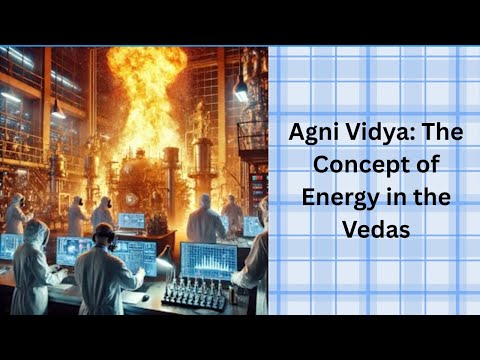
Energy is a fundamental concept in both Vedic philosophy and modern science. The Vedas contain numerous references to Agni (fire), which represents energy in various forms. This article explores the concept of Agni Vidya as described in the Vedas, its connection to modern physics, and the principles governing energy transformation.
Agni and Energy in the Vedas
The four Vedas contain hundreds of mantras related to Agni, describing its qualities, nature, functions, and vast presence. In modern science, energy is studied in various forms such as force, motion, heat, sound, light, magnetism, electricity, and nuclear energy. Many of these aspects are inherently linked to Agni Vidya in the Vedic texts.
The Eternal Nature of Energy
A fundamental law of modern physics states: 'Energy can neither be created nor destroyed; it can only be transformed from one form to another.' This concept aligns with Vedic teachings, where Agni is considered the eternal representative of energy. The study of Agni in the Vedas is essentially the study of energy transformation and conservation.
The Yajurveda affirms the indestructibility of energy:
- 'Agni is placed as immortal among mortals.' (Yajurveda 12.24)
- 'Agni became immortal by its potential (energy).' (Yajurveda 12.25)
Transformation of Energy
The Vedas state that Agni (energy) is singular in essence but takes on multiple forms through transformation. This leads to different manifestations of energy, each with its unique characteristics and functions.
- Since energy has the ability to create and sustain, it is called Vishwakarma (universal creator).
- Due to its ability to assume different forms, it is referred to as Pururupa (many-formed).
- Since energy exists in multiple manifestations such as sound, light, heat, and motion, it is termed Vishwarupa (universal form).
- Energy often moves in clusters, and hence it is described as Sanhat (aggregated form).
Supporting Vedic References:
- 'Among the gods, it is one, though known by many names.' (Rigveda 10.82.3)
- 'O Agni, you have a hundred forms.' (Rigveda 2.2.9)
- 'It is vast and possesses universal forms.' (Rigveda 3.1.7)
Energy as a Concentrated Force
In the Vedic texts, energy is often measured in terms of its intensity, described using numerical values such as hundreds and thousands of horsepower. Agni is referred to as:
- Shatin (100 horsepower)
- Sahasrin (1000 horsepower)
- Urjapati (lord of energy)
- Sahasah Sunuh (son of power)
Supporting Vedic References:
- 'O Agni, you have a hundred forms.' (Rigveda 2.2.9)
- 'O Agni, grant vast and thousandfold energy.' (Rigveda 2.2.7)
- 'O son of power, lord of energy.' (Rigveda 8.19.7)
Gavishti and Ashwamishti: Technical Terms for Energy Studies
The Vedas contain technical terms related to energy analysis. Two important concepts are:
- Gavishti: Derived from 'Go' (sun rays) and 'Ishti' (sacrifice), this term refers to the study and analysis of solar energy.
- Ashwamishti: Derived from 'Ashwa' (horse) and 'Ishti' (sacrifice), this term signifies the measurement of energy in terms of horsepower. Modern science defines one horsepower (H.P.) as 745.7 watts per second, a concept similar to the Vedic Ashwamishti.
Supporting Vedic References:
- 'O Indra, for Gavishti and Ashwamishti.' (Rigveda 8.61.7)
- 'O Agni, for Ashwamishti.' (Rigveda 2.6.2)
Q1. What does it really mean to say Agni in the Vedas is energy?
A: It means Agni is not just campfire flame or havan kund smoke. When the Vedas say Agni, they are talking about the underlying power behind heat, light, motion, transformation, digestion, thought, even spiritual illumination. Modern physics splits this into labels like thermal, kinetic, electrical, nuclear. Vedic seers pack all of that into one living principle called Agni.
Q2. How does the law of conservation of energy connect to Agni Vidya?
A: Physics says: energy cannot be created or destroyed, only transformed. Yajurveda says: Agni is immortal among mortals and becomes immortal by its shakti. In other words, forms die, carriers perish, systems collapse, but the energy that moved through them does not vanish. Vedic thought already treats Agni as an eternal continuum that just keeps changing appearances.
Q3. Why do the Vedas say energy is one but many formed (Vishwakarma, Pururupa, Vishwarupa)?
A: Because at the base there is one continuous energy field, but in expression it looks like sound here, heat there, light elsewhere, life in one place, thunder in another. Vishwakarma says this energy creates and structures the universe. Pururupa says it takes many forms. Vishwarupa says those forms fill everything. Same thing modern physics struggles with when it talks about unified fields and many manifestations.
Q4. Why call Agni Vishwakarma, the universal creator?
A: Creation is basically structured energy. Galaxies, atoms, bodies, brains all are arrangements of energy. When Veda calls Agni Vishwakarma, it is saying: this one energy is both the builder and the building material. Everything that appears solid or alive is energy in a particular configuration. The rishis treat Agni not as a symbol but as the architect-principle behind forms.
Q5. What is the significance of calling Agni Shatin, Sahasrin, Urjapati, Sahasah Sunuh?
A: These are not just poetic compliments; they are an early language of measurement. Shatin and Sahasrin point to hundredfold and thousandfold intensities, very similar to how we talk today in horsepower or watts. Urjapati and Sahasah Sunuh underline that Agni is the lord and child of power, the core reference point whenever you talk about strength, force, capacity.
Q6. What are Gavishti and Ashwamishti in simple terms?
A: Think of them as Vedic research tags. Gavishti = study of solar energy (go = rays, ishti = focused ritual/work). Ashwamishti = study and measurement of muscular or mechanical energy in horse power (ashwa = dynamic power). When modern physics says 1 HP = 745.7 watts, it is doing in formulas what the Veda hints at conceptually with Ashwamishti: quantifying work capacity of energy.
Q7. How is Agni Vidya more than just ancient proto physics?
A: Because it does not stop at external energy. It goes all the way to inner fire. The same Agni that burns in stars burns in your metabolism, your nerve impulses, your resolve, your tapas, your clarity in meditation. Modern physics tracks energy in systems; Agni Vidya tracks energy in both cosmos and consciousness. It joins science and sadhana in one framework.
Q8. Why is it important that the Veda says Agni is one among the gods, known by many names?
A: That line is a warning against fragmentation. We love to separate: this is physical, that is spiritual, this is material, that is divine. The rishi is saying: the powers you worship separately are expressions of one base reality. In scientific language, different forces may be modes of a single field. In spiritual language, different devatas are faces of the same Agni shakti.
Q9. What does this Vedic view of energy change in how I look at my daily life?
A: You stop seeing energy as a dead resource and start seeing it as sacred presence. Electricity, sunlight, food, enthusiasm, focus none of these are random utilities; all are Agni showing up in different forms. Wasting energy, abusing it, or dulling it in yourself becomes a kind of adharma. Honouring and refining it becomes a form of worship.
Q10. How does Agni Vidya guide the way we use technology and power today?
A: If energy is just fuel, we exploit it till collapse. If energy is Agni, we handle it with responsibility and reverence. The Vedic lens pushes you to ask: Is this way of using energy aligned with rita (cosmic order) or not? Nuclear, digital, solar, bio all these are higher octaves of Agni. The question is not just can we do it, but are we using this shakti in a dharmic direction.
Q11. What is the spiritual takeaway from saying energy is eternal and indestructible?
A: That nothing really ends; it only changes mode. The fire of your actions, thoughts, and emotions goes somewhere. It transforms, imprints, and returns as environment, karmic pattern, samskara. You are constantly shaping the field through the way you use your own Agni. That makes every choice significant without making life gloomy.
Q12. If I want to live Agni Vidya, where do I start?
A: Start with three recognitions:
-
Outer energy is sacred, handle it with care.
-
Inner energy (health, focus, will, enthusiasm) is Agni; dont dull it with tamasic habits.
-
Linking both through yajna attitude what I receive as energy, I return as service, work, worship.
That alignment puts you in tune with what the rishis saw: one blazing Agni behind physics and prayer both.





English
Vedas
Click on any topic to open
7
30
Astrology
Bhagavad Gita
Bhagavatam
Bharat Matha
Devi
Devi Mahatmyam
Ganapathy
Garuda Puranam
Glory of Venkatesha
Hanuman
Kathopanishad
Mahabharatam
Mantra Shastra
Mystique
Practical Wisdom
Purana Stories
Radhe Radhe
Ramayana
Rare Topics
Rigveda Explained
Rituals
Sages and Saints
Shiva
Spiritual books
Sri Suktam
Story of Sri Yantra
Temples
Vedas
Vishnu Sahasranama
Yoga Vasishta
26
17
10
0


