A Divine Lullaby
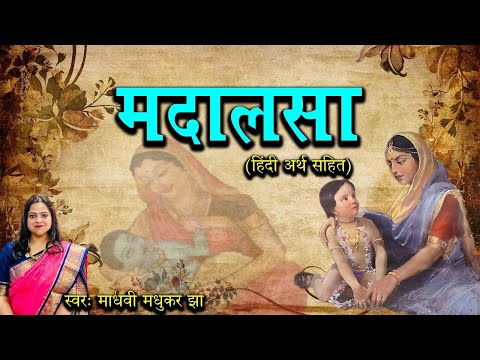
Maadalasa Upadesha is one of the most beautiful and powerful teachings in Indian literature — a mother’s gentle wisdom to her newborn son. It appears in the Markandeya Purana, and it’s the advice of Queen Madalasa, the wife of King Ritadhwaja (also known as Shatrujit), and mother of four sons.
And here's the twist — instead of filling her child’s head with ambitions, achievements, and anxieties, Madalasa sings to him about detachment, inner peace, and the illusory nature of the world.
शुद्धोऽसि बुद्धोऽसि निरञ्जनोऽसि
संसारमायापरिवर्जितोऽसि ।
संसारस्वप्नं त्यज मोहनिद्रां
मन्दालसोल्लापमुवाच पुत्रम् ॥
With the softness of a mother’s touch and the stillness of realized wisdom,
Queen Madalasa cradled her infant,
her voice like the low murmur of a sacred river.
‘You are pure, my child—untouched by sin or sorrow.
You are awakened—though your eyes may still be closed.
You are without blemish, without shadow, untouched by this world’s painted illusions.’
She did not sing of toys, nor of kingship,
but of truth.
‘Give up this dream, child—this world is a passing flicker.
Shake off the sleep of delusion, for you are not this body,
nor the fleeting roles it plays.
You are the light behind the play.’
So sang Madalasa—
not to rock her child into deeper sleep,
but to awaken the eternal soul within him.
A lullaby not of forgetfulness,
but of remembrance.
शुद्धोऽसि रे तात न तेऽस्ति नाम
कृतं हि तत्कल्पनयाधुनैव।
पञ्चात्मकं देहमिदं न तेऽस्ति
नैवास्य त्वं रोदिषि कस्य हेतोः॥
‘O my little one…
You are pure, untouched by name or form.
This name they’ve given you — this sound stitched into language —
it is a moment’s illusion, born of passing thought.’
Madalasa does not adorn her child with dreams of greatness.
Instead, she unrobes every illusion with the silk of truth.
‘This body, made of five elements—earth, water, fire, air, and space—
is not you.
You merely dwell within it like light in a lamp.
And so, my child, why do you cry?
Whose pain is it?
What grief can truly reach you?’
The mother does not hush his cries with comfort—
she lifts him beyond sorrow altogether.
A lullaby that doesn’t dull the pain,
but shows there was no pain to begin with.
न वै भवान् रोदिति विश्वजन्मा
शब्दोऽयमासाद्य महीशसूनुम्।
विकल्प्यमानो विविधैर्गुणैस्ते
गुणाश्च भौताः सकलेन्द्रियेषु॥
‘You do not cry, O child…
You, the very source of the universe,
the womb from which all worlds arise—
how can you weep?’
What we hear, my son, is not your sorrow—
it is only a sound,
rising upon the meeting of body and breath.
‘You are the Self, not the stirrings of this flesh.
What you think is emotion, what you feel as discomfort—
are but flickers of the senses,
born of elements, dancing in the web of gunas.’
The cry is not yours, my son—
it belongs to the body, to nature, to illusion.
You are the sky that watches all clouds,
untouched, unmoved, unshaken.
Thus does Madalasa sing—
not to soothe the senses,
but to free the soul.
भूतानि भूतैः परिदुर्बलानि
वृद्धिं समायान्ति यथेह पुंसः।
अन्नाम्बुपानादिभिरेव तस्मात्
न तेऽस्ति वृद्धिर्न च तेऽस्ति हानिः॥
‘All beings, my son, are made of elements—
and these frail bodies they carry
grow only by feeding on other elements.
The flesh fattens on food,
the strength blooms from water and grain,
just as a tree drinks the earth to rise.’
But you—
you are not this body.
‘So where is growth for you?
Where is decline?
Neither hunger nor nourishment belongs to you,
O one untouched by change.’
You are the silent witness,
neither increased by offerings,
nor diminished by loss.
Thus sings Madalasa—
a lullaby that frees the child from time itself.
Not to make him strong,
but to remind him:
He was never weak.
त्वं कञ्चुके शीर्यमाणो निजेस्मिन्
तस्मिन्देहे मूढतां मा व्रजेथाः।
शुभाशुभैः कर्मभिर्देहमेतन्
मृदादिभिः कञ्चुकस्ते पिनद्धः॥
‘O my child, do not fall into delusion—
this body you wear is but a garment,
a sheath that is already fading,
a robe woven from dust and time.’
Do not mistake the crumbling cloth
for the eternal flame within.
This body, born of clay and karma,
stitched by actions—both pure and impure—
is your outer casing, not your essence.
‘You are not what ages,
you are not what decays.’
Just as one discards a worn-out cloak,
so shall this body fall away.
But you, untouched, shall remain—
like the sun behind torn clouds.
Thus sings Madalasa,
not to trap her child in worldly dreams,
but to awaken him beyond the cage of flesh.
तातेति किञ्चित्तनयेति किञ्चित्
दंवेति किञ्चिद्दयितेति किञ्चित्।
ममेति किञ्चिन्न ममेति किञ्चित्
त्वं भूतसङ्घं बहु मा नयेथाः॥
‘He is my father… you are my son…
this one is my husband… that one, my beloved…’
All these are just echoes in the dream of names,
little sounds caught in the tongue of illusion.
‘Mine… not mine… for me… against me…’
Such are the tangled threads
that bind the soul to the wheel of becoming.
But you, my child,
you are not this tangle.
‘Do not drag your true Self down
into this bundle of bones, senses, and shifting roles.’
This body is a gathering of elements—
you are not the gathering.
You are the light watching it gather and fall apart.
Thus sings Madalasa—
not with fear or warning,
but with the fierce love of truth.
सुखानि दुःखोपशमाय भोगान्
सुखाय जानाति विमूढचेताः।
तान्येव दुःखानि पुनः सुखानि
जानाति विद्वानविमूढचेताः॥
‘The fool believes pleasure is happiness,
and chases comforts to escape sorrow—
thinking each indulgence will bring bliss everlasting.’
But the wise one…
he sees through the veil.
He knows:
the very pleasures that soothe pain
soon become the source of deeper pain.
The sweet turns bitter,
the relief becomes dependence,
and the smile turns hollow.
Only the one who is not deluded—
who watches the rising and falling waves
without jumping in—
knows that what the world calls joy
is often just a disguised ache.
So sings Madalasa—
teaching her child to recognize the difference
between the sugar of illusion
and the stillness of truth.
हासोऽस्थिसन्दर्शनमक्षियुग्मम्
अत्युज्ज्वलं तत्कलुषं वसायाः।
कुचादि पीनं पिशितः धनं तत्
स्थानं रतेः किं नरको न योषित्॥
Explanation (Divya Rasa Vachanam style, as Madalasa’s lullaby):
‘That smile you admire is but a glimpse of bone beneath the skin.
Those radiant eyes—
are simply flesh framed in watery spheres.
The beauty that dazzles,
the skin that tempts—
it is nothing but fat, blood, and decay clothed in illusion.’
O child,
Do not be fooled by curves and fragrance,
by softness and charm.
Even the woman’s form—praised, adorned, chased—
when clung to with craving,
becomes a snare.
If lust alone drives your gaze,
then what is woman but a living hell for the soul asleep in desire?
But Madalasa does not shame women—
she speaks only of the delusion
that mistakes flesh for fulfillment,
and passion for permanence.
She sings not to scorn the world,
but to strip it bare—
so her son may know truth, not just temptation.
यानं क्षितौतत्र गतश्च देहो
देहेऽपि चान्यः पुरुषो निविष्ठः।
ममत्वमुर्व्यां न यथा तथास्मिन्
देहेति मात्रं बत मूढतैषा॥
‘Just as a cart moves upon the earth,
this body too travels,
but the one who moves is not the cart.’
So too, my child,
you are not this body.
You are the Purusha—the indwelling spirit,
not the clay-formed shell you now wear.
We never say, ‘This land is me.’
We live on it, walk upon it—
yet we do not claim it as self.
Why then, O child, do we say, ‘This body is me’?
That is the folly.
That is the spell.
That is the ignorance Madalasa seeks to break.
She does not curse the body—
but she teaches her child
to know the difference
between the vehicle and the rider.






Children's Section
Parenting
Click on any topic to open
7
30
Astrology
Bhagavad Gita
Bhagavatam
Bharat Matha
Devi
Devi Mahatmyam
Ganapathy
Garuda Puranam
Glory of Venkatesha
Hanuman
Kathopanishad
Mahabharatam
Mantra Shastra
Mystique
Practical Wisdom
Purana Stories
Radhe Radhe
Ramayana
Rare Topics
Rigveda Explained
Rituals
Sages and Saints
Shiva
Spiritual books
Sri Suktam
Story of Sri Yantra
Temples
Vedas
Vishnu Sahasranama
Yoga Vasishta
26
17
10
0


