Yoga is More Than Physical Exercise
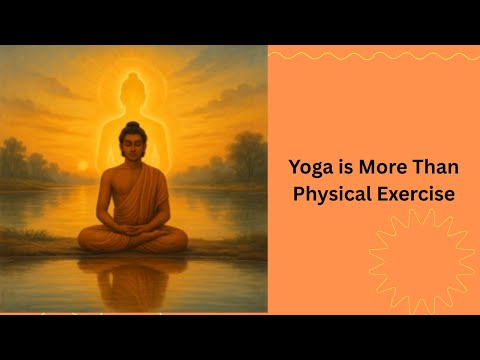
Many people today think yoga means doing stretching exercises, bending the body into different shapes, and keeping fit. In every park and fitness centre, we see groups of people doing asanas. While this is good for the body, it is only one small part of what yoga really is.
The word yoga comes from the Sanskrit root yuj, which means ‘to join’ or ‘to unite’. True yoga is the union of the individual self (Atman) with the universal reality (Brahman). This is not just about moving the body but about disciplining the mind and awakening the spirit.
Patanjali, the ancient sage who compiled the Yoga Sutras, explained yoga as an eight-limbed path called Ashtanga Yoga. The eight limbs are:
-
Yama – moral principles like truth, non-violence, honesty, and self-control.
-
Niyama – personal observances such as cleanliness, contentment, self-study, and surrender to the divine.
-
Asana – physical postures that make the body strong and steady so the mind can remain calm.
-
Pranayama – regulation of breath, which connects the body and the mind.
-
Pratyahara – withdrawal of the senses from outside distractions.
-
Dharana – concentration on one object or thought.
-
Dhyana – meditation, where the mind becomes peaceful and steady.
-
Samadhi – the state of oneness with the divine, the final goal of yoga.
As you can see, asana is only the third step. It prepares the body to go further. Yoga is not limited to physical movements. It teaches us how to live, how to think, and how to reach inner peace.
The first two limbs, yama and niyama, build the foundation. Without moral discipline and personal purity, yoga becomes just exercise. Pranayama and pratyahara help us gain control over the breath and the senses. Only then can the mind become strong enough for dharana and dhyana, leading finally to samadhi, the highest state of awareness.
Many people today focus only on the physical aspect because it gives quick results. It helps with health, flexibility, and stress relief. These benefits are valuable, but if we stop there, we miss yoga’s deeper meaning. The real purpose of yoga is self-transformation.
Sri Aurobindo, a great Indian thinker, explained that yoga is not a set of exercises but a method for complete growth — of body, mind, and soul. He described it as a process that changes human life into divine life. Through yoga, a person learns to live consciously, with balance, awareness, and inner strength.
When yoga is understood in this complete way, it becomes a way of living, not a session on a mat. It teaches patience, self-control, and compassion. It helps us handle emotions, overcome fear, and reduce attachment.
In short, yoga is both physical and spiritual. The postures are just the doorway. Behind them lies a path that leads to peace and liberation (moksha). Practicing yoga with this understanding turns every breath, every thought, and every action into a step toward higher awareness.






English
Rare Topics
Click on any topic to open
7
30
Astrology
Bhagavad Gita
Bhagavatam
Bharat Matha
Devi
Devi Mahatmyam
Ganapathy
Garuda Puranam
Glory of Venkatesha
Hanuman
Kathopanishad
Mahabharatam
Mantra Shastra
Mystique
Practical Wisdom
Purana Stories
Radhe Radhe
Ramayana
Rare Topics
Rigveda Explained
Rituals
Sages and Saints
Shiva
Spiritual books
Sri Suktam
Story of Sri Yantra
Temples
Vedas
Vishnu Sahasranama
Yoga Vasishta
26
17
10
0


