Why Do We Consider Guru as God?
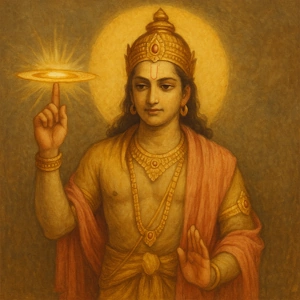
These days, media has come out with a term 'God-Man'.
This is a term of ridicule used mostly in a negative sense.
But, if you look deep, this is a fact.
Tattvamasi means God is not different from man.
There is no separate God. God resides inside every man — not just a few men.
The quantum of God inside each person can vary — this is also not correct.
The sheaths around the God tattva inside each person can vary in numbers and thickness.
These sheaths are sheaths of ignorance — both for himself and the observer.
For himself, the thicker the sheath, the more difficult it will be for him to see the God inside himself.
For the observer, the thinner these sheaths, the more the God reveals Himself through that person.
These sheaths are mainly defects such as ego, selfishness, and passion.
So, when these are less in a person, we see more of God in him.
Or the God, who is already inside him — equal to the God in any other person — reveals more, shines more.
Such people, we consider as divine people.
So everybody is a God-man or a God-woman.
It is only a question of how much that God is covered, and how much is revealed.
Anyway, we will look at Guru Tattva now.
We say:
Gururbrahma…
Guru is Brahma... Guru is... Guru is sakshat param Brahma. I bow before him.
How is Guru God?
Isn't Guru the person who shows the path to God?
How can a man be equal to God?
The explanation we saw before itself is sufficient, but we will look for more.
In Geeta, Chapter 17, Shloka 3 says:
सत्त्वानुरूपा सर्वस्य श्रद्धा भवति भारत।
श्रद्धामयोऽयं पुरुषो यो यच्छ्रद्धः स एव सः।
Yah yacchraddhah ya shraddha yasya jivasya sah yacchraddhah,
Sah eva tacchraddhanurupa eva sah jivah.
Whatever is the nature of shraddha within a person, he becomes like that.
Towards whomsoever shraddha is within a person, he becomes like that.
Meaning, if your shraddha is towards Rama, you will eventually become like Rama.
If your shraddha is towards Durga, you will eventually become Durga.
This truth is what Bhagavan reveals through this shloka of the Geeta.
Every Guru parampara starts from a Devata. This is another fact.
A Devata passes on the knowledge to a Rishi, and then it goes on.
So every Guru parampara has a Devata at its roots.
Then the first shishya of this parampara, who has shraddha towards the Guru (who is the Devata), becomes like that Devata — or becomes that Devata himself.
Then he becomes the Guru.
His shishya has shraddha towards him.
So this shishya becomes like his Guru, who has himself become like the adi-Guru, the Devata.
This goes on and on in the Guru–shishya parampara.
Every shishya, when he becomes the Guru, becomes like the Guru himself.
And when you look back up this chain, you will see that every Guru in this parampara would resemble the adi-Guru — the Devata.
So any Guru in the parampara at any point of time is like the adi-Guru, the Devata.
The only requirement is that it should be a formal Guru–shishya parampara, and it should be unbroken.
There could be exceptions here.
Now, when you say Guru, don’t look at the physical body of the Guru.
The Guru tattva resides in the sukshma sharira.
It is the sukshma sharira which becomes anurupa of the Guru.
The gross body doesn’t have any relevance here.
The gross body is like a USB drive — a device which carries the content.
The content is what is important, not the device.





English
Rare Topics
Click on any topic to open
7
30
Astrology
Bhagavad Gita
Bhagavatam
Bharat Matha
Devi
Devi Mahatmyam
Ganapathy
Garuda Puranam
Glory of Venkatesha
Hanuman
Kathopanishad
Mahabharatam
Mantra Shastra
Mystique
Practical Wisdom
Purana Stories
Radhe Radhe
Ramayana
Rare Topics
Rigveda Explained
Rituals
Sages and Saints
Shiva
Spiritual books
Sri Suktam
Story of Sri Yantra
Temples
Vedas
Vishnu Sahasranama
Yoga Vasishta
26
17
10
0


