Who Becomes a Pitru — And Who Does Not
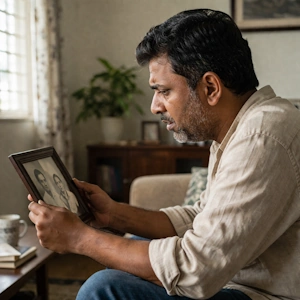
This is where most confusion starts. People assume every dead person automatically becomes a pitru. That is not how the system works.
First understand one thing clearly.
Pitru is not just a dead ancestor. It is a specific state in the ancestral system.
Now break it properly.
Who Becomes a Pitru
A person becomes a pitru when four conditions are aligned.
- Proper exit from life
Death happens in a relatively settled state. Not extreme disturbance. Not violent inner collapse. But understand this also. The person's own karma and inner state at the time of death carries weight. The family's role matters. But it is not the only factor.
- Proper samskaras after death
Antyeshti, shraddha, tarpana. These are not rituals for show. They are transition mechanisms. They move the being from preta state to pitru state.
- Continuity through lineage
Someone in the family continues remembrance. Even simple annual shraddha is enough. That keeps the connection stable.
- No extreme inner heaviness
Extreme attachment, hatred, addiction, obsession. These create heaviness. Even with proper rituals and family continuity, a being carrying this kind of weight cannot stabilize into pitru state easily.
When these four are in place, the person stabilizes as a pitru.
Then What Happens
They don't wander. They don't interfere randomly. They don't create disturbance.
They become part of an ordered system.
They support quietly. They receive offerings. They bless the lineage with progeny, prosperity, and protection. This is what the tradition actually describes. Not a vague balance. Specific blessings to the living.
This is pitru.
Who Does NOT Become a Pitru
Now the uncomfortable part.
- Those stuck in preta state
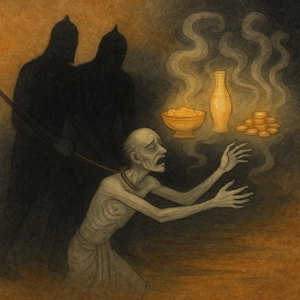
If proper rituals are not done, or death is sudden, violent, or confused, the being does not transition. It remains in a disturbed intermediate state. That is called preta. This is not a horror story. This is incomplete transition. And as mentioned above, even with rituals, extreme inner heaviness can keep a being stuck here.
- Those who break from lineage
If a person has no continuation, no remembrance, no connection to family line, then they do not stay in the pitru system. They move out of the lineage structure.
- Those who attain higher states
Now the opposite side.
Some do not become pitrus because they go beyond. Yogis, jnanis, deep sadhakas. They do not enter pitru loka. They travel a different path entirely.
Here is what this means in precise terms.
The Upanishads describe two paths after death. The path of the gods, called Devayana. And the path of the ancestors, called Pitruyana. Ordinary people travel Pitruyana, stabilize as pitrus, and eventually return through rebirth. Realized beings travel Devayana and do not return to the cycle.
So not becoming a pitru is not always negative. It can mean the person moved beyond the system entirely.
Now Understand the System Clearly
Here is how all of this fits together. Three broad outcomes after death.
- Preta — unstable transition
- Pitru — stable ancestral state, residing in pitru loka
- Devayana — upward movement beyond the lineage system entirely
Most people have the potential to stabilize as pitrus. But only if the conditions are maintained.
Why This Matters to You
Because your current life is not isolated.
If pitrus are stable, life flows with basic order.
If they are disturbed or not settled, you see patterns. Repeated obstacles. Family instability. Unexplainable stagnation.
Not drama. Pattern.
And the solution is also simple. Consistency matters more than complexity.
There is one thing to understand here. Tarpana and shraddha are related but not the same practice.
Tarpana is the water offering. It can be done regularly, even daily or monthly. It is simpler and more frequent.
Shraddha is the fuller annual ritual. It involves food offerings and is the main yearly acknowledgment of the ancestors.
Both matter. But they serve slightly different functions. Knowing this helps you practice correctly, not just symbolically.
One More Thing People Miss
Pitru work is not about fear. It is about responsibility.
You are not appeasing ghosts. You are maintaining continuity.
That is why it works.
1
Question: Why is not every deceased person considered a Pitru
Answer: Because Pitru is a specific stabilized state, not just death. Without proper transition, inner readiness, and lineage continuity, the being does not settle into that role.
2
Question: What is the purpose of post-death samskaras like antyeshti and Shraddha
Answer: They enable transition. They move the being from an unstable condition to a stable ancestral state. Without them, the process remains incomplete or delayed.
3
Question: Why does inner condition at the time of death matter so much
Answer: Because it determines stability. Heavy attachment, anger, or confusion creates resistance. Even with rituals, such weight slows or disturbs the transition.
4
Question: What is the difference between Preta, Pitru, and Devayana states
Answer: Preta is unstable transition. Pitru is stable placement within the lineage system. Devayana is upward movement beyond the ancestral cycle. These are structured outcomes, not random labels.
5
Question: How do Tarpana and Shraddha function differently
Answer: Tarpana is regular support through simple offerings, often water-based. Shraddha is the annual structured ritual with fuller offerings. One maintains continuity regularly. The other completes formal acknowledgment.
1
Objection: This classification feels too rigid for something as complex as death
Reply: It is structured, not rigid. The framework simplifies understanding of different states. Real experience may vary, but the categories help map the process clearly.
2
Objection: If inner condition matters so much, why perform rituals at all
Reply: Because rituals support the transition. Inner condition determines readiness, but external support helps stabilize and guide the process.
3
Objection: This makes it seem like families control what happens after death
Reply: Control is partial. The individual’s karma and state are primary. Family actions provide support, not complete determination.
4
Objection: The idea of beings getting stuck sounds like superstition
Reply: It refers to incomplete transition, not permanent trapping. It is a way to describe instability in the process, not a dramatic scenario.
5
Objection: This system seems too complex for modern life
Reply: The explanation is detailed, but the practice is simple. Consistent remembrance and basic rituals maintain continuity without requiring complexity.




English
Garuda Puranam
Click on any topic to open
7
30
Astrology
Bhagavad Gita
Bhagavatam
Bharat Matha
Devi
Devi Mahatmyam
Ganapathy
Garuda Puranam
Glory of Venkatesha
Hanuman
Kathopanishad
Mahabharatam
Mantra Shastra
Mystique
Practical Wisdom
Purana Stories
Radhe Radhe
Ramayana
Rare Topics
Rigveda Explained
Rituals
Sages and Saints
Shiva
Spiritual books
Sri Suktam
Story of Sri Yantra
Temples
Vedas
Vishnu Sahasranama
Yoga Vasishta
26
17
10
0


