What Is Behind Arrogance?
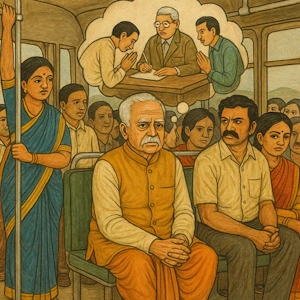
Kama, krodha, lobha, moha, mada and matsarya – some of the forces that take over the mind and leave impurity behind. How this can be prevented and chitta shuddhi attained through simple acts like puja, japa, pilgrimage, daana.
What is mada – mada is arrogance, pride, conceit.
अहं महात्मा धनवान् मत्तुल्यः कोऽस्ति भूतले
इति यज्जायते चित्तं मदः प्रोक्तः स कोविदैः
I am great, I am rich, I am influential, there is no one like me on the face of the earth. This feeling is called mada. This is an intoxication, this is an addiction. Mada corrupts the mind. It dirties the mind.
The result of mada we know, it leads to grief eventually, to disappointment, dejection and depression. People sitting in positions of power, like govt officers, they think fate of people is in their hand, people bow before them, dance to their tune as long as they are there in that chair. Then they retire. Nobody is bothered about them anymore. In train and bus and in public, they are pushed around like anyone else. After a few years, they are just 'old man'.
But they don’t realize this when sitting in that chair. They think they are God, all powerful. Forever. This is mada. And simple religious living helps you to stay away from mada.
We see charity in the west. But charity in the west is a matter of honour, respect. People do charity to earn respect, that is the motivation, not a genuine feeling from inside or realization of a responsibility. They get honoured as great philanthropists. They get awards and even if some of them start with a genuine intention, they end up pursuing awards and recognitions, pampering their own egos. See how good I am, how great I am. Mada again.
And we have also started this in India, awards for social work, awards for poverty alleviation, awards for working among the underprivileged. Good. The effort needs to be recognized by society as a whole. But what are you doing to the psyche of that man or woman who is doing this? Have you ever thought?
There are a select few who refuse awards, who refuse to get recognized for what they do. But how many. What happens to the rest of them. They get politically affiliated to the party which is in power when they get the award. They get emotionally attached to the person who conferred the award. The purpose is lost.
And that too in a country in which the culture says, the giver’s left hand shouldn’t know when his right hand is giving. This is how our sages wanted us to give. Not to get awards and recognition. Then it purifies the chitta. Swami Vivekananda said don’t give out of sympathy, that is the worst thing to do. Serve by giving. Serve divinity by giving.
There is a usage called Daridra Narayana, Narayana in the form of a poor man. That is what you should see when you see a poor old man lying by the side of the road begging, you should be able to see Narayana in him, give to him thinking that he is Narayana, give to him with the mindset that you are serving Narayana. Don’t sympathize, nobody needs your sympathy. It won’t take you anywhere. It will only harm you.
Understand that you are serving the lord when you are serving anyone, rich or poor shouldn’t matter to you, man or animal shouldn’t matter to you. This is what we have been taught. Narayana is inside everyone, everything. Serve him. You are nobody to show sympathy to him.
And when you follow these simple acts with proper understanding. And mind you, you may not do this with proper understanding right from the beginning. But if you don’t, do something you don’t learn it at all. By sitting in the gallery and watching others play football, you don’t learn to play football. You have to go to the middle of the field yourself, start playing, then you learn. Then you learn the nuances of the game. Otherwise not.
Start doing these simple things and as you go on doing you will learn how to do them the right way which will help you attain chitta shuddhi.
-
Kama (desire), krodha (anger), lobha (greed), moha (delusion), mada (arrogance), and matsarya (jealousy) pollute the mind and leave it restless.
-
Among these, mada (arrogance) is the intoxication of power, wealth, and self-importance.
-
Arrogance eventually collapses, leaving only grief, loneliness, and loss of dignity.
-
Positions of authority create the illusion of invincibility, but once power is gone, respect also vanishes.
-
Charity done for recognition strengthens ego rather than purifies the heart.
-
True giving is meant to be silent, without expectation of awards or honor.
-
Service should not arise from sympathy, but from the recognition of divinity present in all beings.
-
Simple practices like puja (worship), japa (repetition of mantra), pilgrimage, and daana (charity) gradually clean the mind when done with sincerity.
-
Right understanding grows only through practice, just like playing football can never be learnt by watching others.
What is mada?
Mada is arrogance born out of wealth, power, or influence. It clouds the mind like an intoxicant, making a person believe they are superior and invincible. This pride dirties the mind, shuts out humility, and distances one from reality. Eventually, it traps a person in delusion and causes suffering when the illusion breaks.
Why does arrogance feel so addictive?
Because it feeds on temporary positions and possessions that inflate the ego. When people bow down to authority, it creates a false sense of divinity in the person sitting in power. Like alcohol, it feels uplifting in the moment but leaves a destructive aftereffect. The intoxication is not of substance but of self-image.
If arrogance is just a thought, why does it destroy lives?
Because thoughts shape actions, and actions shape destiny. A person drunk on pride mistreats others, overestimates themselves, and refuses correction. When circumstances change, the fall feels unbearable because they never trained the mind in humility. Thus arrogance, though mental, leads to very real collapse.
Why does power always lead to downfall when held with arrogance?
Because power is temporary, but arrogance convinces the mind it is permanent. When authority ends, the respect it commanded vanishes instantly. What remains is humiliation and the painful realization that the world moves on without you. This shift shatters the ego, causing grief and dejection.
Can a person in authority stay humble?
Yes, by constantly reminding themselves that their position is a role, not their true self. They can serve others through their power instead of demanding obedience. When respect comes naturally from service, it lasts even after the position is gone. True leaders earn reverence by humility, not command.
But doesn’t society itself encourage arrogance by rewarding powerful people?
It does, but only for a time. Society bows before chairs, not individuals. The same person is ignored once the chair is gone. This proves that power is external, not inherent, and that arrogance built on it is bound to crumble.
Why is charity often tainted by ego?
Because many give to be seen as noble rather than to actually help. Awards, media praise, and social respect feed the ego more than the act of giving itself. This turns charity into self-promotion instead of purification. The giver ends up serving their pride instead of others.
How can one ensure their giving is pure?
By giving silently, without expectation of recognition or thanks. When you see service as your duty to the divine in all beings, the act itself becomes complete. The left hand need not know what the right hand gives. True purity lies in invisibility of the ego.
If charity helps others anyway, why does the giver’s motive matter?
Because external help may benefit others, but the giver’s inner growth is blocked. Ego-based charity traps the mind deeper into pride. Selfless charity cleanses the heart and connects the giver to something larger than themselves. Motive decides whether giving liberates or binds.
Why should service not come from sympathy?
Sympathy creates a sense of superiority in the giver and inferiority in the receiver. This feeds ego and weakens both sides. True service comes from seeing the same divine essence in all, regardless of wealth or status. Then giving is an act of reverence, not pity.
How can one cultivate this vision?
By training the mind to see Narayana, the divine, in every being. A poor man on the roadside is not an object of pity but a form of the same divine principle. When you serve him, you are serving divinity itself. This mindset transforms giving into worship.
Isn’t it unrealistic to see divinity in everyone?
It may seem difficult, but it becomes natural with practice. Just like repeated exercises train the body, repeated acts of selfless service train the mind. Slowly, the habit of seeing all beings as divine replaces judgment. This inner vision brings peace and humility.
Why is practice essential for chitta shuddhi (purification of mind)?
Because right understanding comes only from doing, not from thinking. Watching others perform rituals or serve is like watching a football game—you never learn the game yourself. By engaging directly in puja, japa, pilgrimage, or charity, you slowly grasp their deeper meaning. Practice polishes the mind.
Can someone start without full understanding?
Yes, action itself is the doorway to understanding. Even if you begin mechanically, the repetition shapes your thoughts and refines your awareness. Over time, clarity unfolds naturally. Waiting for perfect understanding before starting is like waiting to swim until you know the whole ocean.
But isn’t blind practice dangerous?
Blindness lies in never trying, not in beginning with limited knowledge. When you step into the field, experience corrects and guides you. Errors teach as much as successes. What matters is the willingness to act and learn, because purification cannot happen in theory alone.





English
Yoga Vasishta
Click on any topic to open
7
30
Astrology
Bhagavad Gita
Bhagavatam
Bharat Matha
Devi
Devi Mahatmyam
Ganapathy
Garuda Puranam
Glory of Venkatesha
Hanuman
Kathopanishad
Mahabharatam
Mantra Shastra
Mystique
Practical Wisdom
Purana Stories
Radhe Radhe
Ramayana
Rare Topics
Rigveda Explained
Rituals
Sages and Saints
Shiva
Spiritual books
Sri Suktam
Story of Sri Yantra
Temples
Vedas
Vishnu Sahasranama
Yoga Vasishta
26
17
10
0


