What Does Sanatana Dharma Say About LGBTQ People?
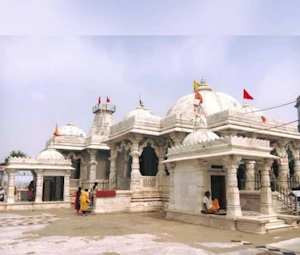
The ancient tradition has more to say on this subject than most people realize. The texts, the symbols, and the philosophy all point in a consistent direction — one that many modern conversations have missed.
First, understand what Sanatana Dharma is
Sanatana Dharma is the oldest living spiritual tradition in the world. In Sanskrit, Sanatana means eternal. Dharma means duty or right way of living. Together, the phrase means the eternal way of life. It is what most people today call Hinduism.
It is not one fixed religion with one rulebook. It is a vast tradition with many sacred texts, many schools of thought, and thousands of years of philosophy and practice. There is no single pope or central authority who speaks for all of it.
This matters because when we ask what Sanatana Dharma says about LGBTQ people, we have to look at the tradition honestly — at the texts themselves, at the stories, and at the core philosophy. Not just at modern social opinion.
The ancient texts recognized a third gender
Sanatana Dharma has an ancient concept called Tritiya Prakriti. It means the third nature. This recognized that beyond male and female, a third category of human beings exists. This is not a modern idea. It is found in texts that are thousands of years old.
The Narada Smriti, an ancient legal text, mentions the third gender as a recognized category of person. The Sushruta Samhita, an ancient medical text, also acknowledges it. The Kamasutra, written around 300 CE by the scholar Vatsyayana, describes same-sex relationships and third gender people. It does not condemn them. It treats them as a natural part of human life.
Hijra communities in India, who belong to this third gender tradition, historically held sacred roles in ceremonies like births and weddings. They were seen as carriers of divine blessing. The tradition did not erase them. It gave them a recognized place in society.
Key characters in the sacred epics
The two greatest epics of Sanatana Dharma are the Mahabharata and the Ramayana. Both contain characters who live outside the male-female binary. These are not side characters. They are central to the stories.
Shikhandi was born as the daughter of King Drupada. But Shikhandi lived and fought as a male warrior. In the Kurukshetra war — the central battle of the Mahabharata — Shikhandi stood before the great warrior Bhishma on the battlefield. Bhishma refused to fight Shikhandi. This caused Bhishma to fall. The entire outcome of the war turned on this moment. The Mahabharata placed a gender-fluid character at the most critical point of its most important battle. Not as a background figure. As the pivot of the entire story.
Arjuna is the greatest hero of the Mahabharata. He lived a full year as Brihannala, a third gender teacher of dance and music. The text says this was enabled by a divine boon from the god Indra. A divine boon is a gift, not a punishment. The tradition saw third gender existence as something a god could grant as a blessing.
In the Ramayana, when Rama returned after fourteen years in exile, he found the third gender people who had waited faithfully at the edge of the forest. He blessed them and gave them special powers. It is a story of respect, not rejection.
Lord Vishnu, one of the three supreme deities of Sanatana Dharma, takes the female form of Mohini in several Puranas. Lord Shiva becomes deeply attracted to Mohini. Their union produces a child named Ayyappa, who is worshipped widely in South India today, especially at the famous Sabarimala temple in Kerala. Two of the most supreme male deities in the tradition are at the center of a story involving gender transformation and divine attraction. This is not a hidden story. Millions of devotees worship Ayyappa, whose very origin depends on it.
Ardhanarishvara — the Supreme beyond gender
Ardhanarishvara is one of the most important symbols in all of Sanatana Dharma. It is a form of Shiva, one of the three supreme deities. The name means the lord who is half woman. The right side of this form is Shiva, the male deity. The left side is Parvati, the female deity. But they are not two beings standing side by side. They are one single being in one single body.
This form is worshipped in temples across India. It appears in the Linga Purana, the Skanda Purana, and across Shaiva and Shakta traditions. It is mainstream, not marginal.
The highest reality in Sanatana Dharma is depicted as beyond the male and female divide. Gender is shown as a surface-level feature of creation. At the deepest level, the division does not exist.
What the Vedic texts say at the deepest level
The Vedas are the oldest and most sacred texts of Sanatana Dharma. They are the foundation that everything else rests on.
The Rigveda contains a hymn called the Nasadiya Sukta, also known as the Hymn of Creation. It describes the state before creation began. In that original state, there was neither male nor female. Gender did not exist at the source of existence. It arose later as part of the manifest world.
The Brihadaranyaka Upanishad describes the original Self as a single undivided being that split into two to become male and female. This means male and female are secondary divisions of one undivided original reality. They are not the deepest truth. The undivided Self is the deepest truth.
The Chandogya Upanishad contains one of the most famous statements in all of Sanatana Dharma: Tat Tvam Asi. It means That Thou Art. The Self inside you is the same as the Supreme Self. That Self has no gender. It is pure awareness. It is equally present in every being.
The Bhagavad Gita states clearly that the Atman — the true Self inside every person — is beyond the body. It is neither born nor does it die. It is eternal and genderless.
From this view, judging a person's spiritual worth based on their gender identity or sexual orientation directly contradicts the core teaching of the entire tradition. The Atman in every person is the same. It is equally divine. It has no gender.
The Yoga Vasistha — gender as a teaching tool
The Yoga Vasistha is a large and profound philosophical text within Sanatana Dharma. It contains multiple stories of characters changing gender across lifetimes and sometimes within a single lifetime.
These stories are not presented as cautionary tales. They are presented as philosophical teachings. The tradition uses gender fluidity to make a specific point — that identity is not fixed. Who we think we are is not our deepest reality. Our deeper identity is the Atman, which is beyond all such categories. The text uses gender change to loosen the reader's grip on fixed ideas about selfhood. It is a deliberate philosophical device.
Bahuchara Mata — a goddess of the third gender community
Bahuchara Mata is a goddess specifically associated with the Hijra community and third gender people in India. She is worshipped in Gujarat and across the country. Her temple stands and receives thousands of devotees. Third gender people serve as her priests.
A tradition that genuinely rejected gender diversity would not have produced a goddess specifically honored by and through that community. The existence of Bahuchara Mata is itself evidence of how the tradition has historically related to third gender people — not with rejection, but with a sacred role.
What about the householder ideal in the texts?
It is fair to present the other side honestly.
The Grihastha ashrama is the householder stage of life described in Sanatana Dharma. Texts describing this stage speak primarily of a man and woman forming a family unit, with procreation as one of the purposes. Some traditional scholars use this to argue that same-sex relationships fall outside the householder ideal as the texts describe it.
Here is the important point in response. Sanatana Dharma recognizes four paths to liberation. Bhakti is the path of devotion. Jnana is the path of knowledge. Karma Yoga is the path of selfless action. Raja Yoga is the path of meditation and inner discipline. None of these paths require a person to be in a heterosexual marriage. A person's progress toward liberation is not blocked by their sexual orientation under any of these four paths. The tradition is bigger than one model of household life.
The role of colonial history
Much of the harsh rejection of LGBTQ people in Indian society did not come from Sanatana Dharma. It came from British colonial rule. The British imposed Victorian moral codes on India when they ruled the country. These Victorian codes were deeply hostile to any form of sexuality or gender expression outside the strict heterosexual norm.
Section 377 of the Indian Penal Code, which criminalized same-sex relations, was a British colonial law. It was created in 1861. It was not derived from Hindu scripture. The Supreme Court of India struck it down in 2018.
Historians have documented clearly that many of the stricter social attitudes toward gender non-conforming people in South Asia were strengthened during the colonial period, not before it. The tradition before colonialism showed far more acceptance.
Where modern voices stand
There is a genuine divide among modern teachers and scholars within the tradition today.
Some traditional and conservative teachers hold that heterosexual family life is the intended norm as described in the texts. They argue that same-sex relationships fall outside the Dharmic ideal of householder life.
Many progressive Hindu scholars, teachers, and spiritual leaders disagree. They point to the textual evidence above. They argue that the tradition's greatest strength has always been its recognition of diversity in all of creation. They see the inclusive reading as the more faithful one.
This debate is real and ongoing. What is not honest is to pretend the ancient texts give a clear message of rejection. They do not.
Takeaway
The honest reading of Sanatana Dharma shows that the ancient texts recognized gender and sexual diversity. The concept of a third gender is native to the tradition, not borrowed from elsewhere. Characters like Shikhandi, Arjuna as Brihannala, and Mohini are not footnotes — they are central figures in the tradition's most important stories. The symbol of Ardhanarishvara places the Supreme itself beyond the male and female divide. The Vedic teaching that the Atman is genderless and equally divine in every being is not a modern reinterpretation. It is the foundation of the entire philosophy. Much of the rejection seen today did not come from the ancient texts. It came from colonial influence layered onto the tradition over time.
10 Questions and Answers for Deep Understanding
- Why does Sanatana Dharma recognize a third gender when most ancient traditions do not?
Most ancient traditions built their social and spiritual systems around a strict male-female divide. Sanatana Dharma went further because its foundation was philosophical, not just social. The tradition began with the question of what is ultimately real. When the Vedic seers looked deeply, they found that at the root of existence, before creation began, there was no gender at all. Because the tradition recognized this at its core, it naturally made room for human beings who did not fit the two-category system. The third gender was not added later as a compromise. It was a logical outcome of the tradition's own deepest understanding of reality.
- What is the real significance of Arjuna living as Brihannala, and why does most popular retelling skip over it?
Arjuna is the tradition's greatest warrior hero. He is the person to whom the Bhagavad Gita was spoken. The tradition chose this specific figure, the most celebrated and masculine of all its heroes, to live a full year as a third gender person. This was not accidental. The tradition was making a point. True identity is not the body, not the role, not the gender. Arjuna remained Arjuna through the entire year. His inner self did not change. The Mahabharata used the most iconic figure it had to demonstrate that gender is a surface layer, not the truth of a person. Popular retellings skip this because it disrupts the simplified version of the story that most audiences have grown comfortable with.
- What does Ardhanarishvara actually teach about the nature of reality, beyond what is usually said?
The common explanation stops at the image. It says Shiva and Parvati are united as one. But the deeper teaching goes further. Shiva in this tradition represents pure consciousness, the witness, the unchanging. Parvati represents Shakti, which is the energy that creates and sustains the universe. When they are shown as one being, the tradition is saying that consciousness and creation are not separate. The universe is not something that consciousness looks at from the outside. They are the same thing at the deepest level. The male and female in the image are not just about gender. They are symbols for the two great forces of existence. And the teaching is that these two forces are, at their root, one single reality. Gender in this tradition is a window into a much larger truth about how the universe works.
- How does the story of Ayyappa reveal something most devotees are unaware of?
Millions of people worship Ayyappa at Sabarimala and across South India. They follow strict rituals and take a difficult pilgrimage. But most devotees do not stop to consider what the origin story of their deity actually says. Ayyappa was born from the union of Shiva and Vishnu in the female form of Mohini. This means the deity at the center of one of India's largest pilgrimage traditions was born through a same-sex and gender-transforming divine union. The tradition placed this story not at the margins but at the origin of a widely worshipped deity. The theology and the devotional practice are inseparable from a story that directly involves divine gender fluidity.
- What does the Yoga Vasistha reveal about identity that most people overlook?
The Yoga Vasistha tells stories of people changing gender across lifetimes and within single lifetimes. The surface reading treats these as interesting narrative events. But the philosophical function is precise and deliberate. The text is teaching that any fixed idea of who you are is a form of ignorance. When a person reads that a character they followed as male in one chapter is now female, the mind is forced to ask a question. Who exactly is this character? The answer the text is building toward is that the real self is the witness behind all these changing forms. The Atman has no gender and no fixed personal identity. The gender-change stories are not entertainment. They are a philosophical method for dissolving the reader's attachment to fixed self-concepts.
- Why is Bahuchara Mata one of the most philosophically significant goddesses in the tradition?
A tradition's real values are visible in what it makes sacred. When Sanatana Dharma produced a goddess specifically associated with and served by third gender priests, it was not making a social accommodation. It was placing third gender people inside the sacred order of the universe. Bahuchara Mata's existence in the tradition means that the divine itself was understood to have a special connection to this community. In the logic of the tradition, a community without divine representation is outside the sacred order. A community that holds priesthood and serves as the representative of a goddess is inside that order. The existence of this goddess says more than any social policy could about where the tradition originally placed third gender people.
- What is the secret hidden in the Nasadiya Sukta that most discussions of this topic miss?
The Nasadiya Sukta describes the state before creation. It says there was no male, no female, no light, no darkness, no being, no non-being. There was only one undivided reality. This means that gender is a product of creation. It did not exist before creation began. It will not exist after creation ends. It is a temporary feature of the manifest world. This has an important implication. If gender is a feature that appears within creation and did not exist before it, then gender diversity within creation is simply part of how creation unfolds. Variation in gender expression is not a deviation from the natural order. It is part of the natural order. The Rigveda, the oldest text in the tradition, already contained this understanding thousands of years ago.
- Why is the distinction between Dharma and social convention so important for this topic?
Sanatana Dharma distinguishes between two layers of teaching. The first is Sanatana Dharma, which means the eternal truth that applies in all times and places. The second is Desh Kaal Paristhiti Dharma, which means right conduct for a particular time, place, and social condition. Specific social rules about household life and family structure belong to the second category. They were meant to guide a particular society at a particular period in history. They were not meant to be taken as eternal spiritual law. The eternal principles are those found in the Upanishads. That the Atman is genderless. That it is equally divine in all beings. That no outer category of person is excluded from liberation. Confusing social convention with eternal principle is how misunderstanding enters.
- What does the colonial imposition of Section 377 reveal about how tradition and history got mixed up?
When the British established legal codes in India, they brought with them the moral framework of Victorian England. This framework was built on a specific reading of Christian morality that treated sexuality very strictly and non-heterosexual behavior as criminal. Section 377 made same-sex conduct a criminal offense in 1861. This law did not emerge from Hindu texts. It emerged from British colonial policy. But over time, as this law became part of everyday life, many people began to assume that its values were always part of Indian culture. The colonial law was mistaken for traditional teaching. When India's Supreme Court struck down this law in 2018, it was not introducing a new idea. It was removing a foreign imposition and allowing older, deeper traditions to breathe again.
- What is the single most important philosophical principle that settles the entire question?
The Mahavakyas are the great statements found in the Upanishads. They are considered the highest expressions of Vedic wisdom. One of them is Tat Tvam Asi, which means That Thou Art. It means the Atman inside you is the same as Brahman, the Supreme reality. Another is Aham Brahmasmi, meaning I am Brahman. These statements make no distinction based on gender, caste, or any outer characteristic. The same Atman is present in every human being equally. The tradition does not say that the Atman in a gender-diverse person is a lesser Atman. It cannot say this without contradicting its own foundation. When the highest teaching of a tradition says that the innermost self of every being is the Supreme, there is no logical room for spiritual exclusion based on gender or orientation.
10 Objections and Replies
Objection 1: The texts describe marriage as between a man and a woman. This proves the tradition sees heterosexual life as the only valid path.
Reply: The texts describe householder life in the context of a specific social order of a specific historical period. They do not claim this is the only path to liberation. The tradition explicitly recognizes four paths to liberation and none of them require heterosexual marriage. The Atman does not attain liberation through the marital status of the body it inhabits. The householder descriptions belong to the category of social guidance, not eternal spiritual law. The Upanishads, which are the highest level of Vedic teaching, say nothing of the kind. They teach that every being carries the same Atman and that liberation is available to all.
Objection 2: Tritiya Prakriti was only mentioned in minor or non-authoritative texts. It was not a serious part of the tradition.
Reply: The Narada Smriti is considered a serious legal text within the tradition. The Sushruta Samhita is the foundation of Ayurvedic medicine. The Mahabharata is explicitly called the fifth Veda by the tradition itself. Shikhandi appears in the Mahabharata at its most critical narrative moment. Arjuna's year as Brihannala appears in the Mahabharata. Ardhanarishvara is mentioned across the Linga Purana and Skanda Purana and is worshipped in mainstream temples. The Kamasutra is a recognized scholarly text. These are not obscure marginal writings. Dismissing all of them at once would require dismissing large portions of the tradition.
Objection 3: The characters like Shikhandi were special divine cases or the result of karma from past lives. Ordinary people should not draw comparisons.
Reply: This objection actually strengthens the inclusive reading. The tradition is saying that gender diversity in human beings has divine origin and karmic depth. It is not being attributed to social influence or moral failure. When the tradition explains a character's gender variance by reference to divine boons and past life karma, it is placing that variance within the sacred framework of cause, consequence, and divine will. The tradition's explanation is spiritual, not judgmental.
Objection 4: India has always had conservative family values and LGBTQ acceptance is a Western import.
Reply: The historical record shows the opposite. It was the British colonial administration that imported legal hostility to gender and sexual diversity into India in 1861 through Section 377. The texts and traditions described above existed for thousands of years before that. Hijra communities held recognized sacred roles at births and weddings long before British rule. Temples with Ardhanarishvara imagery stood for centuries before colonial contact. If anything, the timeline shows that conservative exclusion of gender diversity was the import, and the older Indian tradition was more accepting.
Objection 5: Modern LGBTQ identity politics is a product of Western liberalism and has no place in an ancient tradition.
Reply: The question is not about modern identity politics. The question is what the ancient tradition actually taught about gender and sexual diversity in human beings. The tradition's own texts, symbols, and stories have been presented above. Whether or not one agrees with modern political movements, the ancient textual evidence remains. The Ardhanarishvara was not designed by any modern political movement. The Nasadiya Sukta was not written by a Western liberal. Shikhandi was not placed in the Mahabharata by anyone alive today. The evidence belongs to the tradition itself.
Objection 6: The physical body is designed for reproduction and anything outside that purpose goes against nature.
Reply: Sanatana Dharma does not define nature through the lens of physical function alone. Nature in this tradition is understood as the entire display of Brahman. The diversity of creation is itself the expression of one infinite reality taking infinite forms. The tradition teaches that no form within creation is outside the divine. When the Yoga Vasistha presents gender fluid characters as philosophical teachings, it is not presenting them as failures of natural design. It is presenting them as part of the same vast creation that includes every other form. The argument that physical reproductive design defines the only valid form of human life is not a Vedic argument. It is a different argument from a different tradition entirely.
Objection 7: Allowing same-sex relationships and gender diversity would destroy the family structure and social order that the tradition depends on.
Reply: Sanatana Dharma has never been a single fixed social system. It has adapted across thousands of years, across dozens of regional cultures, through massive historical changes. The tradition's resilience comes from its philosophical depth, not from any fixed social arrangement. A third gender community existing alongside heterosexual families did not destroy social order in ancient India. Hijra communities participated in family celebrations as blessing-givers. Recognition of diversity and maintenance of social order were not treated as opposites. The argument assumes a fragility in the tradition that the tradition's own long history does not support.
Objection 8: Most traditional Hindu priests and religious authorities reject LGBTQ people. Their authority should be respected.
Reply: The tradition has never had a single central religious authority whose pronouncements override everything else. This is one of the distinctive features of Sanatana Dharma. Different schools, different Acharyas, and different regional traditions have always held different views and the tradition accommodated all of them. Some traditional teachers take the conservative position. Others, equally rooted in the texts, take the inclusive position. On a question where the texts themselves contain the evidence presented above, no single authority can claim that the texts give a simple message of rejection. That claim is not textually honest.
Objection 9: The tradition teaches control of desire and transcendence of the body. Therefore all sexual expression, including same-sex, should simply be transcended.
Reply: This argument proves too much. If the teaching to transcend desire applies equally to all sexual expression, then the same argument applies to heterosexual desire as well. The tradition does not single out same-sex attraction as a specially disqualifying form of desire while treating heterosexual desire as spiritually neutral. The path of renunciation is open to all people equally. But the tradition never taught that only people on the path of renunciation are valid human beings. The householder path is a valid and respected path. The tradition never restricted the householder path to heterosexual people on the basis of eternal spiritual law. These are two different questions and the objection conflates them.
Objection 10: The Manusmriti prescribes punishments for same-sex acts. This is a core text of the tradition and must be taken seriously.
Reply: The Manusmriti prescribes punishments for a very large number of behaviors, many of which no modern practitioner of the tradition follows. It prescribes different rules for different castes in ways that the tradition itself has debated and rejected in many respects over centuries. The Manusmriti represents one legal text from a specific historical period. It is not the Vedas. It is not the Upanishads. It does not carry the authority of the Mahavakyas or the Bhagavad Gita. When a legal text written for a particular historical social order contradicts the philosophical foundation established by the Upanishads, the tradition's own hierarchy of authority is clear. The philosophical foundation is higher. The Atman is equally divine in all beings. That principle is from the foundation, not from the legal code.





English
Rare Topics
Click on any topic to open
7
30
Astrology
Bhagavad Gita
Bhagavatam
Bharat Matha
Devi
Devi Mahatmyam
Ganapathy
Garuda Puranam
Glory of Venkatesha
Hanuman
Kathopanishad
Mahabharatam
Mantra Shastra
Mystique
Practical Wisdom
Purana Stories
Radhe Radhe
Ramayana
Rare Topics
Rigveda Explained
Rituals
Sages and Saints
Shiva
Spiritual books
Sri Suktam
Story of Sri Yantra
Temples
Vedas
Vishnu Sahasranama
Yoga Vasishta
26
17
10
0


