Visa Balaji Temple
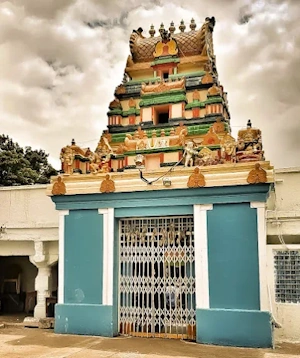
In a quiet village near Hyderabad, Telangana, stands a temple that has become a surprising symbol of hope for thousands of people aspiring to go abroad — especially to the United States. It’s not because it houses an immigration consultant or is next door to a consulate. It’s because people genuinely believe that Lord Balaji, the presiding deity here, grants visas.
Welcome to Chilkur Balaji Temple, famously nicknamed Visa Balaji Temple.
Where Is It?
The temple is located in Chilkur village, about 25 to 30 kilometers from Hyderabad city. Nestled along the scenic Osman Sagar Lake, the temple is surrounded by greenery and calm, far removed from the noise and chaos of the city. It’s easily accessible by road, and regular buses and cabs ply from major areas of Hyderabad.
The temple might look modest at first glance, but it holds centuries of tradition and an atmosphere thick with devotion. It’s a place where families come with petitions, where students arrive with documents tucked away in their bags, and where prayers are whispered with a deep yearning.
How Old Is It?
The origins of the temple go back nearly five centuries. It is said to have been built during the era of the poet-saint Bhakta Ramadasu’s contemporaries. The exact historical dates may be unclear, but what’s certain is this: it’s old, sacred, and has stood the test of time.
The story goes that a devout man who was too ill to travel to Tirupati had a vision. Lord Venkateswara appeared in his dream and told him that He resided right there, nearby. Guided by the vision, the man dug up a mound of earth in his village — and found an idol of Lord Venkateswara (Balaji) flanked by Sridevi and Bhoodevi. That sacred spot became the Chilkur Balaji Temple.
Later, another deity — Goddess Rajyalakshmi — was also installed within the premises, adding to the divine energy of the place.
Why the Name 'Visa Balaji'?
Now, here’s where things take an interesting turn.
In the past few decades, the temple became famously linked to visa approvals — especially for students and IT professionals hoping to go to countries like the U.S., U.K., or Canada. Devotees who had been rejected multiple times suddenly started receiving approvals after visiting this temple. As word spread, more people came with similar hopes. It snowballed into a movement of faith.
Today, thousands of devotees visit this temple every week, most of them praying for success in visa interviews, job approvals abroad, or overseas educational admissions. Over time, this faith-driven association earned Lord Balaji here the nickname ‘Visa God’.
Importantly, the temple priests never claim that this is guaranteed — but they do say that faith, surrender, and commitment work mysterious miracles. And honestly, for the kind of people who walk barefoot for miles to complete their vows here, that faith is enough.
What Happens at the Temple?
One of the temple’s most iconic features is the pradakshina ritual — circumambulating the sanctum sanctorum.
- 11 circumambulations are done when making a wish — for example, a successful visa.
- Once the wish is fulfilled, devotees return and complete 108 circumambulations as a form of thanksgiving.
And these aren’t symbolic. People walk every step around the inner shrine, chanting or praying, each round a declaration of intent or gratitude.
It’s said that the number 11 signifies a union — one body, one soul. The number 108 is considered sacred in Hinduism, symbolizing completeness. Together, this practice gives devotees a concrete, personal way to participate in their prayer, rather than simply offering it and walking away.
Over the years, the temple has become more than just a religious destination — it’s a place of emotional release, hope, and reconnection. Many come back even after they’ve settled abroad, just to say thanks. Some do their 108 pradakshinas quietly in the background, with tears of gratitude. Some bring their children and tell them, 'This is where our journey began.'
And you don’t have to be a visa applicant to pray here. People come for health, marriage, exams, peace of mind — the energy of the temple welcomes all desires that are honest and heartfelt.
There are countless anecdotes — of students who couldn’t afford the visa fee but still came here and ended up with scholarships; of families who faced multiple rejections and finally saw a breakthrough after visiting the temple.
When faith meets effort, something shifts.
Temple Timings and Policies
- The temple is open from 5:00 AM to 8:00 PM, every day.
- There is typically a break in the afternoon around 1:00 PM to 4:00 PM.
- Entry is completely free.
- Here’s the most unusual part: the temple does not accept donations. There is no hundi, no ticketed darshan, and no special lines for VIPs. Everyone — rich or poor — stands in the same queue.
- The temple also discourages the use of plastic and has encouraged devotees to wear handloom clothing, especially on Saturdays, to support local weavers.
This isn’t just a religious place; it’s a movement for simplicity, equality, and mindful living.
How to Reach the Temple
From Hyderabad, the easiest way to get to Chilkur is by road. If you’re coming from the city center, you can drive, hire a taxi, or take a bus from places like Mehdipatnam or LB Nagar.
If you’re flying in, the nearest airport is the Rajiv Gandhi International Airport, which is about a 40–50 minute drive away. If you’re arriving by train, the Hyderabad Deccan (Nampally) or Secunderabad stations are your best bet — from there, it’s another 30–45 minutes by road.
There’s also a healthy number of autos and shared cabs plying around this route, especially during weekends.
Best Time to Visit
While the temple is open year-round, the best time to visit is during the cooler months between October and February. The summers in Telangana can be quite intense, making the early mornings or evenings your safest bet.
Weekdays tend to be quieter. On weekends, especially Saturdays, the temple gets crowded. That’s when most of the working professionals and students come to complete their vows. If you prefer a peaceful darshan, early morning is ideal.
In Summary
The Visa Balaji Temple is not just about getting a stamp on your passport. It’s about letting go of fear, connecting with a higher power, and putting your faith into action. In a world full of red tape, competition, and uncertainty, this temple offers a small but powerful refuge where prayer feels deeply personal — and strangely effective.
So whether you’re holding a visa file or just holding onto hope, Chilkur Balaji’s doors are open. Just remember to carry faith in your heart, not coins in your hand.





English
Temples
Click on any topic to open
7
30
Astrology
Bhagavad Gita
Bhagavatam
Bharat Matha
Devi
Devi Mahatmyam
Ganapathy
Garuda Puranam
Glory of Venkatesha
Hanuman
Kathopanishad
Mahabharatam
Mantra Shastra
Mystique
Practical Wisdom
Purana Stories
Radhe Radhe
Ramayana
Rare Topics
Rigveda Explained
Rituals
Sages and Saints
Shiva
Spiritual books
Sri Suktam
Story of Sri Yantra
Temples
Vedas
Vishnu Sahasranama
Yoga Vasishta
26
17
10
0


