Vedic Knowledge is Practical Science
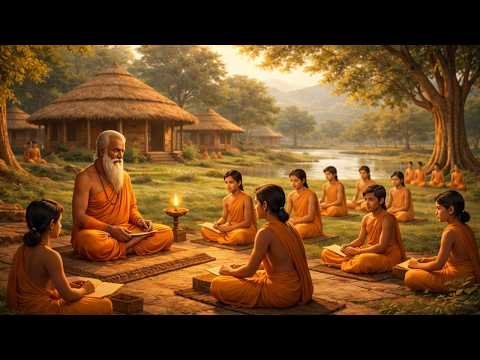
This article explains that the Vedas are not just religious chants or symbolic stories. They are carefully designed with a clear system behind them. Every sound, word, and arrangement has a purpose. The main idea is that real understanding does not come from theory alone or from blindly repeating rituals. It comes when correct chanting, proper understanding, and actual practice are combined. Over time, people have started separating these parts, which has created confusion. The article is trying to remind us that Vedic knowledge was meant to be learned in a complete and practical way, not treated as mere information or tradition without deeper engagement.
The Vedas are not random chants. Every sound, rhythm, tone and word has a system behind it.
- Some parts of the Veda are grouped into seven sections. People later connected them with seven worlds. But the author is saying — do not take it as fantasy symbolism. There is a structural reason behind it.
- Vedic knowledge works in three levels:
– Sound
– Meaning
– Practice
If you only chant without understanding, you are incomplete.
If you only understand theory but never practice, you are incomplete.
If you practice without correct sound, again incomplete.
It is like cooking:
– Recipe is theory
– Cooking is experiment
– Eating and gaining strength is result
Just reading the recipe does not fill your stomach.
- In old times, learning was complete. Students lived with gurus. They practiced, tested, experienced. So faith was strong.
- Today we only want quick theory. We question everything without practice. So confusion increases.
- The main message:
Vedic knowledge is practical science. It is not blind belief. But you must follow the full method — sound + meaning + practice.
That is it. Nothing mystical. Nothing complicated.
Question 1
Why should we view the Vedas as a precise logical system rather than just a collection of ancient myths?The Vedas are structured like a blueprint or sophisticated software. Every sound, rhythm, and tone was designed with a specific functional purpose. Rather than being random stories, they are an organized framework intended to produce predictable results when followed correctly. The greatness of this principle lies in its move away from abstract mysticism toward a repeatable, structured science of the mind and environment.
Question 2
What is the hidden meaning behind the seven worlds often mentioned in ancient texts?
While many view the seven worlds as fantasy realms or locations in the sky, they were originally intended as structural groupings. They represent seven distinct sections or categories of knowledge used to organize complex information. The secret is that these were practical divisions meant to help a student navigate a vast system of information efficiently, much like folders in a computer database.
Question 3
What are the three pillars required for this ancient system to function effectively?
The system relies on the integration of Sound, Meaning, and Practice. Sound refers to the specific frequency and vibration of the words. Meaning refers to the underlying logic and theory. Practice is the actual application or experiment. The secret to the system's power is that none of these pillars can stand alone; you need the vibration, the understanding, and the action to achieve a complete result.
Question 4
Why is chanting a sound perfectly without knowing its meaning considered incomplete?
Sound without meaning is like turning on a machine without knowing what it does. You might create a vibration, but you lack the direction and intent to channel it. The ancient principles suggest that when you combine the correct frequency with a deep intellectual understanding of its purpose, the effect is magnified. Without meaning, the practice becomes a hollow ritual rather than a transformative tool.
Question 5
How does the analogy of cooking reveal the secret to successful practice?
Cooking represents the full cycle of knowledge. Reading a recipe is the theory or meaning. Turning on the stove and mixing ingredients is the sound or action. Eating the food is the result or practice. The mystery of why many people fail in their spiritual or personal goals is often because they only read the recipe but never turn on the stove, or they turn on the stove without a recipe. Success requires the full sequence.
Question 6
What is the fundamental difference between ancient learning and modern information gathering?
Ancient learning was based on a complete living experience where students lived with their teachers to test and observe results firsthand. Modern learning often focuses on quick clips of theory without any personal experimentation. The greatness of the ancient method is that it produced evidence-based faith. A student didn't just believe; they knew the system worked because they had seen the results of the practice in their own lives.
Question 7
Why does the script compare Vedic knowledge to sophisticated software?
Software requires a specific code to run, and if even one line of that code is wrong, the program fails. Similarly, the Vedas use specific sounds and rhythms as a type of linguistic code designed to interact with human consciousness. The secret is that these texts were built to be functional tools that trigger specific mental or environmental responses, provided the code of sound and meaning is entered correctly.
Question 8
What causes the modern confusion and dismissal of ancient traditions?
Confusion arises because we try to get the results of a system without following its full methodology. We want the strength from the meal without doing the cooking. When people skip the practice or the understanding and then fail to see a change in their lives, they dismiss the entire system as outdated mythology. The problem is not with the science, but with the incomplete application of it.
Question 9
How can faith be scientific according to these principles?
In this context, faith is not blind. It is a confidence built on a foundation of logic and experimental results. When a person understands the meaning, performs the sound, and sees the practical result, their belief is no longer a guess. It becomes a documented fact of their own experience. This transformation of belief into evidence is the cornerstone of the Vedic scientific approach.
Question 10
What is the most important step for someone who wants to move beyond just observing a tradition?
The most important step is to bridge the gap between theory and action. One must stop looking at the ancient tradition as a spectator and start using it as a participant. By seeking the meaning behind the sounds and then committing to the actual practice, the system stops being a mystery and becomes a practical tool for daily life. The secret is simply moving from the recipe book to the kitchen.






English
Mantra Shastra
Click on any topic to open
7
30
Astrology
Bhagavad Gita
Bhagavatam
Bharat Matha
Devi
Devi Mahatmyam
Ganapathy
Garuda Puranam
Glory of Venkatesha
Hanuman
Kathopanishad
Mahabharatam
Mantra Shastra
Mystique
Practical Wisdom
Purana Stories
Radhe Radhe
Ramayana
Rare Topics
Rigveda Explained
Rituals
Sages and Saints
Shiva
Spiritual books
Sri Suktam
Story of Sri Yantra
Temples
Vedas
Vishnu Sahasranama
Yoga Vasishta
26
17
10
0


