Vedic Astrology is not Fortune Telling, It's a Philosophy
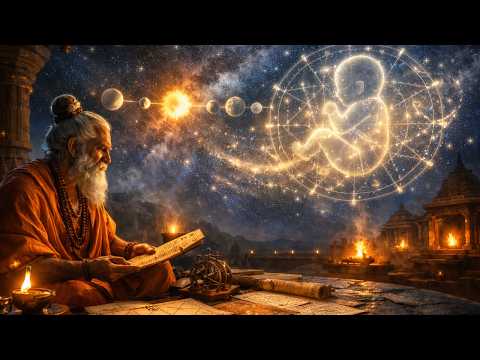
Guru Ganesha Bhyam Namaha.
Many people think that astrology is fortune telling. Western astrology is confined to fortune telling. There is no philosophy behind western astrology. Western astrology developed from a utilitarian point of view. Man is concerned about his future. He has fear about what is going to happen in the future. He has curiosity and he has hope also. Man only wants good things to happen to him, both at present and in the future. So naturally, what is in store is a matter of great interest for anyone. Even those who say "I don't believe in astrology" or "I make my own future", if someone starts telling them something about the future—even a co-passenger—they will be eager to listen. They may not act upon it, but at least they will listen eagerly. This curiosity is there in every man.
Indian Astrology and Vedic Astrology
But Indian astrology or what is commonly known as Vedic astrology, serves a much greater, bigger purpose than knowing about the future. This is because here astrology is not a standalone subject. Astrology for us developed as the eyes of Veda. It is a Vedanga. What are eyes for? To see. To see everything; past, present and future. Veda sees through astrology. There are some who object, saying that Vedanga astrology is not this predictive astrology, it is astronomy which is a pure science used to identify suitable timings for Yajnas.
Influence of Planetary Positions on Yajnas
But then, why identify timing for Yajna? What happens if you perform a Yajna on an arbitrary date or any time that you want? Why should Yajnas be done on a particular date and time? Otherwise, it may not yield the desired result or give unexpected results which could be even adverse.
What is a date? How do you identify a date? Based on planetary positions in the sky. Amavasya means sun and moon are together. Purnima means sun and moon are apart by $180^\circ$. That means planetary positions in the sky at the time of performance of a Yajna can influence its outcome. This is clear. Yajnas are not done every day or every 15th day or every Friday. They are done in connection with Amavasya, Purnima, or onset of seasons which are identified by planetary positions. Do this before sunrise, do this after sunrise. For this, you should know when sunrise is. That is done through astrology. What is supposed to be done before sunrise, if you do it after sunrise, there may be a problem. That is why all these rules are there.
Astrology in Everyday Life
So it is very clear that planets influence the outcome of everything, and indicate the outcome of everything. Planetary positions at the time of doing anything will have a say in its outcome. That's why we choose auspicious timings for everything; for marriage, entering a new house. "Sukha duhkha karam karma shubhashubha muhurtajam". Anything done in an auspicious Muhurta or when planetary positions are favorable will lead to happiness. Anything done in an inauspicious Muhurta or when planetary positions are adverse will lead to problems and misery.
This can be applied to day-to-day human life also. Extrapolating on this, if you look at the planetary positions at the time any event happened, say starting of a business or entering into a new house, you will know where it is heading. If you look at the planetary positions when a child is born, you will know what is going to happen to that child in future. This is predictive astrology.
Should you know this? That is up to you. If you're curious and have access to the right means, you can. If you're not interested, nobody is forcing you. It is like if you are sick, it is up to you whether to go to the doctor or not. Choice is yours. But if you have the curiosity, astrology may be able to satisfy that curiosity.
Insights from Bhaskaracharya
Do our Acharyas approve of the application of astrological principles in day-to-day life? Bhaskaracharya is one of the greatest astronomers the world has seen. In his famous book Siddhanta Shiromani, which is pure astronomy and mathematics—not predictive astrology—he says while starting the chapter called Spashtadhikara, wherein procedure for finding the exact longitudes of planets is given, he says:
"Yatra vivahotsava jatakadau khetauh sphutaireva phalasphutatvam syatprocyate tena nabhascaranam sphutakriya drkganitaikyad rdhya."
The results when you start a journey or marriage or conducting a festival or in a horoscope, the results are only to that extent accurate, to the extent the planetary longitudes are calculated accurately.
What does this mean? Astronomy is not just for Yajnas. It was always used in identifying suitable timings for journey, marriage, important events and also in horoscopy. So those who say astronomy only is Vedanga Jyotisha and it was meant for identifying timing of only Yajnas, they should pay attention to what the master astronomer Bhaskaracharya says here.
He also says "Yo jyotisham vetti narah sa samyak dharmartha kaman labhate yashashca". A person who knows astrology, he would obtain Dharma, Artha, Kama and Yashas. Out of the four Purusharthas, three can be achieved with the help of Jyotisha except Moksha. Through observance of Dharma, Moksha can also be obtained. Astrology is not a means to attain Moksha directly. For that, there are better methods.
Philosophical Connection of Vedic Astrology
This is the philosophical connection of Vedic astrology. Astrology can give you that conviction about how Karma operates, and how important is Karma. The present life is only a link between an unknown past and an unknown future. This is what our scriptures say. Astrology can make you understand this flow of Karma in your own life; how your past Karma is unfolding its results now in your life and how your present Karma will have consequences in your future. This clarity, astrology gives. So Indian astrology is not fortune telling. It has much greater significance, much greater role in your life.
- What is the primary difference between Western astrology and Vedic astrology according to the text?
Western astrology is generally confined to a utilitarian point of view focused on fortune telling and man's curiosity or fear about the future. In contrast, Vedic astrology serves a much larger purpose and is rooted in deep philosophy as it is considered a Vedanga, or the eyes of the Veda. - Why is astrology referred to as the eyes of the Veda?
It is called the eyes of the Veda because its purpose is to see the past, present, and future. Just as eyes allow a person to navigate the world, the Veda sees through astrology to understand the timing and flow of existence. - How does the text explain the scientific basis for selecting specific dates for rituals?
Dates are identified based on planetary positions in the sky, such as Amavasya when the sun and moon are together, or Purnima when they are 180 degrees apart. These planetary positions at the time of an action influence the outcome, which is why specific timings are necessary for rituals like Yajnas to be successful. - What are the potential consequences of ignoring astrological timing for important tasks?
Performing a significant task at an arbitrary or inauspicious time may not yield the desired result. It can lead to unexpected outcomes that might even be adverse, resulting in problems or misery instead of happiness. - How does the principle of Muhurta apply to day to day human life?
The principle suggests that anything started during an auspicious Muhurta, when planetary positions are favorable, leads to success and happiness. This applies to major life events such as entering a new house or getting married. - Can astrology be used to understand the future of a newborn child?
Yes, by looking at the planetary positions at the exact moment a child is born, predictive astrology can indicate what is likely to happen to that child in the future. - What was the perspective of the great astronomer Bhaskaracharya on astrology?
Although he was a master of pure astronomy and mathematics, Bhaskaracharya stated that the accuracy of results for journeys, marriages, or horoscopes is directly tied to how accurately the planetary longitudes are calculated. This shows that he saw a vital link between astronomical precision and astrological outcomes. - Which of the four human goals or Purusharthas can be achieved through the help of astrology?
Astrology helps a person obtain Dharma, Artha, and Kama, as well as Yashas or fame. While it does not lead to Moksha directly, the observance of Dharma facilitated by astrology can eventually lead to Moksha. - What is the mysterious or hidden role of astrology in relation to the concept of Karma?
Astrology serves as a tool to understand the flow of Karma. it reveals how a person's past actions are unfolding in their present life and how their current actions will shape their future. - Is Indian astrology merely about predicting fortunes?
No, it is a profound system that provides a link between an unknown past and an unknown future. Its true significance lies in providing clarity on the law of cause and effect and helping individuals navigate their lives with greater conviction and understanding.





English
Astrology
Click on any topic to open


