This Idea Redefines Everything
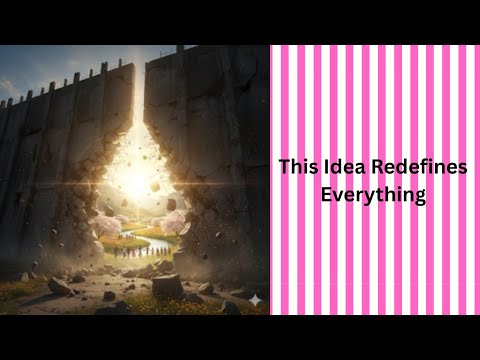
Today, we’re tackling a difficult and urgent topic: the rising tide of ethno-nationalism across the globe. We see it in headlines every day—a politics of division, of 'us versus them,' where identity is narrowly defined by a shared ethnicity, language, or a single, rigid interpretation of religion. It’s a worldview that draws lines, builds walls, and thrives on the idea that one group’s identity is superior and must be protected from others. This ideology often leads to conflict, marginalization, and a shrinking of our shared human space.
In this climate of increasing fragmentation, it’s natural to search for alternative frameworks, for philosophies that can guide us toward a more inclusive and harmonious future. And for that, I want to turn our attention to Sanatana Dharma.
I’m not proposing a religious conversion, but an exploration of a philosophical principle. At the very heart of Sanatana Dharma lies a profound and powerful pluralism, one that offers a compelling antidote to the exclusionary logic of ethno-nationalism.
Let’s begin with a foundational concept, articulated thousands of years ago in the Rigveda, one of humanity’s oldest texts. It’s a simple, elegant line: 'Ekam Sat Vipra Bahudha Vadanti.' This translates to: 'Truth is one, but the wise call it by many names.'
Think about the implications of that statement. It’s a radical declaration of intellectual and spiritual humility. It asserts that the ultimate reality, the ultimate truth, is singular, but our human paths to understanding it are many and varied. Your path is not a threat to my path. Your name for the divine does not invalidate my name for the divine. They are simply different languages describing the same, ineffable reality.
This isn't mere tolerance, which can often be a grudging acceptance of another's existence. This is a genuine, principled celebration of diversity. It frames different religions and worldviews not as competing for a monopoly on truth, but as different streams flowing towards the same ocean. Ethno-nationalism claims there is only one valid stream, and all others must be dammed or diverted. The Vedic perspective suggests that the beauty lies in the very existence of multiple streams.
This pluralistic foundation extends from the spiritual to the social with another key concept: 'Vasudhaiva Kutumbakam.' This phrase means ‘The world is one family.'
This is not a poetic platitude. It is a worldview. It fundamentally reorients our sense of identity. Ethno-nationalism demands that our primary identity be tied to our nation, our ethnicity, our tribe. It asks us to see ourselves first and foremost as a German, a Japanese, a Russian, or an American. But 'Vasudhaiva Kutumbakam' proposes a more expansive identity. It suggests that our primary, most fundamental identity is that of a member of the human family.
When you truly internalize the idea that the world is one family, the entire 'us versus them' narrative begins to collapse. You can no longer see the 'other' as an existential threat, but as a distant relative. You may have disagreements, cultural differences, and different ways of life, just as siblings do, but the underlying connection remains. This worldview doesn't erase national or cultural identities, but it places them in their proper context—as secondary to our shared humanity.
Sanatana Dharma’s structure itself is a model of this pluralism. It has no single founder, no single holy book that is considered the exclusive word of God, and no central, supreme religious authority like a Pope. Instead, it’s a vast, diverse ecosystem of traditions, philosophies, deities, and practices. Some may find their path through devotion, or Bhakti Yoga. Others through knowledge, Jnana Yoga. Still others through action and service, Karma Yoga. All are seen as valid. The system is designed to accommodate a multiplicity of temperaments and approaches.
So how does this serve as a practical system today?
The ethno-nationalist impulse is to purify, to homogenize, to create a monolithic cultural and ideological state. It sees diversity as a weakness, a dilution of national character. The pluralistic approach of Sanatana Dharma sees diversity as a strength, as a sign of a healthy, thriving reality. It provides a spiritual and philosophical grammar for living with difference, not just in spite of it, but because of it.
It offers a framework where patriotism can coexist with globalism. You can love your family without hating your neighbor's family. You can cherish your culture and nation without believing it is inherently superior or that it must be defended by excluding others. Your identity is not a zero-sum game.
In a world grappling with division, this worldview asks us to consider a different way. It invites us to move away from the certainty of a single story and embrace the wisdom of many. It asks us to see the world not as a collection of competing tribes, but as a single, interconnected family. It is a call to see unity not in uniformity, but in the beautiful, complex tapestry of our diverse human experience. And that is a perspective our world desperately needs to hear today.





English
Practical Wisdom
Click on any topic to open
7
30
Astrology
Bhagavad Gita
Bhagavatam
Bharat Matha
Devi
Devi Mahatmyam
Ganapathy
Garuda Puranam
Glory of Venkatesha
Hanuman
Kathopanishad
Mahabharatam
Mantra Shastra
Mystique
Practical Wisdom
Purana Stories
Radhe Radhe
Ramayana
Rare Topics
Rigveda Explained
Rituals
Sages and Saints
Shiva
Spiritual books
Sri Suktam
Story of Sri Yantra
Temples
Vedas
Vishnu Sahasranama
Yoga Vasishta
26
17
10
0


