The Mistake That Creates Bondage
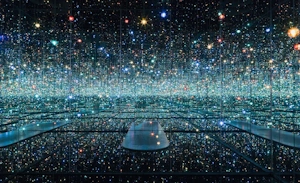
The Question of Memory
श्रीराम उवाच
एवमेव मनः शुद्धं पृथ्व्यादिरहितं त्वया । मनो ब्रह्मेति कथितं सत्यं पृथ्व्यादिवर्जितम् ।। १ तदत्र प्राक्तनी ब्रह्मन्स्मृतिः कस्मान्न कारणम् । यथा मम तवान्यस्य भूतानां चेति मे वद ।। २
Rama has been listening carefully. Vasistha had just said that pure Mind — untouched by earth, water, fire and other elements — is itself Brahman, the absolute reality. Rama accepts this. But a question nags him.
He says — 'Fine. But you and I both carry memories from past lives. So do all living beings. These memories shape us, pull us back, keep us turning on the wheel of birth and death. Now if Brahmā is the first being — the self-born creator — why doesn't he have such memories driving him? What makes him different from the rest of us?'
It is a sharp question. Rama is probing the very mechanics of bondage.
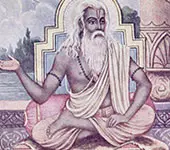
श्रीवसिष्ठ उवाच
पूर्वदेहोऽस्ति यस्याद्य पूर्वकर्मसमन्वितः । तस्य स्मृतिः संभवति कारणं संसृतिस्थितेः ।। ३ ब्रह्मणः प्राक्तनं कर्म यदा किंचिन्न विद्यते । प्राक्तनी संस्मृतिस्तस्य तदोदेति कुतः कथम् ।। ४
Vasistha explains patiently. Memory is not magical — it is mechanical. It arises because you had a previous body, and that body accumulated karma. Those actions left impressions. Those impressions surface as memories. This is exactly what keeps ordinary beings trapped in samsara. Memory pulls you back. Karma pulls you forward. The wheel keeps turning.
But Brahmā? He had no previous body. He was never born before. He carried no old karma into existence. There was simply nothing there to remember. You cannot have memories of a life that never happened.
तस्मादकारण भाति वा स्वचित्तैककारणम् । स्वकारणादनन्यात्मा स्वयंभूः स्वयमात्मवान् ।। ५
This leads to something profound. If Brahmā had no prior cause — no past karma, no previous body, no external creator making him — then what brought him into being? Vasistha's answer is startling. His only cause is his own mind. He is self-luminous, self-arising, self-contained. He did not come from somewhere. He simply IS.
But notice what Vasistha is doing here. He is pointing through Brahmā toward something deeper. When he says Brahmā's only cause is pure consciousness itself — he is touching Brahman, the absolute. Brahmā arises from Brahman the way a wave arises from the ocean. The wave is real. But it is nothing other than water.
The Two Bodies
आतिवाहिक एवासौ देहोऽस्ति स्वयंभुवः । न त्वाधिभौतिको राम देहोऽजस्योपपद्यते ।। ६
Now Vasistha introduces a crucial distinction. Brahmā has a body, yes — but not the kind of body you are thinking of.
There are two kinds of bodies. The Adhibhautika body is the gross physical body — made of earth, water, fire, air, space. The body that gets hungry, tired, and eventually dies. But there is another — the Ativahika body. This is a subtle body of pure consciousness and intention. Not made of matter at all. More like a luminous form of awareness itself.
Brahmā has only the Ativahika body. He was never assembled from elements. He is pure conscious intention wearing the appearance of a being.
श्रीराम उवाच
आतिवाहिक एकोऽस्ति देहोऽन्यस्त्वाधिभौतिकः । सर्वासां भूतजातीनां ब्रह्मणोऽस्त्येक एव किम् ।। ७
Rama asks — 'Are you saying ALL living beings have both bodies? And Brahmā alone has just one?'
श्रीवसिष्ठ उवाच
सर्वेषामेव देहौ द्वौ भूतानां कारणात्मनाम् । अजस्य कारणाभावादेक एवातिवाहिकः ।। ८ सर्वासां भूतजातीनामेकोऽजः कारणं परम् । अजस्य कारणं नास्ति तेनासावेकदेहवान् ।। ९
Yes, says Vasistha. Every being that has a cause — every being born from prior karma — has both bodies. You need both because you have history, you have karma, you have a reason for being born into physical existence.
But Brahmā is Aja — the unborn, in the sense that he had no prior cause generating him. He is the ultimate cause of all other beings, yet he himself has no cause. Since he has no causal history, nothing generates a physical body for him. He remains with only his subtle consciousness-body.
नास्त्येव भौतिको देहः प्रथमस्य प्रजापतेः । आकाशात्मा च भात्येष आतिवाहिकदेहवान् ।। १० चित्तमात्रशरीरोऽसौ न पृथ्व्यादिक्रमात्मकः । आद्यः प्रजापतिर्व्योमवपुः प्रतनुते प्रजाः ।। ११
Vasistha becomes almost lyrical. The first Prajapati has no physical body whatsoever. He is made of Akasha — space, the infinite void. His form is consciousness alone. He is pure mind, pure intention, wearing the appearance of a being.
And from this space-like, mind-like being — all of creation flows outward. He does not build the world with physical hands. He thinks it into existence. His sankalpa — his pure will — is the creative act.
Here Vasistha is again pointing beyond Brahmā. This space-like quality, this pure consciousness that Brahmā is made of — that IS Brahman. Brahmā is Brahman's creative face.
Creation as Consciousness
ताश्च चिद्व्योमरूपिण्यो विनान्यैः कारणान्तरैः । यद्यतस्तत्तदेवति सर्वैरेवानुभूयते ।। १२
The creatures and worlds that emerge from Brahmā are of the same nature as him — forms of consciousness-space. No external material was needed. Whatever comes from consciousness is itself consciousness. A mango tree does not produce lemons. This is not philosophy, says Vasistha — it is directly experienced by those who look clearly.
निर्वाणमात्रं पुरुषः परो बोधः स एव च । चित्तमात्रं तदेवास्ते नायाति वसुधादिताम् ।। १३
Now the shift from Brahmā to Brahman becomes explicit. The Supreme Being — and here Vasistha means Brahman, not Brahmā — is pure stillness, pure awareness, Nirvana itself. It remains as pure mind. It never actually becomes earth or stone or matter. The appearance of the material world is just that — an appearance. Beneath everything, the reality is Brahman, unchanged, undivided.
सर्वेषां भूतजातानां संसारव्यवहारिणाम् । प्रथमोऽसौ प्रतिस्पन्दश्चित्तदेहः स्वतोदयः ।। १४ अस्मात्पूर्वात्प्रतिस्पन्दादनन्यैतत्स्वरूपिणी । इयं प्रविसृता सृष्टिः स्पन्दसृष्टिरिवानिलात् ।। १५
For all beings caught in samsara, the very first movement — the original stirring — was Brahmā's mind-body arising spontaneously from Brahman. And from that first vibration, all of creation unfolded. Just as wind creates ripples without becoming something other than wind — creation flows from that original conscious vibration without ever becoming something truly separate from Brahman.
प्रतिभानाकृतेरस्मात्प्रतिभामात्ररूपधृक् । विभात्येवमयं सर्गः सत्यानुभववान्स्थितः ।। १६ दृष्टान्तोऽत्र भवत्स्वप्नपुरस्त्रीसुरतं यथा । असदप्यर्थसंपत्त्या सत्यानुभवभासुरम् ।। १७
But if creation is just consciousness, why does it feel so utterly real and solid?
Vasistha addresses this directly. Creation borrows its seeming-reality from the consciousness it springs from — Brahman itself. It shines with Brahman's reality even though it has no independent material existence.
Then he gives a vivid example. Think of a dream. You meet people in a beautiful city, you feel emotions, even physical sensations. None of it is physically real. Yet while you are in it — it feels completely real. The experience is genuine even though the objects are not. Creation works exactly this way. It is projected from Brahman's consciousness, which is why it glows with the feeling of reality.
Brahmā's True Nature — and What Lies Behind It
अपृथ्व्यादिमयो भाति व्योमाकृतिरदेहकः । सदेह इव भूतेशः स्वात्मभूः पुरुषाकृतिः ।। १८ संवित्संकल्परूपत्वान्नोदेति समुदेति च । स्वायत्तत्वात्स्वभावस्य नोदेति न च शाम्यति ।। १९
Brahmā appears to have a form — he looks like a person, the lord of all beings. But he is made of no element. He is like the sky taking a human shape. And because his nature is pure awareness and pure intention — he neither truly rises nor truly sets in the way ordinary beings do. He is beyond the usual cycles of birth and death.
But notice — these qualities Vasistha describes for Brahmā are actually the qualities of Brahman. Unchanging, self-luminous, beyond arising and ceasing. Brahmā is Brahman's creative expression, wearing a subtle personal form.
ब्रह्मा संकल्पपुरुषः पृथ्व्यादिरहिताकृतिः । केवलं चित्तमात्रात्मा कारणं त्रिजगत्स्थितेः ।। २० संकल्प एष कचति यथा नाम स्वयंभुवः । व्योमात्मैष तथा भाति भवत्संकल्पशैलवत् ।। २१
Brahmā is a being made entirely of Sankalpa — pure will, pure intention. No earth, no elements. Only mind. And yet he is the cause of all three worlds.
His intention shines like light. He is made of sky-like consciousness — meaning Brahman's consciousness. And just as you can imagine a mountain in your mind — vivid, solid, utterly convincing — and yet that mountain exists nowhere but in thought — so too the universe exists in Brahmā's consciousness, which is itself nothing other than Brahman shining through a personal creative form.
The Root of Bondage
आतिवाहिकमेवान्तर्विस्मृत्या दृढरूपया । आधिभौतिकबोधेन मुधा भाति पिशाचवत् ।। २२
Now Vasistha turns to the actual subject of this canto — bondage and its causes.
Deep within every being, there is only the Ativahika — the subtle consciousness body, which is ultimately Brahman itself. That is the truth. But through deep, persistent forgetting — through the firm delusion that we are physical bodies — the gross material body appears to be real. It haunts us like a ghost. It is not truly there in any ultimate sense, but we cannot stop seeing it and believing in it.
इदं प्रथमतोद्योगसंप्रबुद्धं महाचितेः । नोदेति शुद्धसंवित्त्वादातिवाहिकविस्मृतिः ।। २३ आधिभौतिकजातेन नास्योदेति पिशाचिका । असत्या मृगतृष्णेव मिथ्या जाड्यभ्रमप्रदा ।। २४
For the great awakened consciousness — one who is fully awake from the very first stirring of awareness — this forgetting never happens. Pure awareness, Brahman itself, does not forget itself. The ghost of physical-body-identification never rises for such a one.
The gross body delusion is like a mirage. A traveler in the desert sees water shimmering ahead. He runs toward it. But there was never any water. The gross body creates exactly this kind of illusion — the illusion of dense, inert, independent matter. It is the source of our deepest confusion. But it has no ultimate reality.
Everything is Mind — and Mind is Brahman
मनोमात्रं यदा ब्रह्मा न पृथ्व्यादिमयात्मकः । मनोमात्रमतो विश्वं यद्यज्जातं तदेव हि ।। २५
Here Vasistha states the philosophical heart of this entire passage.
Brahmā is nothing but mind. No earth, no elements. Therefore whatever was born from him — the entire universe — is also nothing but mind. The cause was pure mind, which is Brahman's own nature. The effect cannot be anything other. This is not a mystical claim — it is simple logic about the nature of causation.
अजस्य सहकारीणि कारणानि न सन्ति यत् । तज्जस्यापि न सन्त्येव तानि तस्मात्तु कानिचित् ।। २६ कारणात्कार्यवैचित्र्यं तेन नात्रास्ति किंचन । यादृशं कारणं शुद्धं कार्य तादृगिति स्थितम् ।। २७ कार्यकारणता ह्यत्र न किंचिदुपपद्यते । यादृगेव परं ब्रह्म तादृगेव जगत्त्रयम् ।। २८
In ordinary creation, you need many supporting causes working together. A pot needs clay, a potter, a wheel, fire, water. But Brahmā had no such supporting causes — he arose from Brahman alone, spontaneously. Therefore whatever came from him also has no external supporting causes. No separate raw material was needed.
And this means — there is no real difference between cause and effect here. The cause is pure Brahman. The effect is equally Brahman. In fact the whole framework of cause-and-effect barely applies. The Supreme Brahman and the three worlds are of the exact same nature. The universe is not a product manufactured by Brahman from some other material. It IS Brahman, appearing as universe.
This is the great leap. Brahmā is the creative face. But the substance — of Brahmā, of creation, of you — is Brahman alone.
मनस्तामिव यातेन ब्रह्मणा तन्यते जगत् । अनन्यादात्मनः शुद्धाद्द्रवत्वमिव वारिणः ।। २९ मनसा तन्यते सर्वमसदेवेदमाततम् । यथा संकल्पनगरं यथा गन्धर्वपत्तनम् ।। ३०
Brahmā, having taken on the nature of mind, stretches the world outward. Vasistha uses a beautiful analogy — just as fluidity is not separate from water, the universe is not separate from Brahman's pure Self. The world is an inherent expression of consciousness, the way wetness is an inherent quality of water. You cannot have water without wetness. You cannot have Brahman without the appearance of the world arising within it.
And yet — this vast creation is ultimately unreal in the material sense. It is like a city built in imagination. Like the legendary Gandharva city — a celestial mirage shimmering in the sky with extraordinary detail, yet having no physical substance whatsoever.
The Awakened Ones
आधिभौतिकता नास्ति रज्ज्वामिव भुजङ्गता । ब्रह्मादयः प्रबुद्धास्तु कथं तिष्ठन्ति तत्र ते ।। ३१ आतिवाहिक एवास्ति न प्रबुद्धमतेः किल । आधिभौतिकदेहस्य वाचो वात्र कुतः कथम् ।। ३२
The physical world has no more ultimate reality than a snake seen in a rope. In dim light, you recoil from a coiled rope thinking it is a snake. Bring a lamp — the snake never existed. There was only ever a rope. There was only ever Brahman.
So how do the awakened ones — Brahmā and those like him — actually function in this world? Vasistha is precise. For an awakened mind, only the Ativahika exists — the subtle consciousness body that is ultimately Brahman's own awareness. The gross physical body simply does not arise as a reality. It never had any ground to stand on.
Mind IS the World
मनोनाम्नो मनुष्यस्य विरिञ्च्याकारधारिणः । मनोराज्यं जगदिति सत्यरूपमिव स्थितम् ।। ३३ मन एव विरिञ्चित्वं तद्धि संकल्पनात्मकम् । स्ववपुः स्फारतां नीत्वा मनसेदं वितन्यते ।। ३४
Brahmā is essentially a being called Mind — Manas — wearing the form of the creator. The entire universe is this mind's kingdom. It appears real and feels real. But it is the domain of mind expressing itself as world.
And then — mind itself IS Brahmā. They are not two different things. Brahmā is what we call mind when it assumes a creative, intentional, world-generating character. Mind expands its own being outward — and that expansion is what we call creation.
And behind mind — is Brahman. The rope behind the snake.
विरिञ्चो मनसो रूपं विरिञ्चस्य मनो वपुः । पृथ्व्यादि विद्यते नात्र तेन पृथ्व्यादि कल्पितम् ।। ३५
Brahmā is the form of mind. Mind is the body of Brahmā. Completely identical — two words pointing at one reality. And since neither Brahmā nor mind contains earth or water or any element — the entire material world is simply an idea, a projection, a superimposition onto the pure screen of Brahman.
The Inseparability of Seer and Seen
पद्माक्षे पद्मिनीवान्तर्मनो दृद्यस्ति दृश्यता । मनोदृश्यदृशौ भिन्ने न कदाचन केनचित् ।। ३६ यथा चात्र तव स्वप्नः संकल्पश्चित्तराज्यधीः । स्वानुभूत्यैव दृष्टान्तस्तस्माद्धृद्यस्ति दृश्यभूः ।। ३७
Just as a lotus exists within the lotus-eyed being — meaning within consciousness itself — the seen world exists inside the mind that sees it. The seer and the seen have never actually been two separate things. No one, at any time, has ever truly experienced a gap between mind and its objects.
Vasistha points Rama to his own dream-experience. In a dream, you the dreamer, your thoughts, and the entire world you dream of are all happening inside one mind. They feel real and separate. Yet they were never outside you for even a moment. Use that as your evidence. The waking world works exactly the same way — and behind that mind is Brahman, the dreamer who never actually dreams, the witness who is beyond all witnessing.
The Binding Power of Appearance
तस्माच्चित्तविकल्पस्थपिशाचो बालकं यथा । विनिहन्त्येवमेषान्तर्द्रष्टारं दृश्यरूपिका ।। ३८ यथाङ्कुरोऽन्तर्बीजस्य संस्थितो देशकालतः । करोति भासुरं देहं तनोत्येवं हि दृश्यधीः ।। ३९
But if the world is mind and mind is Brahman — why are we so hopelessly trapped?
The appearance of an objective world 'out there' acts like a ghost haunting the mind. Just as a child is paralyzed with terror by a ghost story, the appearance of the seen world paralyzes the inner witness — the pure Seer — and overwhelms it completely. The Seer forgets it is Brahman. It starts to believe it is a tiny, vulnerable physical creature.
And this is not sudden. It grows organically. Like a sprout hidden inside a seed — given the right conditions of space and time, it breaks through and builds an entire body. The tendency to see an external material world grows exactly this way inside the mind. It starts as a subtle movement, takes root, and eventually fills everything — until the infinite Brahman seems to be a small frightened person.
Liberation — The Final Verse
सच्चेन्न शाम्यति कदाचन दृश्यदुःखं दृश्ये त्वशाम्यति न बोद्धरि केवलत्वम् । दृश्ये त्वसंभवति बोद्धरि बोद्धृभावः शाम्येत्स्थितोऽपि हि तदस्य विमोक्षमाहुः ।। ४०
This final verse is among the most precise and beautiful in the entire Yoga Vasistha. Vasistha lays out the logic of liberation with surgical clarity.
If the seen world is ultimately real — then the suffering within it will never end. Ever. It will just keep going in endless variation.
But when the seen world is recognized as nothing other than Brahman — when the appearance dissolves back into the pure Awareness that was always the ground — that Awareness loses nothing. It remains full, complete, alone in its own nature. Brahman is not diminished when the world appearance ceases.
And here is the deepest paradox. When the seen world dissolves, the very sense of 'I am the knower, I am the witness, I am the one who sees' — also dissolves. Because the knower-role only existed in relation to something known. Brahman has no knower and no known. It simply is.
Yet the sage continues to live. He walks, talks, breathes, acts in the world. He appears to be a person. But inwardly — the knower has dissolved along with the known. What remains is Brahman alone, wearing the appearance of a person, the way the rope wears the appearance of a snake — until the light comes.
This, says Vasistha, is what the wise call liberation — Vimoksha.
- Why does Vasistha say memory is the cause of bondage rather than desire or ego?
Most spiritual teachings blame desire or ego for keeping us trapped. Vasistha goes deeper. He says memory is the real engine of bondage. Here is why. Desire needs an object. Ego needs a sense of self. But both of these depend on memory. Without memory you would not know what you desire. Without memory you would not know who you think you are. Memory carries the impressions of past actions forward into a new life and gives them fresh momentum. It tells you who you were, and from that, you conclude who you are. Vasistha is saying that the chain of rebirth is literally a chain of memory. Break the chain of memory and the whole machinery of bondage stops. This is far more precise than blaming desire, because desire is only the symptom. Memory is the mechanism.
- Brahma had no past karma and no past body. Does that mean he was perfectly free from the very beginning?
Yes, and this is one of the most quietly revolutionary ideas in the text. Brahma was never bound. He did not achieve freedom. He never lost it. Freedom was his natural condition simply because there was nothing prior to create bondage in him. Now here is the secret implication of this. If Brahma is the source of all beings, and Brahma is naturally free, then the original nature of every being is also freedom. Bondage is something that was added later through forgetting. It is not the original condition. Liberation therefore is not gaining something new. It is simply returning to what was always already the case before the forgetting began. Vasistha is telling us that our deepest nature is closer to Brahma than to the trapped creature we imagine ourselves to be.
- What exactly is the Ativahika body and why does it matter so much?
The Ativahika body is one of the most important and least discussed concepts in this teaching. It is the body made entirely of consciousness and intention. No earth, no water, no fire, no physical substance at all. Every being has this subtle body underneath the gross physical one. The gross body is like a costume worn over it. Now here is what makes this profound. When you die, the gross body falls away. But the Ativahika body carries your consciousness forward into the next birth. It is the vehicle of your continuity across lives. More importantly, when you wake up spiritually, the gross body is seen as the illusion it always was and only the Ativahika remains as your actual form. The awakened sage has a body that the ordinary eye cannot truly see because it is made of the same stuff as awareness itself.
- Vasistha says the universe is like a dream. But we all know dreams end when we wake up. Why has this dream not ended?
This is the question that Vasistha is really answering throughout this entire text. The dream continues because the dreamer has forgotten that he is dreaming. In an ordinary night dream, some part of you remains slightly separate from the dream and eventually pulls you out. But in the cosmic dream, the dreamer, which is pure consciousness, has become so completely absorbed in the appearance that this slight distance has collapsed. The forgetting is total. And here is the deeper secret. The dream is not actually sustained by anything outside you. It is sustained only by your continued belief in it. The moment that belief cracks, the moment even a small gap opens between you and your identification with the seen world, the dream begins to thin. This is why sages place such enormous importance on questioning the reality of the world rather than just trying to improve your situation within it.
- Vasistha says cause and effect are of the same nature here. Why does this matter practically?
In ordinary life we assume that causes and effects are different. Seeds are different from trees. Parents are different from children. But Vasistha is pointing to something extraordinary. When the cause is pure consciousness and nothing else, then the effect must also be pure consciousness and nothing else. There is no raw material from outside being shaped into something new. Consciousness is not making the world the way a potter makes a pot. It is more like the way a dreamer makes a dream. The dream is not made of different stuff than the dreamer's mind. It is the dreamer's mind, appearing to itself as something other. The practical implication is this. You are not separated from the source by layers of different substance. There is no gap between you and Brahman made of intervening matter. The only separation is the appearance of separation, which is itself made of consciousness. You are already that which you are seeking.
- Why does Vasistha use the image of a ghost specifically to describe the gross body?
This is a carefully chosen image and it reveals something important. A ghost is something that appears to be present but has no physical substance. A ghost frightens people, controls their behavior, makes them run and hide, shapes their entire reality, and yet it is not actually there. The gross physical body is exactly like this. It has the appearance of solidity and reality. It generates fear, desire, pain, pleasure. It runs your entire life. And yet underneath it, what is actually there is only the subtle consciousness body, the Ativahika, which is pure awareness. The gross body is a haunting. It is the appearance of matter superimposed on what is actually spirit. And just like a ghost that disappears the moment you realize there was never anything there, the gross body loses its tyrannical hold the moment you see through it. The image is not poetic decoration. It is a precise description of what is actually happening.
- The text says the seer and the seen have never been separate. But we experience them as completely separate every moment. How do we hold this?
Vasistha is pointing to something that can only be verified in direct experience, not in intellectual argument. Here is the approach he suggests. Look at your dream. In the dream, you the dreamer, the world you are experiencing, and the objects within that world all feel entirely separate from each other. The dream mountain feels absolutely solid and external. But when you wake up you realize the mountain was inside you the whole time. You were simultaneously the one seeing the mountain and the mountain itself. Both were movements in your own mind. Vasistha says waking experience is structurally identical to this. The appearance of separation between seer and seen is created by the same mechanism that creates separation in a dream. The appearance is convincing. But it is an appearance. The fact that we cannot easily see through it is not evidence that the separation is real. It is only evidence of how deep the forgetting goes.
- Why does Vasistha say the knower must dissolve for liberation to happen? Is the witness not the highest thing?
This is one of the most subtle and advanced points in the teaching. Many spiritual traditions stop at the witness. They say, become the pure observer, the detached awareness watching everything. This is a genuine step forward. But Vasistha goes further. The witness, the knower, the observer, all of these still imply a subject facing an object. There is still a duality. There is still an inside and an outside. As long as there is a knower, there is something known, and that means the division between self and world is still operating. True liberation, according to Vasistha, is when even the knower dissolves. Not into unconsciousness, but into something that is prior to the knower-known division altogether. That is Brahman. Not the one who knows Brahman. Not even the pure witness of Brahman. Simply Brahman, which needs no witness because it is complete in itself. The witness is the last veil.
- Vasistha describes creation as a Gandharva city, a mirage in the sky. But people lived entire lifetimes, civilizations rose and fell. How can all of that be called unreal?
Vasistha is not saying that the experience did not happen. He is saying that what it was made of is not what we think. The Gandharva city is a perfect image because it is not nothing. It appears fully formed, with great detail and apparent substance. People in the stories would see it and mistake it for a real city. The error was not in seeing it. The error was in the conclusion drawn from seeing it, which was that it had independent material reality. Creation is exactly this. The experiences are real experiences. The feelings, the relationships, the beauty and suffering, all of it registers fully. But its substance is consciousness, not matter. The civilizations that rose and fell were movements in cosmic consciousness, like elaborate dreams. Calling them unreal does not dismiss them. It reveals what they were actually made of, which turns out to be something far more extraordinary than mere matter. They were Brahman dreaming at a civilizational scale.
- If Brahman never actually became the world, why does the world appear at all? What was the first cause of this appearance?
This is the question that every serious reader of this text eventually arrives at, and it is the one Vasistha answers most carefully throughout the Yoga Vasistha. The appearance arises through what the text calls the first vibration, the original Sankalpa or intention within consciousness. But here is the secret that most readers miss. Vasistha never says this first vibration had a cause outside of consciousness itself. He is not describing a fall, a mistake, or a divine plan. He is describing something more mysterious. Consciousness, by its very nature, has the capacity to appear to itself as other than itself. This is not a flaw. It is not an accident. It is the nature of awareness to be luminous, and luminosity means things appear within it. The world appearance is not something that happened to Brahman from outside. It is something that arises within Brahman the way light naturally radiates from a flame. The flame does not decide to radiate. It simply does, because that is what it is. And just as the radiance never leaves the flame, the world never actually leaves Brahman. The mystery is not why the world appeared. The mystery is why it took us so long to see that it never went anywhere else.
Here are ten objections and replies:
Objection 1. This is all just ancient Indian mythology dressed up as philosophy. Brahma, Brahman, cosmic dreams, none of this is based on evidence.
The objection assumes that evidence means physical measurement. But consider what is actually being discussed here. The nature of consciousness, the relationship between the observer and the observed, whether matter is fundamental or whether awareness is more fundamental. These are not mythology. They are live questions in modern physics and philosophy of mind right now.
Quantum mechanics already showed that the act of observation affects what is observed. That collapses the sharp boundary between seer and seen that we always took for granted. Neuroscience still cannot explain how physical processes in the brain produce the felt quality of experience. The hard problem of consciousness remains completely unsolved.
Vasistha is not offering mythology as a substitute for inquiry. He is offering a map of consciousness drawn from direct inner investigation. The question is not whether to trust ancient texts. The question is whether the map matches actual territory. That can only be tested by looking inward honestly.
Objection 2. If the world is just a projection of mind, explain earthquakes, tsunamis, cancer. Did those victims project their own suffering?
This confuses two levels that Vasistha carefully keeps separate. He never says the world is your personal projection the way some pop spirituality suggests. He is not saying the earthquake victim chose their suffering. He is saying that the entire framework within which earthquakes, bodies, victims and suffering all arise is made of consciousness rather than independent matter.
Within that framework, cause and effect work completely normally. Fire burns. Disease kills. Gravity pulls. The teaching does not cancel physical causation. It only reveals what physical causation is happening inside of.
A dream can contain genuine tragedy. The dreamed person experiences real terror and real pain. The fact that the dream is made of mind does not make the suffering less real to the one inside it. It does however point to a level of reality from which even the greatest suffering cannot touch the deepest nature of the one experiencing it. That is not cold comfort. That is the most radical source of genuine comfort available.
Objection 3. Consciousness being the ground of reality sounds beautiful but you cannot test it. It is not science.
The demand for testability is reasonable for studying the outer world. But consciousness is not accessible from outside. It is only accessible from inside, through direct experience. This is not a weakness of the teaching. It is a basic fact about what consciousness is. You cannot put awareness under a microscope because the microscope, the eye looking through it, and the entire act of looking are all already happening inside awareness.
The teaching does have a very specific test. Investigate the nature of the one who is reading these words right now. Find where that one begins and ends. Find the boundary between the observer and what is being observed in your own direct experience. Try to find a self that exists independently of the thoughts and sensations it is aware of.
What you find, or more precisely what you fail to find, is the evidence. Every serious investigator who has done this inquiry honestly reports the same result. The separate self cannot be found as a solid independent object. That is repeatable and verifiable. It simply requires a different instrument than a laboratory.
Objection 4. Vasistha says Brahma arose without cause. That is no different from religious people saying God just exists. It explains nothing.
The objection is fair if we stop at Brahma. But the teaching does not stop there. Brahma is not the final answer. He is a pointer. The actual claim is that consciousness itself is the uncaused ground of everything.
Now consider the alternative. Science currently says the universe arose from a quantum fluctuation or a singularity. When pressed on what caused that singularity, the answer is that causation itself only begins with the universe, so the question of a prior cause does not apply. Science also arrives at an uncaused beginning.
The difference is that Vasistha identifies this uncaused ground as consciousness while materialist science identifies it as matter or energy. Neither can go further back than their chosen fundamental. The question then becomes which is more fundamental, consciousness or matter. Matter has never been shown to produce consciousness. But consciousness demonstrably produces the appearance of matter, as every dream shows. An uncaused conscious ground is at least as logically solid as an uncaused material ground, and arguably more so.
Objection 5. The dream analogy breaks down completely. In a dream I am the sole dreamer. In the real world billions of people share the same reality independently. That proves the world is not a dream.
The hidden assumption here is that shared experience proves external material reality. But shared experience only proves that experiences are coordinated. It does not prove they are generated by independent matter outside all consciousness.
In your own dream, multiple dream characters share the same dream world. They respond to the same events, interact with each other, confirm each other's experiences. From inside the dream it looks exactly like independent shared reality.
The coordination of experience across many beings is precisely what you would expect if all experience arose within one field of consciousness appearing as many. This is exactly what Vasistha describes. Brahman is not your personal mind. It is the one consciousness within which all individual minds arise and share a coordinated appearance. The sharing is not evidence against this view. It is exactly what this view predicts.
Objection 6. If everything is Brahman and nothing is ultimately real then nothing matters. Ethics, compassion, justice all become meaningless.
This is the most common and most misguided objection to this philosophy. It assumes that meaning and ethics require things to be independently real in a material sense.
Go back to the dream. Within a dream, causing pain to a dream character is still cruelty. Helping a dream character in distress is still compassion. The unreality of the dream does not cancel the moral quality of actions within it.
In fact this teaching leads to deeper compassion, not less. If every being is Brahman appearing in a temporary form then harming another is literally harming yourself. The boundaries between self and other that normally limit our compassion are revealed as fictional. The greatest acts of human compassion in history came from people who experienced this dissolution of the self and other boundary, not from people convinced of their own solid separate existence. The teaching does not produce indifference. It removes the last justification for indifference.
Objection 7. Vasistha says the gross physical body is an illusion like a ghost. But I feel pain right now. Pain is more real than any philosophy.
Nobody is disputing the reality of pain as an experience. Pain is perhaps the most vivid and undeniable of all experiences. The question is not whether pain is experienced. The question is what pain is made of and where it happens.
Pain is an experience arising in consciousness. It cannot arise anywhere else. You have never experienced pain outside of awareness. Even the most intense physical agony is, at the level where it actually occurs, an event in consciousness.
This does not make pain less painful. It does not mean you should not seek relief. But it means that what pain is happening in is not a fragile physical object in a hostile universe. It is happening in the one thing that is ultimately indestructible, which is consciousness itself. The sage does not stop feeling pain. But pain no longer carries the additional terror of threatening his deepest existence, because he knows his deepest existence is not the body in which pain appears. That shift alone transforms the entire relationship to suffering.
Objection 8. This entire teaching is elitist. Only people with leisure time to sit and philosophize can pursue this. What about ordinary working people?
The teaching is not asking anyone to sit in a cave and philosophize. Vasistha delivers this entire teaching to Rama while Rama is preparing to fulfill his duties as a prince and future king. The Yoga Vasistha is explicitly about how to live in the world with full engagement while being inwardly free.
The insight being pointed to does not require hours of leisure. It requires a shift in understanding that can happen in a single moment of genuine seeing and then deepen through ordinary daily life. The awakened one continues to act normally. He eats, works, engages with people. The difference is entirely interior.
A working person carrying this understanding goes to their work differently. Their dignity does not depend on their circumstances. Their peace is not contingent on the world cooperating with their wishes. This teaching is actually far more accessible to ordinary people than academic philosophies requiring years of specialized education. It only requires honest self inquiry, which costs nothing and can happen anywhere at any time.
Objection 9. Vasistha says Brahman is beyond cause and effect. But everything we know exists within cause and effect. Talking about something outside it is just meaningless.
The objection assumes that our framework of cause and effect covers all possible reality. But even within science this assumption is breaking down. Quantum entanglement shows connections between particles that cannot be explained by any causal chain operating through space. The origin of the universe sits at a boundary where causal concepts simply stop applying. Mathematics exists in a domain where physical causation is entirely irrelevant.
The limits of causal thinking are not the limits of reality. They are the limits of a particular tool we use to understand the outer world.
Vasistha is not asking you to accept something meaningless. He is asking you to notice something simple. The awareness in which all causal processes appear is itself not produced by those processes. You do not cause yourself to be aware right now. Awareness simply is. That simple undeniable fact, looked at carefully, is the doorway into everything this teaching is pointing toward.
Objection 10. Even if all this is true it is practically useless. Knowing the world is Brahman does not pay your bills or cure your disease or fix your relationships.
This objection assumes that the most urgent human problem is managing outer circumstances. But look at the evidence of ordinary life. People who achieve everything they pursued, wealth, health, perfect relationships, still report a persistent feeling that something is missing. Outer circumstances improve but inner restlessness remains. This is not a personal failing. It is the predictable result of looking for a solution to an inner problem in outer arrangements.
Vasistha is addressing the root cause of the restlessness itself, which is the forgetting of what we actually are.
A person who has genuinely understood even a fraction of what is pointed to here does not become incapable of paying bills or treating disease. They become more effective at practical life because they are no longer desperate. Desperation is one of the greatest obstacles to clear action. When you know your deepest nature is not threatened by any circumstance, a quality of inner steadiness arises from which clear and effective outer action becomes naturally possible. The understanding does not take you out of the world. It puts you in a position to deal with the world without being crushed by it.





English
Yoga Vasishta
Click on any topic to open
7
30
Astrology
Bhagavad Gita
Bhagavatam
Bharat Matha
Devi
Devi Mahatmyam
Ganapathy
Garuda Puranam
Glory of Venkatesha
Hanuman
Kathopanishad
Mahabharatam
Mantra Shastra
Mystique
Practical Wisdom
Purana Stories
Radhe Radhe
Ramayana
Rare Topics
Rigveda Explained
Rituals
Sages and Saints
Shiva
Spiritual books
Sri Suktam
Story of Sri Yantra
Temples
Vedas
Vishnu Sahasranama
Yoga Vasishta
26
17
10
0


