The Inner Clean-Up Starts from Your Plate
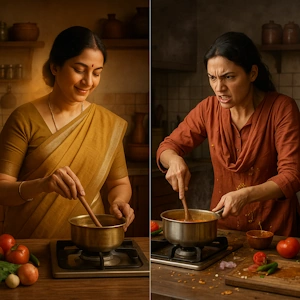
Linga Purana says -
अन्नशुद्धौ सत्वशुद्धिर्न मृदा न जलेन वै ।
सत्वशुद्धौ भवेत्सिद्धिस्ततोन्नं परिशोधयेत् ॥
- Food is the gateway.
The shloka starts by saying, ‘If your food is pure, your mind becomes pure.’ Why food? Because every thought you think is powered by the energy that food releases in your body. Garbage in, confusion out; clean fuel in, clear thinking out. - You cannot hose down the mind.
‘Not by mud, not by water,’ the verse insists. Swap ‘mud’ for the modern ‘soap’ and it reads: No amount of water or detergent can scrub the mind the way you scrub a plate. You can rinse rice a dozen times, you can sanitise your kitchen till it gleams, but that physical cleaning stops at the skin. The mind is subtler than nerves and blood. Water or soap never even reach it. - Inner purity demands inner methods.
Since the mind lives on subtler vibrations, it can only be purified by subtler inputs: - Quality ingredients – fresh, seasonal, grown without violence or exploitation.
- Quality emotions – calmness, gratitude, devotion while chopping, stirring, serving.
- Quality consumption – eating slowly, without rage-scrolling a phone or quarrelling at the table.
- Picture two identical bowls of soup. One was simmered by someone anxious, cursing the clock; the other by someone chanting quietly. Chemically they look the same, but you and I have both felt the difference: one leaves you restless, the other strangely at ease.
- Pure mind, reliable success.
The verse links a clean mind with ‘siddhi’ – accomplishment. A mind that is light, undisturbed, and sharp spots good choices faster, sticks with them longer, and bounces back sooner when life slaps it. Students on a sattvic diet report better focus; athletes ditching junk notice steadier moods on game day. Same law. - Therefore, purify food – at every layer.
The Sanskrit word ‘parishodhayet’ means ‘clean thoroughly’. Sure, wash the veggies; hygiene is non-negotiable. Then add the deeper cleanse: cook in a peaceful mood, offer a silent thank-you before eating, avoid food loaded with cruelty or greed. That whole chain of care is the real soap for the mind.
1. Sattvic: the calm, clear fuel
Essence
Light, fresh, easy to digest. Boosts clarity, steadiness, and a gentle sense of joy.
Typical items
- Fresh fruits (banana, mango, pomegranate)
- Steamed or lightly sautéed vegetables (ridge gourd, bottle gourd, pumpkin, spinach)
- Whole grains (unpolished rice, millets, whole-wheat chapati)
- Split dals and mung beans, well-cooked
- Milk, ghee, fresh paneer, curd made at home
- Moderate natural sweeteners—jaggery, honey, dates
- Herbs and mild spices—coriander, cumin, fennel, cardamom
How it feels
After a sattvic meal you rarely need a nap. The mind stays alert but peaceful, making it ideal for study, meditation, or creative work.
2. Rajasic: the driver’s fuel
Essence
Energising, spicy, stimulating. Good for action but can overheat mind and body if overdone.
Typical items
- Onions, garlic, radish, mustard greens
- Chili, black pepper, strong pickles, heavy masala gravies
- Deep-fried snacks—pakoras, samosas, bhujia
- Caffeinated drinks—chai, coffee, colas
- Sour, tangy chutneys loaded with salt or vinegar
- Refined sugar treats—jalebi, barfi, bakery cakes
How it feels
Gives a quick surge—handy when you need to pitch, present, or power through deadlines. Too much, though, and irritation, restlessness, or late-night wakefulness creep in.
3. Tamasic: the dulling fuel
Essence
Heavy, stale, or lifeless food. Slows body and clouds judgment when relied on day after day.
Typical items
- Leftovers kept too long or reheated multiple times
- Processed meats, canned foods, instant noodles heavy on preservatives
- Alcohol, cigarettes, narcotics
- Mushy overcooked dishes sitting for hours on a buffet
- Excess cheese or overly sweet, greasy desserts
How it feels
You might feel sleepy, sluggish, and foggy in thought. Long-term reliance often goes hand-in-hand with low motivation and ‘why bother’ moods.
Practical pointers
- Cook in a calm mood
The category can shift with your emotion. A sattvic curry stirred in anger becomes rajasic in effect. A rajasic pickle prepared with patience can land lighter. - Watch leftovers
If food must be stored, cool it quickly, seal it tight, reheat only once, and finish the batch the next day. Anything beyond that starts sliding toward tamas. - Seasonal sense
Summer welcomes more raw salads and coconut water. Winter likes warming millet, ghee, and gentle spices. Nature already cues you—listen. - Mindful eating ritual
Sit down, bless the plate quietly, chew thoroughly, pause screens for ten minutes. That single act upgrades any meal by a whole guna.






English
Rare Topics
Click on any topic to open
7
30
Astrology
Bhagavad Gita
Bhagavatam
Bharat Matha
Devi
Devi Mahatmyam
Ganapathy
Garuda Puranam
Glory of Venkatesha
Hanuman
Kathopanishad
Mahabharatam
Mantra Shastra
Mystique
Practical Wisdom
Purana Stories
Radhe Radhe
Ramayana
Rare Topics
Rigveda Explained
Rituals
Sages and Saints
Shiva
Spiritual books
Sri Suktam
Story of Sri Yantra
Temples
Vedas
Vishnu Sahasranama
Yoga Vasishta
26
17
10
0


