The Beginning of the Ramayana's Composition
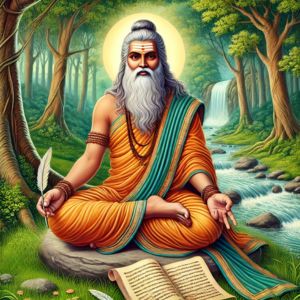
After hearing the story of Shri Ram in hundred concise shlokas from Devarishi Narada, Sage Valmiki went to the banks of the Tamasa River for his daily rituals. There, he saw a hunter shoot down one bird of a Krauncha pair. Deeply moved by the sorrow of the surviving bird, the sage cursed the hunter:
'Maa Nishada Pratishthaam Tvam Agamah Shaashvatee Samah,
Yat Krauncha Mithunaadekam Avadheeh Kaama Mohitam'
Later, the sage wondered, 'Why did I feel such deep compassion and sorrow for the bird?'
He then told his disciple Bharadwaja, 'The words that came from my tongue formed a shloka with equal syllables, four lines, and a melody like the sound of a veena.'
As he continued reflecting on this incident back in his ashram, Lord Brahma appeared before him. Valmiki, still moved by the sight of the bird's fall and the cries of its mate, repeated his curse:
'Maa Nishada...'
However, now, the words carried a new meaning:
'O one who is the seat of Lakshmi, eternal glory has come to you for slaying a lust-driven rakshasa.'
Lord Brahma smiled and said, 'O sage, do not doubt. What you uttered is the world’s first shloka. Now, based on Narada's narration, compose the story of Shri Rama in the form of shlokas. This is happening by my will. Not a single word in your kavya will be false or meaningless. As long as this universe exists, this Ramakatha will be celebrated. After completing this kavya, you will reside with me in Brahmaloka forever.'
This is how Valmiki Ramayana was composed.





English
Ramayana
Click on any topic to open
7
30
Astrology
Bhagavad Gita
Bhagavatam
Bharat Matha
Devi
Devi Mahatmyam
Ganapathy
Garuda Puranam
Glory of Venkatesha
Hanuman
Kathopanishad
Mahabharatam
Mantra Shastra
Mystique
Practical Wisdom
Purana Stories
Radhe Radhe
Ramayana
Rare Topics
Rigveda Explained
Rituals
Sages and Saints
Shiva
Spiritual books
Sri Suktam
Story of Sri Yantra
Temples
Vedas
Vishnu Sahasranama
Yoga Vasishta
26
17
10
0


