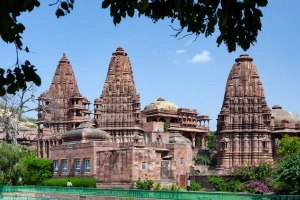
Temple as the Human Body: A Sacred Parallel
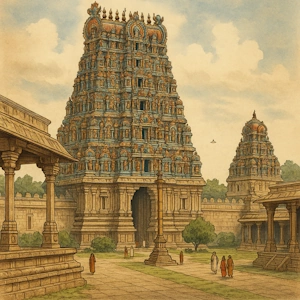
Temple as the Human Body: A Sacred Parallel

Temple architecture is often compared to the human body, symbolizing a deep connection between the physical and spiritual realms. Ancient texts describe the human body as a temple, where the soul resides as its deity. Each part of the temple mirrors a corresponding part of the body, emphasizing the sacred nature of both.

  • Entrance Tower (Gopuram): The towering entrance symbolizes the feet, representing the foundation and the initial step toward the divine journey. Just as the feet support the body, the entrance invites devotees into the sacred space.
  • Flagstaff (Dhvaja-Stambha): This vertical structure signifies the genital organ, reflecting the creative energy and the potential for spiritual growth and transformation.
  • Assembly Hall (Ranga-Maṇḍapa): The spacious hall represents the belly, symbolizing sustenance and communal gathering, where devotees come together for rituals and celebrations.
  • Porch (Antarāla or Śukanāsī): This transition area connects the outer and inner sanctums, symbolizing the heart, the center of emotions and devotion, bridging the material and spiritual worlds.
  • Sanctum (Garbhagriha): The innermost chamber of the temple represents the head, housing the deity and symbolizing the intellect and spiritual focus.
  • Seat of the Deity (Peetha): The exact location of the deity aligns with the center of the eyebrows, the point associated with the third eye or spiritual insight, indicating the ultimate goal of enlightenment.

This metaphor reflects how temples are not just architectural structures but embodiments of the divine human form, guiding devotees toward self-realization and spiritual awakening.

English

English

Temples

Click on any topic to open

0

Copyright © 2026 | Vedadhara | All Rights Reserved. | Designed & Developed by Claps and Whistles
| | | | |
Vedahdara - Personalize

We use cookies