Shlokas 54 - 56 Chapter 2
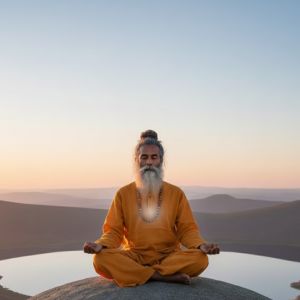
Bhagavad Gita – Chapter 2 (Shlokas 54–56)
Shloka 2.54
अर्जुन उवाच
स्थितप्रज्ञस्य का भाषा समाधिस्थस्य केशव ।
स्थितधीः किं प्रभाषेत किमासीत व्रजेत किम् ॥
arjuna uvaacha -
sthitaprajnyasya kaa bhaashaa samaadhisthasya keshava .
sthitadheeh' kim' prabhaasheta kimaaseeta vrajeta kim ..
Meaning
Arjuna said:
O Keshava, what is the description of a person of steady wisdom, who is established in deep awareness?
How does such a person speak?
How does he sit?
How does he walk?
Shloka 2.55
श्रीभगवानुवाच
प्रजहाति यदा कामान्सर्वान्पार्थ मनोगतान् ।
आत्मन्येवात्मना तुष्टः स्थितप्रज्ञस्तदोच्यते ॥
shreebhagavaanuvaacha -
prajahaati yadaa kaamaansarvaanpaartha manogataan .
aatmanyevaatmanaa tusht'ah' sthitaprajnyastadochyate ..
Meaning
Bhagavan said:
When a person completely gives up all desires arising in the mind,
and remains satisfied in the Self by the Self alone,
then he is called a person of steady wisdom.
Shloka 2.56
दुःखेष्वनुद्विग्नमनाः सुखेषु विगतस्पृहः ।
वीतरागभयक्रोधः स्थितधीर्मुनिरुच्यते ॥
duh'kheshvanudvignamanaah' sukheshu vigataspri'hah' .
veetaraagabhayakrodhah' sthitadheermuniruchyate ..
Meaning
One whose mind is not disturbed in sorrow,
who does not crave pleasure,
who is free from attachment, fear, and anger —
such a person is called a sage of steady understanding.
1. Why Arjuna Asks This Question
Up to this point, Krishna has spoken about Atma, imperishability, and wisdom that goes beyond birth and death. Arjuna understands the words — but he is a warrior standing on a battlefield.
So he asks a sharp, grounded question.
Not:
What is truth?
What is Brahman?
But:
How does such a person actually live?
How does he speak when provoked?
How does he sit when alone?
How does he move among people?
This is not curiosity.
This is urgency.
Arjuna is asking:
If I become like this, what changes in my day-to-day life?
2. Krishna Does Not Start With Behavior
This is crucial.
Krishna does not say:
He speaks softly
He walks slowly
He sits in meditation
Instead, Krishna goes straight to the root.
When all desires born of the mind are dropped…
Why?
Because behavior is not the cause.
Behavior is the effect.
Trying to imitate the outer habits of a wise person without inner clarity creates hypocrisy. Krishna cuts that off immediately.
3. What Are 'Manogata Kamanas'?
These are not gross desires alone.
They include:
Wanting approval
Wanting recognition
Wanting control
Wanting certainty
Wanting emotional safety
Wanting life to behave a certain way
These desires run silently inside the mind, shaping reactions.
A 'sthitaprajna' does not negotiate with these desires.
He lets them drop.
Not by force.
But by seeing through them.
4. 'Atmanyeva atmana tustah' — The Turning Point
This single line carries enormous weight.
Satisfied in the Self, by the Self.
This means:
He no longer asks the world to complete him
He no longer waits for situations to align
He no longer depends on outcomes for inner stability
This does not mean he rejects pleasure or comfort.
It means his sense of wholeness is not outsourced.
Once this happens, steadiness is natural. Not practiced. Natural.
5. Pain Still Comes — But It Does Not Shake Him
Krishna is very precise.
He does not say the wise person does not feel pain.
He says:
His mind is not shaken in pain.
Pain happens.
Loss happens.
Failure happens.
But the mind does not spiral.
It does not collapse into complaint.
It does not demand the universe explain itself.
This is inner maturity, not emotional numbness.
6. Pleasure Comes — But It Does Not Hook Him
This is even more subtle.
Most people think suffering is the problem. Krishna points out that attachment to pleasure is equally destabilizing.
The sthitaprajna:
Enjoys pleasure when it comes
Does not crave its repetition
Does not fear its loss
Pleasure is experienced fully — then released cleanly.
No residue.
7. The Three Fires That Are Extinguished
Krishna names three inner fires that normally rule human life:
Raga — Attachment
The need to cling.
The inability to let go.
Bhaya — Fear
Fear of loss.
Fear of uncertainty.
Fear of the future.
Krodha — Anger
Anger when expectations break.
Anger when control slips.
A 'sthitaprajna' is not battling these fires.
He goes out because the fuel — desire and identification — is gone.
8. Why Such a Person Is Called a Muni
Krishna ends with a powerful word: Muni.
A Muni is not someone who talks a lot about wisdom.
A Muni is someone whose inner noise has fallen silent.
Silence here is not absence of speech.
It is absence of compulsion.
Speech arises when needed.
Action happens when required.
Stillness remains underneath.
The Core Teaching in One Line
A 'sthitaprajna' is not someone who controls life.
He is someone who no longer needs life to behave a certain way to remain whole.
That is why:
His speech is steady
His sitting is relaxed
His walking is unhurried
Because his center does not move.





English
Bhagavad Gita
Click on any topic to open
7
30
Astrology
Bhagavad Gita
Bhagavatam
Bharat Matha
Devi
Devi Mahatmyam
Ganapathy
Garuda Puranam
Glory of Venkatesha
Hanuman
Kathopanishad
Mahabharatam
Mantra Shastra
Mystique
Practical Wisdom
Purana Stories
Radhe Radhe
Ramayana
Rare Topics
Rigveda Explained
Rituals
Sages and Saints
Shiva
Spiritual books
Sri Suktam
Story of Sri Yantra
Temples
Vedas
Vishnu Sahasranama
Yoga Vasishta
26
17
10
0


