Sankhana’s Pilgrimage to Grace
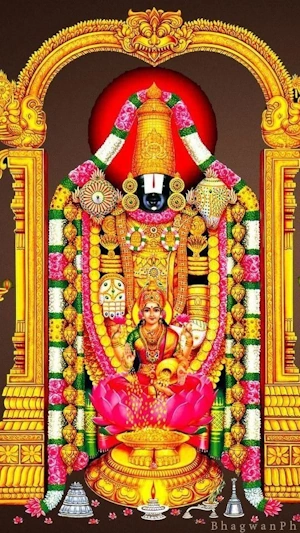
Sankhana was the King of Kambhoja. Betrayed by his subordinates, he lost his kingdom. Sankhana felt sad and helpless. He decided to go on a pilgrimage with his wife and trusted ministers.
Traveling through the south, he visited many holy places. At Sri Kalahasti, he bathed in the Suvarnamukhi river and prayed to Lord Shiva. Sitting under a tree, he reflected on his life, full of sorrow and failure. Feeling hopeless, he wished for an end to his misery. Suddenly, a mysterious voice spoke to him. It urged him to go to Tirumala, worship Lord Venkateswara, and bathe in the sacred Pushkarini.
Obeying the voice, the King set out for Tirumala with his wife and ministers. The sacred hill welcomed them with its beauty. Trees, flowers, birds, and animals surrounded them. Cool streams flowed, filling the air with peaceful sounds. Reaching Pushkarini, the King bathed in its holy waters and offered prayers to Lord Venkateswara. He continued this daily for six months with unwavering devotion, undeterred by the harsh weather.
One morning, during his prayers, a miracle occurred. Lord Venkateswara appeared from the holy Pushkarini, standing with His two consorts. Amazed, celestial beings and saints gathered to witness the divine presence. Overwhelmed with joy, the King knelt before the Lord, seeking blessings. Smiling, the Lord spoke kind words and blessed him with grace.
Returning to his kingdom, Sankhana found his enemies had destroyed each other in internal battles. The people, searching for a king, welcomed him with joy. They crowned him once again, and he ruled as a just and wise leader.
The waters of Pushkarini are holier than any river. Those who bathe there and worship Lord Venkateswara receive blessings. Their wishes are fulfilled by His grace.
- Who was Sankhana and what major crisis did he face in his life?
Sankhana was the King of Kambhoja who faced a devastating betrayal by his own subordinates. This treachery led to the loss of his entire kingdom, leaving him in a state of profound sadness and helplessness. - What was the King's initial reaction to his failure and loss of power?
Initially, the King felt overwhelmed by sorrow and failure. He chose to leave his past behind and embark on a pilgrimage with his wife and trusted ministers, eventually reaching a point of such despair that he wished for an end to his misery while reflecting under a tree at Sri Kalahasti. - What role did the mysterious voice play in the King's spiritual journey?
The mysterious voice acted as a divine catalyst. It intervened at the King's lowest emotional point, providing him with specific direction to seek out Lord Venkateswara at Tirumala and bathe in the Swami Pushkarini, shifting his focus from despair to a path of hope and action. - How does the story describe the natural environment of the sacred Tirumala hill?
Tirumala is depicted as a place of immense natural beauty and spiritual serenity. The hill was filled with vibrant trees, flowers, and various birds and animals, complemented by the peaceful sounds of cool, flowing streams that created a welcoming atmosphere for the pilgrims. - What specific spiritual discipline did King Sankhana follow once he reached Tirumala?
The King practiced rigorous and unwavering devotion for six months. His daily ritual involved bathing in the holy waters of the Pushkarini and offering prayers to Lord Venkateswara, remaining steadfast despite the challenges of harsh weather conditions. - What was the miraculous event that occurred after the King's six months of penance?
A divine miracle took place where Lord Venkateswara manifested physically from the waters of the Pushkarini. He appeared alongside His two consorts, an event so significant that celestial beings and saints gathered to witness the divine presence. - How did the King's external world change as a result of his internal spiritual devotion?
While the King was focused on his prayers, his enemies back in Kambhoja were destroyed by their own internal conflicts. This highlights a hidden principle where spiritual alignment can resolve external obstacles without the need for direct violent confrontation. - What does the restoration of Sankhana to his throne suggest about the nature of divine grace?
The story suggests that divine grace does not just provide emotional comfort but can restore lost status and provide justice. The people’s enthusiastic welcome and his subsequent wise rule indicate that his period of suffering and pilgrimage transformed him into a more capable and just leader. - Why is the Pushkarini considered holier than other sacred rivers in this context?
The Pushkarini is presented as uniquely holy because it is the specific site where the Lord chose to manifest. The text emphasizes that its waters possess the power to fulfill the wishes of the devoted and grant direct access to the grace of Lord Venkateswara. - What is the hidden lesson regarding the relationship between patience and success in this narrative?
The narrative reveals that success is often preceded by a period of total surrender and patience. The King had to endure betrayal, the loss of his identity, a long journey, and six months of disciplined worship before his life was restored, suggesting that true greatness is forged through endurance and faith during times of silence.






English
Glory of Venkatesha
Click on any topic to open
7
30
Astrology
Bhagavad Gita
Bhagavatam
Bharat Matha
Devi
Devi Mahatmyam
Ganapathy
Garuda Puranam
Glory of Venkatesha
Hanuman
Kathopanishad
Mahabharatam
Mantra Shastra
Mystique
Practical Wisdom
Purana Stories
Radhe Radhe
Ramayana
Rare Topics
Rigveda Explained
Rituals
Sages and Saints
Shiva
Spiritual books
Sri Suktam
Story of Sri Yantra
Temples
Vedas
Vishnu Sahasranama
Yoga Vasishta
26
17
10
0


