Reckless Acts of the Youth Lead to Dire Consequences
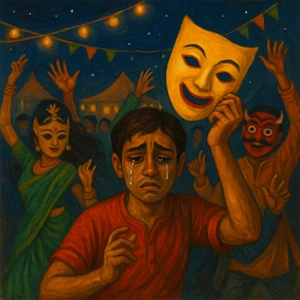
The vairagya prakarana of Yoga Vasishta is about calling the bluff of most things we consider as important in life.
We are all very proud and elated about our youth, the yauvvana. But in the vairagya prakarana, Lord Rama says that youth is the time which is corrupt with arrogance, pride, greed, jealousy, animosity.
Childhood is all about foolishness, incapacity, dependence on others, constant troubles, fears, and misery.
Youth is generally considered to be a time for enjoying, a time full of enjoyments. But youth is in fact a never-ending series of problems and troubles. You enter into youth thinking that it is going to be full of enjoyments, but the experience is just the opposite of this. It is trouble after trouble.
There was a Maharshi called Mandavya. Once he was meditating in his ashrama. At that time, some thieves came and hid inside the ashrama. Soldiers came searching for them. They asked the Maharshi whether he had seen the thieves. He was in deep meditation and did not even hear them. The soldiers searched inside the ashrama and found the thieves hiding there. They thought that the sage was aiding the thieves. Along with the thieves, they brought the Maharshi also to the king's court.
The king ordered all of them to be mounted on standing spears and leave them to die up there with spears thrust into their bodies. The Maharshi continued his tapas there on top of the shoola which had pierced his body. All others had died, but the Maharshi was still meditating, even after days. When the king heard about this, he came rushing and the Maharshi was brought down. The protruding portion of the spear was cut off, but he lived with the sharp tip of the spear still inside his body.
Maharshi wondered what sin he would have done to undergo such severe experience in life. Once when he met Dharmaraja, he asked him about this. Dharmaraja said, when you were a young boy, you used to pierce the bodies of insects with sharp darbha grass. That's why you also had to undergo this suffering.
But that is not fair. A young child does not know the consequences of what he is doing. Mandavya, with the power of his tapas, proclaimed that hereafter no child below 14 would suffer the consequences of what he does, and he also cursed Dharmaraja to take birth on earth. This birth of Dharmaraja on earth is Vidura.
Lord Rama says, even though childhood is a period of misery and troubles, children have the protection of this proclamation by Sage Mandavya. But with youth starts the time when someone sets the path for suffering in naraka. This is the time the mind gets filled with all kinds of desires, and takes off after sensual pleasure, gambling, fighting.
If you have survived the youth, then nothing can ever touch you. Youth is the time when someone destroys himself. Those who have crossed the dangerous land called youth untouched, undestroyed in character — they have real courage and integrity, you can say.
The brilliance of youth is only at times and for a short while — like how lightning lights up a dark stormy night — short-lived. The exciting moments of the youth are short-lived. Everything tastes good while enjoying, but eventually, they all lead to misery and trouble.
All these pleasures are short-lived. They are there only for the time it takes for an arrow to leave the bow and hit the target. Youth looks nice only till the time you don't apply your mind to it — where these momentary enjoyments are taking you.
Youth is the time when you cause maximum trouble to others. Youth is the time when you ignore and neglect everything auspicious in life such as virtues, kindness, helpfulness. You are so self-centred during youth.
For many, broken relationships end up destroying their life. Even the purest of minds get corrupt during youth, like how even the crystal-clear river gets dirty during rainy season. You can cross the dangerous and turbulent river. But to bring the mind under control during youth is next to impossible.
-
Most people glorify youth, but it is often a period filled with arrogance, pride, greed, jealousy, and hostility — traits that set one up for suffering.
-
Childhood is messy and dependent, but it is protected by nature and cosmic law, which doesn't hold children accountable for their actions until a certain age.
-
Sage Mandavya’s story shows how even saints can suffer due to unresolved karmas from childhood, which led him to declare that no child below 14 should bear karmic consequences.
-
Youth is mistakenly expected to be a time of enjoyment, but it quickly turns into a series of emotional, social, and moral traps.
-
It is during youth that people run after sensory pleasures, gambling, and fights, setting the stage for long-term regret and spiritual downfall.
-
Those who pass through youth with their character and clarity intact are rare and truly strong; they are like those who cross a wild, stormy river without drowning.
-
Pleasures of youth are short-lived, intense for a moment, but they quickly give way to dissatisfaction, emotional wreckage, and confusion.
-
Youthful indulgence causes pain to oneself and others — often leading to broken relationships, loneliness, and even self-destruction.
-
Even the clearest mind can get clouded during youth, just like a pure river gets muddied in the monsoon — clarity is overwhelmed by inner turbulence.
-
Bringing the mind under control during youth is one of the hardest spiritual challenges; discipline, if not built early, becomes almost unreachable later.
What makes youth spiritually dangerous?
Youth unleashes ego-driven traits like pride, greed, and jealousy. These emotions cloud judgment, feed desires, and drag a person toward harmful actions. The excitement of the age masks the long-term consequences. Unlike childhood, youth carries full karmic accountability. It becomes the most decisive phase of a person's moral trajectory.
Why do people think youth is meant for enjoyment then?
Because it looks attractive from the outside — full of freedom, energy, and new experiences. But only after entering it do people realize it's chaotic, full of restlessness and craving.
Isn't it unfair to call youth dangerous when it's just a natural phase?
Youth being natural doesn't make it safe. Fire is natural too, but if you don't handle it with care, it'll burn you. The danger lies in its unchecked momentum.
Why does childhood get a karmic pass?
Sage Mandavya’s declaration protects children under 14 from karmic consequences, recognizing their actions stem from ignorance, not intent. It draws a moral boundary between innocence and accountability. Nature gives that space for growth before judgment begins.
Why did Mandavya make this rule?
After suffering unjust punishment for something he did as a child, he used his spiritual authority to reform cosmic justice itself. His tapas (spiritual power) gave him that capacity.
But if karma is absolute, how can one sage change its rules?
Karma works through cosmic intelligence, which is responsive to dharma (righteousness). When injustice becomes visible, sages can alter its application through deep penance and truth-realization.
What happens when youth chases pleasure blindly?
The mind gets consumed by desire, leading to poor decisions, ruined relationships, and eventual inner emptiness. The joy is momentary, but the damage lasts long. Youth becomes a trap disguised as freedom.
What if someone enjoys youth but stays balanced?
That's rare and commendable. It needs strong early training and inner awareness, like giving reins to a wild horse only after it's trained.
Isn't desire a part of life? Why suppress it?
Desire itself isn’t evil — but indulgence without direction breeds ruin. Like overeating sweet food, it tastes great but causes sickness later.
Why is surviving youth considered a spiritual victory?
Because the temptations are intense, and the wisdom is low. Emerging from youth with moral clarity and emotional stability is like swimming across a flood without drowning. It's a sign of real strength.
Can you prepare for youth in advance?
Yes, through early education in values, restraint, and mindful living. It’s like reinforcing a dam before the storm — waiting until it hits is too late.
Isn't moral strength something that comes with age?
Not necessarily. Many remain weak even in old age. Strength comes from conscious discipline, not age alone.
Why are pleasures in youth called short-lived?
They peak fast and fade faster. What feels thrilling today leads to regret tomorrow. It’s like lightning — bright for a second, then gone. The soul is left chasing more, never satisfied.
Isn't some joy better than none?
Joy that uplifts is better than thrill that enslaves. Real joy doesn’t need you to pay for it later in guilt, loss, or suffering.
Is this view just pessimistic?
No — it’s honest. It doesn’t reject joy but warns against blind indulgence. Awareness protects, not ruins, real happiness.
How does youth harm others unintentionally?
In self-centeredness, youth ignores the impact of its actions on parents, friends, and society. It becomes emotionally reckless, careless with trust and obligations. Many lives get shaken by one person’s lack of control.
Why is youth so self-absorbed?
Because identity is still forming. The craving to assert oneself takes over empathy and restraint.
Isn’t that just how everyone is at that age?
Yes, and that’s why it’s dangerous. Normalizing selfishness doesn’t make it right. A society that trains its youth in compassion becomes far more resilient.
What makes the mind uncontrollable in youth?
It’s constantly distracted, overstimulated, and driven by unchecked desires. Like a river in flood, it doesn’t listen to reason. Even noble minds get swept away unless anchored early.
Can the mind ever be tamed during youth?
Yes, but it takes serious effort, like trying to hold a kite in a storm. It requires inner training, support, and sharp awareness.
If control is so hard, why try at all?
Because not trying leaves you at the mercy of impulses. Control might be hard, but chaos is worse. Effort is the only path to real freedom.





English
Yoga Vasishta
Click on any topic to open
7
30
Astrology
Bhagavad Gita
Bhagavatam
Bharat Matha
Devi
Devi Mahatmyam
Ganapathy
Garuda Puranam
Glory of Venkatesha
Hanuman
Kathopanishad
Mahabharatam
Mantra Shastra
Mystique
Practical Wisdom
Purana Stories
Radhe Radhe
Ramayana
Rare Topics
Rigveda Explained
Rituals
Sages and Saints
Shiva
Spiritual books
Sri Suktam
Story of Sri Yantra
Temples
Vedas
Vishnu Sahasranama
Yoga Vasishta
26
17
10
0


