Rudra Seeks the Supreme Truth from Vishnu – The Origin of the Garuda Purana
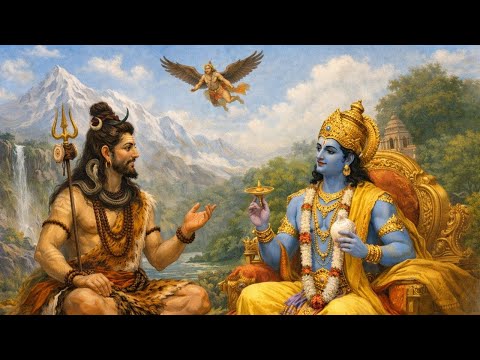
This chapter describes how Rudra approaches Vishnu and asks profound questions about the Supreme Lord, the origin of the universe, dharma, worship, and spiritual disciplines. Vishnu then reveals his all-pervading nature as the source of creation, dharma, knowledge, and the cosmos. The narrative concludes with the story of Garuda receiving boons from Vishnu and the declaration of the Garuda Purana, which will proclaim Vishnu’s greatness.
।।ब्रह्मोवाच।।
इत्युक्तोऽहं पुरा रुद्रः श्वेतद्वीपनिवासिनम् ।
स्तुत्वा प्रणम्य तं विष्णुं श्रोतुकाम स्थितः सुरैः ।। 2.30 ।।
Meaning:
Brahma said: Long ago Rudra went to Vishnu who resides in Shvetadvipa. After praising him and bowing to him, Rudra stood there with the devas, eager to listen.
अस्माकं मध्यतो रुद्र उवाच परमेश्वरम् ।
सारात्सारतरं विष्णुं पृष्टवांस्तं प्रणम्य वै ।। 2.31 ।।
Meaning:
Among us, Rudra bowed to Vishnu, the Supreme Lord and the essence of all essences, and respectfully asked him profound questions.
।।ब्रह्मोवाच।।
यथा पप्रच्छ मां व्यास स्तथासौ भगवान् भवः ।
पप्रच्छ विष्णुं देवाद्यैः श्रृण्वताममरैः सह ।। 2.32 ।।
Meaning:
Brahma said: Just as Vyasa once asked me these questions, in the same way Bhagavan Rudra asked Vishnu, while the devas and celestial beings listened.
।।रुद्र उवाच।।
हरे कथय देवेश ! देवदेवः क ईश्वरः ।
को ध्येयः कश्च वै पूज्यः कैर्व्रतैस्तुष्यते परः ।। 2.33 ।।
Meaning:
Rudra said:
O Hari, Lord of the devas! Who is the Supreme Lord among the gods? Who should be meditated upon? Who is worthy of worship? By which vows is the Supreme pleased?
कैर्धर्मैः कैश्च नियमैः कया वा धर्मपूजया ।
केनाचारेण तुष्टः स्यात्किं तद्रूपं च तस्य वै ।। 2.34 ।।
Meaning:
By which dharmas and disciplines, and by what kind of worship, is that Supreme Lord pleased? By what conduct does he become satisfied? What is his true form?
कस्माद्देवाज्जगज्जातं जगत्पालयते च कः ।
कीदृशैरवतारैश्च कस्मिन्याति लयं जगत् ।। 2.35 ।।
Meaning:
From which deity has this universe arisen? Who sustains the universe? Through what kinds of incarnations does he protect it? Into whom does the universe finally dissolve?
सर्गश्च प्रतिसर्गश्च वंशो मन्वन्तराणि च ।
कस्माद्देवात्प्रवर्त्तन्ते कस्मिमन्नेतत्प्रतिष्ठितम् ।। 2.36 ।।
Meaning:
Creation, dissolution, the genealogies of beings, and the cycles of Manus — from which deity do all these originate? In whom are they ultimately established?
एतत्सर्वं हरे ! ब्रूहि यच्चान्यदपि किञ्चन ।
परमेश्वरमाहात्म्यं युक्तयोगादिकं तथा ।। 2.37 ।।
Meaning:
O Hari, please explain all this to me. Also tell me about the greatness of the Supreme Lord and about yoga and related disciplines.
हरिरुवाच
श्रृणु रुद्र ! प्रवक्ष्यामि ब्रह्मणा च सुरैः सह ।। 2.38 ।।
Meaning:
Hari said: Listen, O Rudra. I will explain this in the presence of Brahma and the devas.
अहं हि देवो देवानां सर्वलोकेश्वरेश्वरः ।
अहं ध्येयश्च पूज्यश्च स्तुत्योहं स्ततिभिः सुरैः ।। 2.39 ।।
Meaning:
I am the god of the gods and the Lord of the lords of all worlds. I am the one to be meditated upon, worshipped, and praised by the devas.
अहं हि पूजितो रुद्र ! ददामि परमां गतिम् ।
नियमैश्च व्रतैस्तुष्ट आचारेण च मानवैः ।। 2.40 ।।
Meaning:
O Rudra, when I am worshipped, I grant the highest state. Humans please me through discipline, vows, and righteous conduct.
जगत्स्थितेरहं बीजं जगत्कर्त्ता त्वहं शिव ! ।
दुष्टनिग्रहकर्त्ता हि धर्मगोप्ता त्वहं हर ! ।। 2.41 ।।
Meaning:
O Shiva, I am the seed of the universe and its creator. I restrain the wicked and protect dharma.
अवतारैश्च मत्स्याद्यैः पालयाम्यखिलं जगत् ।
अहं मंत्राश्च मन्त्रार्थः पूजाध्यानपरो ह्यहम् ।। 2.42 ।।
Meaning:
Through incarnations such as Matsya and others, I protect the entire universe. I am the mantras and their meanings. I am the focus of worship and meditation.
स्वर्गादीनां च कर्त्ताहं स्वर्गादीन्यहमेव च ।
योगी योगोहमेवाद्यः पुराणान्यहमेवच ।। 2.43 ।।
Meaning:
I am the creator of heaven and other realms, and I myself am those realms. I am the yogi, the path of yoga, and the ancient Puranas.
ज्ञाता श्रोता तथा मन्ता वक्ता वक्तव्यमेव च ।
सर्वः सर्वात्मको देवो भुक्तिमुक्तिकरः परः ।। 2.44 ।।
Meaning:
I am the knower, the listener, the thinker, the speaker, and the subject spoken about. I am everything and the Self of all beings. I grant both worldly enjoyment and liberation.
ध्यानं पूजोपहारोऽहं मण्डलान्यहमेव च ।
इतिहासान्यहं रुद्र ! सर्ववेदा ह्यहं शिव ! ।। 2.45 ।।
Meaning:
I am meditation, worship, offerings, and sacred diagrams. O Rudra, I am the Itihasas and the Vedas.
सर्वज्ञानान्यहं शम्भो ! ब्रह्मात्माहमहं शिव ! ।
अहं ब्रह्मा सर्वलोकः सर्वदेवात्मको ह्यहम् ।। 2.46 ।।
Meaning:
O Shambhu, I am all knowledge. I am Brahman and the Self. I am Brahma, all worlds, and the essence of all devas.
अहं साक्षात्सदाचारो धर्मोऽहं वैष्णवो ह्यहम् ।
वर्णाश्रमास्तथा चाहं तद्धर्मोऽहं पुरातनः ।। 2.47 ।।
Meaning:
I am righteous conduct itself. I am dharma. I am the Vaishnava path. I am the ancient system of varna and ashrama and their duties.
यमोऽहं नियमो रुद्र ! व्रतानि विविधानि च ।
अहं सूर्य्यस्तथा चन्द्रो मङ्गलादीन्यहं तथा ।। 2.48 ।।
Meaning:
O Rudra, I am restraint, discipline, and the many vows. I am the Sun, the Moon, and the planets such as Mars.
पुरा मां गरुडः पक्षी तपसाराधयद्भुवि ।
तुष्ट ऊचे वरं ब्रूहि मत्तो वव्रे वरं स तु ।। 2.49 ।।
Meaning:
Long ago Garuda performed austerities on earth to worship me. Pleased with him, I said, Ask a boon.
गरुड उवाच
मम माता च विनता नागैर्दासीकृता हरे ।
यथाहं देवताञ्जित्वा चामृतं ह्यानयामि तत् ।। 2.50 ।।
Meaning:
Garuda said: O Hari, my mother Vinata has been enslaved by the serpents. Grant that I may defeat the devas and bring the nectar of immortality.
दास्याद्विमोक्षयिष्यामि यथाहं वाहनस्तव ।
महाबलो महावीर्य्यः सर्वज्ञो नागदारणः ।। 2.51 ।।
Meaning:
By bringing the nectar I will free my mother from slavery. Also grant that I may become your vehicle, extremely powerful and capable of destroying serpents.
विष्णुरुवाच
यथा त्वयोक्तं गरुड तथा सर्वं भविष्यति ।। 2.52 ।।
Meaning:
Vishnu said: Garuda, everything will happen exactly as you have asked.
नागदास्यान्मातरं त्वं विनतां मोक्षयिष्यसि ।
देवादीन्सकलाञ्जित्वा चामृतं ह्यानयिष्यसि ।। 2.53 ।।
Meaning:
You will free your mother Vinata from the bondage of the serpents and will bring the nectar after defeating the devas.
महाबलो वाहनस्त्वं भविष्यसि विषार्दनः ।
पुराणं मत्प्रसादाच्च मम माहात्म्यवाचकम् ।। 2.54 ।।
Meaning:
You will become my vehicle, extremely powerful and a destroyer of serpents. By my grace a Purana describing my greatness will arise.
यदुक्तं मत्स्वरूपं च तव चाविर्भविष्यति ।
गारुडं तव नाम्ना तल्लोके ख्यातिं गमिष्यति ।। 2.55 ।।
Meaning:
That Purana will describe my nature and your manifestation. It will become famous in the world by your name as the Garuda Purana.
यथाहं देवदेवानां श्रीः ख्यातो विनतासुत ।
तथा ख्यातिं पुराणेषु गारुडं गारुडैष्यति ।। 2.56 ।।
Meaning:
Just as I am known as the Lord of the gods, O son of Vinata, in the same way the Garuda Purana will become renowned among the Puranas.
यथाहं कीर्त्तनीयोऽथ तथा त्वं गरुडात्मना ।
मां ध्यात्वा पक्षिमुख्येदं पुराणं गद गारुडम् ।। 2.57 ।।
Meaning:
Just as I am worthy of praise, you too will become worthy of praise as Garuda. Meditating upon me, O king of birds, proclaim this Garuda Purana.
इत्युक्तो गरुडो रुद्र ! कश्यपायाह पृच्छते ।। 2.58 ।।
Meaning:
O Rudra, after hearing these words Garuda approached Kashyapa and asked him questions.
गरुडोक्तं गारुडं हि श्रृणु रुद्र ! मदात्मकम् ।। 2.59 ।।
Meaning:
Listen, O Rudra, to the Garuda Purana spoken by Garuda, which is centered on my own divine nature.
End of Chapter 2 – Garuda Mahapurana (Purva Khanda, Achara Kanda).
1. Who approached Vishnu in Shvetadvipa to ask about the Supreme truth?
Answer:
Rudra approached Vishnu in Shvetadvipa. After praising and bowing to him, Rudra stood with the devas and asked profound questions about the Supreme Lord and the nature of the universe.
(Shlokas 2.30–2.31)
2. What questions did Rudra ask Vishnu?
Answer:
Rudra asked who the supreme Lord among the gods is, who should be meditated upon and worshipped, by which vows and disciplines the Supreme is pleased, what his true form is, and from whom the universe originates and into whom it dissolves.
3. Who is the supreme Lord according to Vishnu?
Answer:
Vishnu declared that he himself is the god of the gods and the Lord of all worlds. He is the one worthy of meditation, worship, and praise by the devas.
4. What does Vishnu grant to those who worship him?
Answer:
Vishnu grants the highest spiritual state to those who worship him with discipline, vows, and righteous conduct.
5. What role does Vishnu play in the universe?
Answer:
Vishnu says he is the seed of the universe, the creator of the world, the punisher of the wicked, and the protector of dharma.
6. How does Vishnu protect the world?
Answer:
Vishnu protects the world by taking various incarnations such as Matsya and others. Through these avatars he preserves the universe and restores dharma.
7. What does Vishnu say about his presence in knowledge and scriptures?
Answer:
Vishnu declares that he is the Vedas, the Itihasas, the Puranas, and all knowledge. He is also the knower, the listener, the thinker, and the speaker.
8. What universal forms does Vishnu identify himself with?
Answer:
Vishnu states that he is Brahma, the worlds, the essence of all devas, the Sun, the Moon, and the planetary forces. He is also dharma, righteous conduct, and the ancient system of varna and ashrama.
9. What boon did Garuda request from Vishnu?
Answer:
Garuda asked for the power to defeat the devas, obtain the nectar of immortality, free his mother Vinata from slavery to the serpents, and become the powerful vehicle of Vishnu capable of destroying serpents.
10. What did Vishnu declare about the Garuda Purana?
Answer:
Vishnu declared that a Purana describing his greatness would arise and it would become famous in the world as the Garuda Purana, named after Garuda.





English
Garuda Puranam
Click on any topic to open
7
30
Astrology
Bhagavad Gita
Bhagavatam
Bharat Matha
Devi
Devi Mahatmyam
Ganapathy
Garuda Puranam
Glory of Venkatesha
Hanuman
Kathopanishad
Mahabharatam
Mantra Shastra
Mystique
Practical Wisdom
Purana Stories
Radhe Radhe
Ramayana
Rare Topics
Rigveda Explained
Rituals
Sages and Saints
Shiva
Spiritual books
Sri Suktam
Story of Sri Yantra
Temples
Vedas
Vishnu Sahasranama
Yoga Vasishta
26
17
10
0


