Observe Dharma as Per Your Financial and Physical Capacity
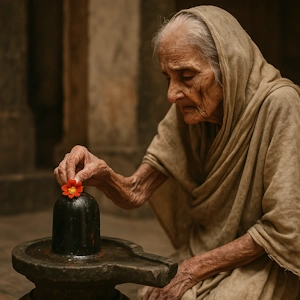
We know that it was Mahadeva who assigned the seven days of the week to the planets and assigned special benefits for worshiping them.
But there are also occasions when the Navagrahas are to be worshiped together.
'शुभादावशुभान्ते च जन्मर्क्षेषु गृहे गृही
आरोग्यादिसमृद्ध्यर्थं आदित्यादीन् ग्रहान् यजेत्'
At the beginning of mangala karma such as marriage, entering a new house, or starting a new venture;
'Ashubhante' – at the end of death rites;
On birthdays – this worship of Navagrahas gives health, wealth, peace, progress, everything.
'तस्माद्वै देवयजनं सर्वाभीष्टफलप्रदम्
यथाशक्त्यनुसारेण कर्तव्यं सर्वदा नरैः'
Worship of Devas grants all wishes.
There is an important point here. The worship is not common for all. There is no common system in Sanatana Dharma, no standard practice. It is diverse and most importantly:
'यथाशक्त्यनुसारेण'
'दरिद्रस्तपसा देवान्यजेत् आढ्यो धनेन हि'
If you don’t have money, do upavasa, visit temples, do parikrama, do service at a temple. You don’t need money for all these. Chant shlokas, read scriptures, participate in satsanga, listen to divine stories. You don’t need money for any of these.
If you have wealth, do dravya dharma – build temples, offer gold ornaments at temples, do big big anna dana, contribute towards the welfare of the society, welfare of trees, birds, animals. Provide water, dig a well in a village that does not have drinking water. Contribute towards running of Vedic Gurukuls and thereby help in spreading of Veda Dharma – the highest of all dharmas.
This is how you should do dharma if you have wealth.
There are so many methods. If you don’t have money to spend, do nama japa, mantra sadhana.
That’s why – 'yatha shakti anusarena'. It is not even about what you like to do. It is about your capacity – shakti – both financial and physical capacity. Senior citizens need not undertake physically exhausting sadhana.
Now, where to conduct pujas and homas? And how does where you do them matter in terms of results?
If your home is clean, you can do them at home.
If you do rituals in a cow shed, the result is ten times more compared to doing at home.
If you do on the banks of water bodies such as lakes, it is hundred times more beneficial.
If you do under a Bilwa tree, Ashwatha tree or near Tulasi, it is 1000 times better.
If you perform rituals at a temple, it is 10,000 times more beneficial.
If you do at a holy teertha such as Kurukshetra or Naimisharanya, then it is 1 lakh times more beneficial.
If you do on the banks of an ordinary river, then it is 1 million times more beneficial.
If you do ritual on the banks of a nadi which is also a teertha, then it is 1 crore times better.
Among the punya nadis, seven are known as Sapta Ganga. They are:
Ganga, Godavari, Kaveri, Tamraparni, Sindhu, Sarayu and Reva.
If you do rituals on the banks of these seven rivers, then it is 10 crore times more beneficial than doing at your own home.
On the banks of the sea – one billion times more beneficial.
On a mountain top – 1000 crore times.
But ultimately, Shiva Purana says:
'सर्वस्मादधिकं ज्ञेयं यत्र वा रोचते मनः'
Maximum benefit from the puja or homa comes if you do it at a place where YOU feel good.
This is about the importance of holy places for performing Devayajana – worship of Devatas.
Next, we will see about auspicious timings.





English
Shiva
Click on any topic to open
7
30
Astrology
Bhagavad Gita
Bhagavatam
Bharat Matha
Devi
Devi Mahatmyam
Ganapathy
Garuda Puranam
Glory of Venkatesha
Hanuman
Kathopanishad
Mahabharatam
Mantra Shastra
Mystique
Practical Wisdom
Purana Stories
Radhe Radhe
Ramayana
Rare Topics
Rigveda Explained
Rituals
Sages and Saints
Shiva
Spiritual books
Sri Suktam
Story of Sri Yantra
Temples
Vedas
Vishnu Sahasranama
Yoga Vasishta
26
17
10
0


