Mothers and Daughters of Vedic Times
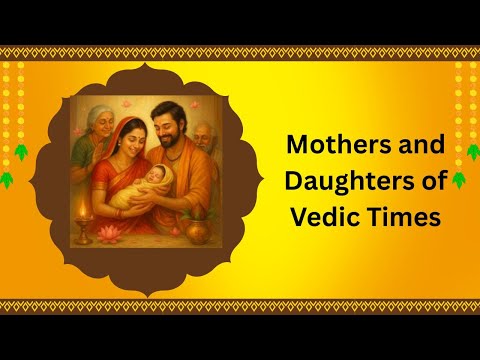
In today's world, where discussions around gender equality are gaining momentum, it's vital to remember that the Vedic civilization of ancient India had already laid the foundation for honoring and uplifting women thousands of years ago. The Vedic worldview, far from being patriarchal or dismissive of women, revered them as essential pillars of spiritual, intellectual, and societal strength.
The Vedic Woman – A Symbol of Dignity and Knowledge
According to Vedic philosophy, a human being’s progress in morality, self-control, and spiritual growth is impossible without proper reverence for women. The culture described in the Vedas rejects the notion of women being weak or inferior. Instead, it celebrates their strength, patience, purity, and wisdom.
Women in Vedic society were not just homemakers or caretakers—they were scholars, sages (rishikas), philosophers, and even composers of Vedic hymns.
घोषा गोधा विश्ववारा अपाला उपनिषत् निषत् ।
ब्रह्मजाया जुहूर्नाम अगस्त्यस्य स्वसादितिः ॥
इन्द्राणी चेन्द्रमाता च सरमा रोमशा उर्वशी ।
लोपामुद्रा च नद्यश्च यमी नारी च शश्वती ॥
श्रीलक्ष्मीः सर्पराज्ञी वाक् श्रद्धा मेधा च दक्षिणा ।
रात्रिः सूर्या च सावित्री ब्रह्मवादिन्य ईरते ॥
— बृहद्देवता 21.84–86
Ghosha, Godha, Vishwavara, Apala, Nishat, Brahmajaya, Juhu, Aditi (sister of Agastya), Indrani, Indramata, Sarama, Romasha, Urvashi, Lopamudra, the river goddesses (Nadyah), Yami, Shashvati Nari, Shri Lakshmi, Sarparajni, Vak, Shraddha, Medha, Dakshina, Ratri, Surya, Savitri, and the other Brahmavadinyahs — these women realized and spoke the truth of Brahman.
Their voices resounded in the sacred texts, guiding generations with profound insights into life and dharma. Education was not a privilege limited to men; women too studied the Vedas with full rights and responsibilities.
द्विविधाः स्त्रियो ब्रह्मवादिन्यः सद्योद्वाहाश्च ।
तत्र ब्रह्मवादिनीनां अग्नीन्धनं वेदाध्ययनं स्वगृहे च भैक्षचर्येति ।
— वीरमित्रोदयः
In the Vedic system, not all women were confined to a single societal role. The tradition recognized two distinct paths for women:
-
Brahmavadini: These were women dedicated to spiritual learning and Vedic study. They led an ascetic or scholarly life—not necessarily bound by marriage. They maintained sacred fires, studied the Vedas, and followed the bhiksha lifestyle (living simply, taking food by seeking alms—not out of poverty, but as a mark of detachment). They lived at home, not in gurukulas, but still practiced intense sadhana, often under the guidance of their father or guru. This was a path of intellectual and spiritual independence, just like male brahmacharis.
-
Sadyodvaha: These women were married soon after they reached puberty and took up domestic dharma as householders. They too were respected, but their dharma was primarily grihastha-oriented, centered on family, rituals, and support of yajnas and dharmic life.
Mother – The First Guru
पितुर्दशशतं माता गौरवेणातिरिच्यते
The mother holds a position even greater than the father or teacher. Before a guru can educate and before a father can guide, the mother nurtures, shapes, and instills values in the child. The Vedic culture recognized this and placed the mother on the highest pedestal, equal to divinity itself — Matru devo bhava.
In our tradition, motherhood wasn’t just a biological role. It was a sacred trust. The mother was seen as a reflection of the divine, and her presence at the heart of the family ensured spiritual balance and cultural continuity.
What Does the Word 'Mata' (माता) Really Mean?
We often use the word 'mata' casually to mean 'mother', but in the Vedic tradition, every word has a deeper meaning based on its roots.
The word mata is derived from the Sanskrit root maan (मान्), which means to honor, revere, or worship.
So mata is not just someone who gives birth — she is:
मान्यते पूज्यते जनैः इति माता
The one who is honored and worshipped by people is called mata.
In other words, a mother is defined by the reverence she receives, not just her biological role.
This gives us a clue into the mindset of Vedic society — where the mother was not just a caretaker but a revered, spiritual presence in the household.
Celebrating Daughters
In the entire body of Vedic literature, the attitude of both parents — mother and father — toward the son or daughter is shown to be equal and full of love.
There is no discrimination between sons and daughters in the way parents express their desire, care, or hopes. This is called samana bhaava — equal emotional regard, and tulyakaamyatva — equal longing or desire for both genders.
अविता नो अजाश्वः पूषा यामनियामनि ।
आ भक्षत्कन्यासु नः ॥१०॥
अयं सोमः कपर्दिने घृतं न पवते मधु ।
आ भक्षत्कन्यासु नः ॥११॥
— Rigveda
This is a father praying for the divine to be present in their daughter’s life — to protect her, nourish her, and guide her path. This shows the deep spiritual significance given to daughters in Vedic society.
Just like sacred ghee and honey are offered to the divine, daughters too are presented as sacred offerings — not in the sense of sacrifice, but as consecrated, noble, and worthy of divine presence.
One of the most beautiful aspects of Vedic life was the celebration of girl children. Far from being unwanted, daughters were honored and prayed for.
अथ य इच्छेद् दुहिता मे पण्डिता जायेत, सर्वमायुरियादिति तिलौदनं पाचयित्वा सर्पिष्मन्तमश्नीयाताम् ।
— बृहदारण्यकोपनिषद्
Now, if one wishes:
‘May a daughter be born to me who is learned (pandita) and long-lived,’
then the couple should cook tilodana (rice with sesame) chanting the mantra sarvamayuriyat and eat it with ghee.
The Brihadaranyaka Upanishad even describes this specific ritual to conceive a virtuous daughter. This wasn’t just symbolic — it was spiritual. The birth of a daughter was considered an auspicious blessing.
काम्यते या सा कन्या —
A daughter means one who is desired.
A daughter was never seen as a burden; she was viewed as the embodiment of blessings, prosperity, and joy.
Vedic girls had the same rights as boys when it came to learning. After upanayana, they were free to study scriptures, participate in yajnas, and even choose to remain unmarried as brahmavadinis — dedicated seekers of truth and spiritual knowledge. Women performed sacrifices, taught dharma, and upheld the spiritual traditions of their families with equal, if not more, devotion than men.
Furthermore, daughters had inheritance rights. If a daughter remained unmarried and continued her Vedic studies under her father’s roof, she had the legal right to a share in the property. This contradicts the common misconception that daughters were never heirs in ancient India.
A Society Rooted in Respect
Clearly, the Vedic worldview did not bind women — it honored them. It did not silence them — it gave them voice and authority. It did not push them aside — it placed them at the center of spiritual and cultural life.
In times when societies around the world were struggling with rigid gender roles, ancient India celebrated the woman as divine, as wise, and as irreplaceable. That spirit of reverence is not just a relic of the past — it is a guiding light for the present and future.





English
Vedas
Click on any topic to open
7
30
Astrology
Bhagavad Gita
Bhagavatam
Bharat Matha
Devi
Devi Mahatmyam
Ganapathy
Garuda Puranam
Glory of Venkatesha
Hanuman
Kathopanishad
Mahabharatam
Mantra Shastra
Mystique
Practical Wisdom
Purana Stories
Radhe Radhe
Ramayana
Rare Topics
Rigveda Explained
Rituals
Sages and Saints
Shiva
Spiritual books
Sri Suktam
Story of Sri Yantra
Temples
Vedas
Vishnu Sahasranama
Yoga Vasishta
26
17
10
0


