Meaning of Paramatma
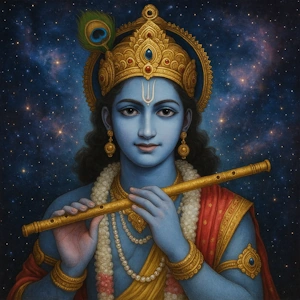
परमात्मा – परमश्च असौ आत्मा च – There are two parts to Paramatma – Parama and Atma. He is Parama, the ultimate, as well as Atma, the soul, the self.
तस्माद्धान्यं न परः किंचनास – Other than him, greater than him, there was nothing else.
आसीदिदं तमोभूतमप्रज्ञातमलक्षणम् अप्रतर्क्यमविज्ञेयं प्रसुप्तमिव सर्वतः –
न तत्समश्चाभ्यधिकश्च दृश्यते – You can’t see an equal to him, nor someone greater than him.
यस्मात्परं नापरमस्ति किञ्चित् – There is nothing greater than him.
न परं पुण्डरीकाक्षात् दृश्यते भरतर्षभ – You can’t see anyone greater than him.
परं हि पुण्डरीकाक्षान्न भूतं न भविष्यति – Greater than him? Never was there, never will there be.
न दैवं केशवात्परम् – No god greater than him.
यस्मात्परस्मात् पुरुषादनन्तात् अनादिमध्यात् अधिकं न किंचित् – There is nothing more or greater than that Parama Purusha without beginning, middle, and end.
मत्तः परतरं नान्यत् किंचिदस्ति – Says Bhagawan in Gita, greater than me there is nothing else.
परं ह्यमृतमेतस्मात् विश्वरूपान्न विद्यते –
परः पराणां परमः परमात्मा – Greatest among the great, the great Paramatma.
And he is the Atma – the soul of everything.
There are four kinds of bhaktas – devotees –
Jijnasu bhaktas
Arta bhaktas
Artharthi bhaktas
Jnani bhaktas
-
If the supreme is both ultimate and inner self, where do I stand?
You are a wave on the same ocean of awareness — distinct in form, one in essence. Pause before reacting and choose what serves the whole, not just the mood of the moment. -
Does this view erase free will?
No. Personal choice operates within a deeper ground. Set a clear intention, act cleanly, and stop second-guessing once you move. -
Why worship if the divine is already within?
Worship focuses scattered attention into alignment. Keep a simple daily practice like five minutes of quiet japa morning and night to keep that alignment alive. -
If nothing is higher, what about science, art, and ambition?
They are expressions of the same source. Build goals as offerings by adding a who benefits line to every plan. -
How do suffering and evil fit in?
Ignorance bends freedom into harm; clarity straightens it. Reduce avoidable harm, tell the truth, and get wise counsel when you are stuck. -
Is the divine personal or impersonal?
Both — the ground of being and a living relationship. Pray with warmth and practice with discipline so heart and mind grow together. -
Where do different kinds of devotees fit?
Curiosity, distress, desire, and knowledge are all valid doors. Start exactly where you are and show up daily; motive refines with practice. -
How do I test alignment with the highest?
Look for clarity, quiet strength, and compassion under pressure. Keep a short journal with intention, action, and lesson to track whether noise is reducing. -
Does surrender make me passive?
Real surrender ends egoic resistance, not effort. Do your duty fully and release anxiety about results so energy stays sharp. -
What is the relation between unity and difference?
Unity in essence, difference in roles. Treat everyone as carriers of the same light while keeping clear boundaries and responsibilities. -
If the highest is absolute, why bother with ethics?
Ethics is realism about how consciousness works. Speak truth, keep promises, and earn cleanly so your mind stays light and your sleep deep. -
How should I pray and plan?
Ask for wisdom and strength rather than fixed outcomes. Before any plan, do a half-minute inner check — does this serve life or only my image. -
What is liberation in practical terms?
Freedom from compulsions while doing your duties. Take one daily break from phone, praise, and panic; sit, breathe, and remember the witness within.





English
Vishnu Sahasranama
Click on any topic to open
7
30
Astrology
Bhagavad Gita
Bhagavatam
Bharat Matha
Devi
Devi Mahatmyam
Ganapathy
Garuda Puranam
Glory of Venkatesha
Hanuman
Kathopanishad
Mahabharatam
Mantra Shastra
Mystique
Practical Wisdom
Purana Stories
Radhe Radhe
Ramayana
Rare Topics
Rigveda Explained
Rituals
Sages and Saints
Shiva
Spiritual books
Sri Suktam
Story of Sri Yantra
Temples
Vedas
Vishnu Sahasranama
Yoga Vasishta
26
17
10
0


