Manifest and Unmanifest Leelas
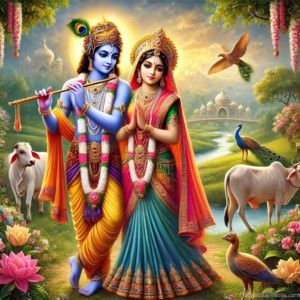
The divine play of Bhagavan is of two types - one manifest and the other unmanifest.
Manifest Leela:
- Accessibility: Bhagavan's presence is openly accessible to all, regardless of spiritual progress. Devotees of all levels, from sages to common people, can witness and experience Bhagavan's form.
- Qualification: Special penance or intense spiritual practices are not required in this context. However, past accumulated merits (samskaras) of the devotees may contribute.
- Examples:
- Lord Shri Ram was accessible to sages and common people alike.
- Lord Krishna, as Shyamsundar, was visible to everyone including Pulindis (tribal women), and deer.
- Nature: The divine form and actions are visibly manifest in the world, allowing everyone to interact with Bhagavan as a physical presence.
Unmanifest Leela:
- Accessibility: The vision of Bhagavan is restricted to the closest and most devoted seekers. It is not visible to all but remains hidden under the veil of maya.
- Qualification: Intense devotion, complete surrender, and the removal of maya's veil are necessary. Only a deeply purified and spiritually advanced soul can perceive Bhagavan in this state.
- Examples:
- Parikshit, even as an unborn child, saw Lord Krishna's radiant form dispelling the Brahmastra.
- After birth, Parikshit perceived the Lord's form in everything.
- Nature: Bhagavan's form is omnipresent but realized only through spiritual effort and grace.
In essence, manifest leela is for all, while unmanifest leela is for the closest and most deserving devotees. Both reflect Bhagavan's compassion, but they emphasize different paths of realization.





English
Bhagavatam
Click on any topic to open
7
30
Astrology
Bhagavad Gita
Bhagavatam
Bharat Matha
Devi
Devi Mahatmyam
Ganapathy
Garuda Puranam
Glory of Venkatesha
Hanuman
Kathopanishad
Mahabharatam
Mantra Shastra
Mystique
Practical Wisdom
Purana Stories
Radhe Radhe
Ramayana
Rare Topics
Rigveda Explained
Rituals
Sages and Saints
Shiva
Spiritual books
Sri Suktam
Story of Sri Yantra
Temples
Vedas
Vishnu Sahasranama
Yoga Vasishta
26
17
10
0
Copyright © 2026 | Vedadhara | All Rights Reserved. | Designed & Developed by Claps and Whistles


