Longevity of Our Ancients
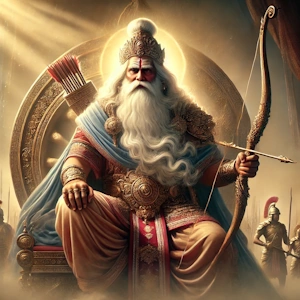
We get many examples in our scriptures about people who have lived for hundreds of years. Could this be true?
According to 'Manusmriti', the longevity of men during the Krita Yuga (Satya Yuga) was 400 years. In Treta Yuga, it was 300 years. In Dwapara Yuga, it was 200 years, and in Kali Yuga, it got reduced to 100 years.
According to 'Shabara Meemamsa', Prajapatis (progenitors) performed tapas lasting 1000 years as part of creation. Devas and Rishis performed yajnas lasting thousands of years. Later, when they were handed down to ordinary men, yajnas were shortened to 12 days or even 6 days.
What is behind the long life of Rishis?
- Tapas
- Yoga
- Brahmacharya
- Consumption of Rasayanas (Ayurvedic formulations)
Some evidence from Mahabharata times:
- Lord Krishna left his body at the age of 125 years. At that time, his father Vasudeva was still alive.
- Dronacharya’s age was 400 years at the time of the Kurukshetra War.
- Bheeshmacharya’s age was 160 years at the time of the war.
- Sage Vyasa was 300 years old.
These examples highlight the profound connection between ancient practices, disciplined lifestyles, and extended longevity in our scriptures.
- How does the concept of the four Yugas explain the gradual decline in human longevity?
The scriptures describe time not as linear, but as cyclical, moving through four Yugas from Krita to Kali. This cycle represents a gradual descent in collective human consciousness, spiritual purity, and connection to nature. In the Krita Yuga, humans supposedly lived in complete harmony with cosmic laws, resulting in a 400-year lifespan. As humanity moved toward the Kali Yuga, materialism, stress, and deviation from natural laws increased, leading to physical degradation and the reduction of the maximum lifespan to 100 years. The decline in years is an allegory for the decline in spiritual vitality. - What is the hidden biological and spiritual mechanism of Tapas in extending life?
Tapas is often translated simply as austerity, but its root means to heat or to burn. Mystically, it refers to the generation of internal spiritual friction that burns away physical impurities and karmic baggage. By subjecting the body and mind to extreme discipline, ancient Rishis were believed to lower their metabolic rate to a state resembling hibernation, halting the normal aging process. This controlled mastery over the autonomic nervous system allowed them to preserve cellular energy for centuries. - Why is Brahmacharya considered a foundational pillar for centuries-long lifespans?
In yogic science, sexual energy is viewed as the most potent creative force in the human body, known as Ojas once transformed. Brahmacharya is not merely celibacy, but the deliberate transmutation of this primal energy upward through the chakras to nourish the brain and nervous system. Ancient texts suggest that when this life force is conserved rather than expended, it creates an impenetrable immunological shield and regenerates cellular decay, effectively slowing down the biological clock. - What is the overlooked difference between modern medicine and the Ayurvedic consumption of Rasayanas?
Modern medicine primarily focuses on treating disease and managing symptoms, whereas Rasayanas were esoteric alchemical and herbal formulations designed for rejuvenation and immortality. The mystery of Rasayanas lies in their purpose: they were meant to fundamentally alter the body's chemistry to hold higher frequencies of consciousness. Ingredients like specific metals, minerals, and rare herbs were purified over years to create substances that ancient physicians believed could repair DNA and completely halt the cellular aging process. - Could the thousands of years mentioned for Yajnas and Tapas be a mysterious code for astronomical or psychological time rather than literal human years?
This is a highly debated and overlooked aspect of scriptural interpretation. In many ancient traditions, a year sometimes referred to a lunar cycle, a season, or a specific astronomical alignment rather than a 365-day solar orbit. Furthermore, in deep states of meditation (Samadhi), the subjective experience of time dilates. A Rishi experiencing cosmic consciousness might perceive a psychological eternity that is recorded in the texts as a thousand years. Therefore, these numbers may represent measures of spiritual intensity and astronomical epochs rather than biological human aging. - How could a warrior like Dronacharya maintain the physical prowess necessary for the Kurukshetra War at the age of 400?
The greatness of ancient martial arts (Dhanurveda) was its integration with Yoga and Prana (vital breath) control. Dronacharya's longevity and stamina suggest that physical strength in that era was not derived solely from muscle mass, but from the manipulation of Prana. By drawing energy directly from the environment and maintaining perfect alignment between mind, breath, and body, warriors of the Dwapara Yuga could theoretically bypass the muscular fatigue and skeletal degradation that define modern human aging. - What is the deeper significance of multiple generations, like Krishna and his father Vasudeva, living simultaneously for over a century?
This simultaneous longevity indicates that extreme lifespans in the Dwapara Yuga were not anomalies limited to isolated hermits, but a biological norm for the ruling and warrior classes. It highlights a society where genetic purity, pristine environmental conditions, and adherence to Dharma were so integrated into daily life that the entire population benefited from extended vitality. It reflects an era where wisdom could be shared directly across several living generations, maintaining cultural continuity. - Why did the duration of Yajnas (fire sacrifices) shrink from thousands of years to just a few days over time?
The shortening of Yajnas reflects the diminishing attention span, physical endurance, and spiritual capacity of humanity as time progressed toward the Kali Yuga. Originally, these rituals were immense undertakings meant to align the earth with cosmic rhythms, requiring generations of unbroken focus. As human vitality waned, the rituals had to be condensed. The essence was concentrated into shorter, highly symbolic acts so that the spiritual benefits could still be accessed by ordinary people with limited lifespans. - What was the ultimate, overlooked purpose behind the Rishis striving to live for hundreds of years?
Extreme longevity was never pursued for the sake of clinging to physical life or fearing death. The physical body was viewed merely as a vessel or a laboratory. The hidden purpose was to maintain a stable physical vehicle long enough to witness cosmic cycles, decode the laws of the universe, and achieve ultimate spiritual liberation (Moksha) within a single incarnation. It takes immense time to map the dimensions of consciousness, and their long lives were dedicated entirely to this spiritual research. - What actionable, hidden truth can the modern world extract from these ancient accounts of extreme longevity?
The most profound takeaway is that aging is not strictly a fixed biological inevitability, but a variable process heavily influenced by how one consumes and expends energy. The principles of Yoga, Tapas, and Brahmacharya teach that by managing breath, reducing mental agitation, conserving physical energy, and living in sync with natural circadian rhythms, humans can vastly improve their healthspan. The ancient texts invite us to view the body not as a machine that simply wears out, but as a dynamic energy system capable of profound self-repair.






English
Bharat Matha
Click on any topic to open
7
30
Astrology
Bhagavad Gita
Bhagavatam
Bharat Matha
Devi
Devi Mahatmyam
Ganapathy
Garuda Puranam
Glory of Venkatesha
Hanuman
Kathopanishad
Mahabharatam
Mantra Shastra
Mystique
Practical Wisdom
Purana Stories
Radhe Radhe
Ramayana
Rare Topics
Rigveda Explained
Rituals
Sages and Saints
Shiva
Spiritual books
Sri Suktam
Story of Sri Yantra
Temples
Vedas
Vishnu Sahasranama
Yoga Vasishta
26
17
10
0


