Is Tantra Black Magic?
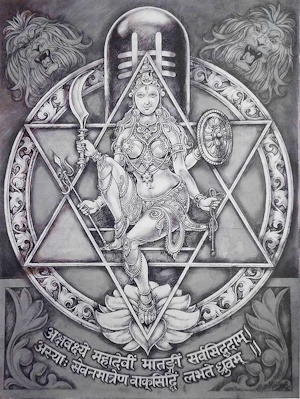
In ancient Bharata, we had two systems running parallelly: the Vedic system and the Agamic or Tantric system. Both were equally strong and widely practiced. Somewhere down the line, they got integrated together. They sort of merged into each other.
There is a big misconception about Tantra—at least among some people. Some think Tantra is magic, black or white magic. This is absolutely wrong. There is no valid reason to attach a negative connotation to the word Tantra. This is yet another creation of the media. They call practitioners of black magic 'Tantric.' In some regional languages, they are referred to as 'Mantra Vadi.'
What is the literal meaning of 'Mantra Vadi'? It means someone who says a mantra, someone who can chant a mantra. How can this be black magic? These are all wrong ideas that we imbibe and also propagate. Basically, Tantra means 'Shivoktashastram'—the siddhantas of worship given by Lord Shiva. The main books of Tantra are 64 in number.
This unwanted and unrealistic stigma attached to Tantra may be due to unnecessary competition between the practitioners of the Vedic system and the Tantric system. In fact, if you look at the system of worship followed in all the temples of Kerala, including Sabarimala and Guruvayur, it is based on Tantra. The authoritative text, the Pramana Grantha, is 'Tantra Samucchaya.' Even in Agama, in all other temples—Vaishnava, Shaiva, or Shakteya—the system of worship is based on Tantra. There is no difference between Tantra and Agama. When we say Agama, it refers to Tantra pertaining to temples, more focused on temples and temple worship. Today, Agama is more about temple worship, while Tantra is more about personal sadhana.
Even in temples where they claim the system is Vedic, it is Agama with some Vedic parts integrated into it. Today, there is no need to see them separately. We have already seen that Devyagama is based on the Devi Sukta of the Rigveda and how the concept of Devi in the Rigveda itself reflects in Devi Agama.
Now, something about Sri Vidya Upasana. The Sri Vidya system is called the Trikuta system. The number three is important here. If you look at Devi's name, it is 'Tri-Pura Sundari.' The Panchadashi mantra is in three parts—called Trikuta. Here also, if you see, in the fifth mandala of the Rigveda, Sukta 29, the first mantra reflects the same concept. We will not get into too much detail. The point is to connect the Vedic corpus and the Srividya paddhati, only to say that if we have integrated the two systems today, it is not without valid logic and reason.
The devata of this mantra is Indra. But in a shloka from 'Varivasya Rahasya,' Indra and Matarishva are also mentioned:
'Threeni Aryamani, Threeni Rochanani'—Recognition of three types of brilliance.
In the 47th Sukta of the same mandala, if you look at the fourth mantra:
'Tridhatavaha'—the same concept appears again. In the earlier mantra, Agni, Vayu, and Surya represent the brilliance or energies of earth, atmosphere, and sky. Here, heat, cold, and rain are the three dhatus. Even otherwise, if you analyze it—Srishti, Sthiti, and Samhara, the Trimurthis, are all expansions of this Vedic concept of the triad.
Time is divided into past, present, and future. Cognition consists of wakefulness, dream, and deep sleep—the three states of the mind. Srividya Upasana is also based on this concept of the triad—groups of three. When you say three, it contains everything. We are not going to explore how in detail here. The point is that this concept of the triad and Trikuta exists in the Veda itself—not just here but in many other places.
'Idam Vishnurvichakrame, Tredha Nidadhe Padam'—many more references exist. The Atharva Veda starts with 'Ye Trishaptaha'—the three sevens, three times seven.
त्रिधा हितं पणिभिर्गुह्यमानं—Existing in the body as a triad: Vishwa, Taijasa, and Prajna, and in the Brahmanda as Virat, Hiranyagarbha, and Avyakrita.
To summarize, Srividya Upasana is centered around the concept of the triad—groups of three, Trikuta. The Vedic corpus also has several references to the concept of the triad.





English
Devi
Click on any topic to open
7
30
Astrology
Bhagavad Gita
Bhagavatam
Bharat Matha
Devi
Devi Mahatmyam
Ganapathy
Garuda Puranam
Glory of Venkatesha
Hanuman
Kathopanishad
Mahabharatam
Mantra Shastra
Mystique
Practical Wisdom
Purana Stories
Radhe Radhe
Ramayana
Rare Topics
Rigveda Explained
Rituals
Sages and Saints
Shiva
Spiritual books
Sri Suktam
Story of Sri Yantra
Temples
Vedas
Vishnu Sahasranama
Yoga Vasishta
26
17
10
0


