How to Sharpen Your Mental Faculties
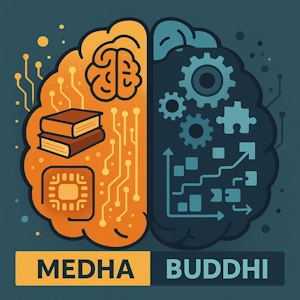
As far as learning and knowledge are concerned, we have two broad functions.
Medha – this is gathering of information and storing of information.
Grasping and memory.
Grasping means taking information inside you from an external source. Some are fast in this, some are slow.
How long can you be engaged in this process? One hour? Two hours? Ten hours continuously?
How long can you stay focused before your attention drifts away and you're not able to make sense out of the words, figures, or images in front of you?
Speed of grasping is one thing. How long you can stay focused is another.
Now, whatever information that goes inside you — is it getting stored? Are you able to recall it whenever required?
What is the quality of this memory?
Are you able to reproduce everything that has gone in, or just 10%, 20%, 50%, or 70% of that?
How long does the memory last?
Do you forget after a few hours, a few days, or even after a few years?
So, memory is another thing.
The second is called Buddhi – this is about how you are able to process the information that has gone inside you.
We really don’t know where the information is residing, but at least for the time being, let’s state that it is not in the brain.
‘Memory and intelligence are in the brain’ is an outdated concept, even by medical science.
Anyway, we will not get into that.
The skill of processing information that has gone inside you — analyzing it quantitatively and qualitatively, drawing inferences and conclusions, identifying errors, contradictions, inconsistencies, matching one with another, mapping one into another — all these are called buddhi.
So, medha and buddhi.
Let’s not be very adamant about the technicality of these definitions.
You may find them differently defined in Sanskrit dictionaries or even used interchangeably.
But functionally:
One is absorption or assimilation and storage of information into you and in you.
The second is processing of this information or knowledge.
Our acharyas have given techniques to enhance the quality of both of these.
They are mainly four in number:
1. Satatadhyanam – Constant learning and updating of your knowledge
You should keep on learning on a daily basis.
Every day, make it a point to acquire some new knowledge about your subject or your field.
This has two more parts:
-
You should memorize certain portions of what you have learned every day, without looking at the book.
-
Teach someone every day.
There is nothing more effective than teaching someone for sharpening your skills.
It keeps your knowledge fresh and refined.
So, three things in satatadhyanam —
Learning something new every day,
Memorizing some portion of what you have learned,
Teaching someone every day.
2. Charcha – Participation in debates and discussions
Engage in debates and discussions only with people who are from your own field — knowledgeable people from your own field — if your purpose is to enhance your buddhi.
Our acharyas have established codes of conduct during such debates — how you should conduct yourself during such debates and discussions. We will discuss that later.
There are several advantages of engaging in discussions and debates.
One important point here — what we are discussing now is not learning procedures for children.
This is for people who have already completed regular education and are already established in a profession.
Through debates and discussions:
-
You develop the skill of presentation.
-
You learn what to say and when.
-
You learn to bring up only those points which are relevant and pertinent to the current topic.
-
Your ability to bring up information as and when required improves.
-
Your knowledge gets refined, even if you may not be doing it consciously.
-
Your ability to say what you know — and convincingly — improves.
-
Your doubts get resolved.
-
Certain aspects that you have overlooked or missed out become visible to you.
-
The same matter gets looked at from different perspectives.
-
New conclusions may be arrived at, or earlier ones confirmed and ratified.
But don’t make such discussions question–answer sessions for those who are learning.
If there are learners present, they should not pose questions or join these debates.
They should sit silently and observe how they are being conducted.
The debates should be between equals.
Learners should not participate in such discussions.
But even when such debates take place, it can happen in two ways:
सन्धाय सम्भाषा and विगृह्य सम्भाषा
सन्धाय सम्भाषा – Cooperative Debate
The purpose is to improve the quality of that particular branch of knowledge and the merit of each participant.
There is no place in these debates for those whose purpose is to defeat the opponent.
Participants should be selected for their ability to present and defend their side logically and ethically.
They should not attempt to push the opponent to a corner and silence them.
They should rather encourage the opponent to come up with their view.
They should encourage the opponent to think and come up with ideas.
There is no place for fault-finding in these debates.
Every view should be justified or countered with valid information and logic.
There is no placement for ‘in my opinion’ unless your opinion can be substantiated by data and information.
If the opponent is at a loss for words or thoughts, try to bring them back by asking yes/no type questions — help them re-engage in the discussion.
This is the spirit of such discussions:
-
Don’t pretend knowledge.
-
Appreciate the knowledge of others.
-
These debates are not arguments to be won.
-
The purpose is to pass on what you know and learn what you don’t.
-
Be flexible and liberal enough to accept and appreciate if your point is proved invalid.
-
Also, be open if new valid concepts come up.
विगृह्य सम्भाषा – Aggressive Debate
Here, only two kinds of statements will be seen:
Jalpa and Vitanda
Jalpa – Constant effort to establish that your point is correct. You may hide or filter data and facts that can be detrimental to your victory. You may even fabricate data to support your stand.
The focus is purely on winning.
Vitanda – You don’t try to establish your point. You only try to prove the opponent wrong.
This is aggressive.
Questions are asked to create fear and self-consciousness in the opponent’s mind.
Authority and knowledge are faked when answers are offered.
A forum of debate is also divided into two —
one of scholars and one of fools.
In another way, debates are classified into three types:
-
Debates among friends
-
Debates among rivals
-
Debates among neutrals
In debates meant for enhancing one’s own knowledge and skill — stay away from:
-
Making fun of other participants
-
Ridiculing others
-
Being aggressive and abusive
When you ask and reply, be polite.
Don’t stop others from expressing their opinions.
If the debate is going in the wrong direction, it is better to wind it up.
3. Paratantravalokana – Exploring different perspectives of the same subject
Just as you improve your knowledge in your own field, it is also good to learn about different approaches to the same subject.
For example, if you are an allopath, it is better to also know how Ayurveda or Homeopathy looks at health and well-being.
But one thing to be careful about —
You should be sound in the knowledge of your own branch.
Or it can confuse you.
This is not for beginners.
4. Interaction with Peers and Masters
These are not debates.
These are interactions with peers in terms of sharing experiences, insights, perspectives.
Interacting with established masters in the subject is also very important —
not only in improving your knowledge,
but also in improving your medha and buddhi as well.






English
Practical Wisdom
Click on any topic to open
7
30
Astrology
Bhagavad Gita
Bhagavatam
Bharat Matha
Devi
Devi Mahatmyam
Ganapathy
Garuda Puranam
Glory of Venkatesha
Hanuman
Kathopanishad
Mahabharatam
Mantra Shastra
Mystique
Practical Wisdom
Purana Stories
Radhe Radhe
Ramayana
Rare Topics
Rigveda Explained
Rituals
Sages and Saints
Shiva
Spiritual books
Sri Suktam
Story of Sri Yantra
Temples
Vedas
Vishnu Sahasranama
Yoga Vasishta
26
17
10
0


