Gopikas Are Jealous About Bhumi Devi and Even Lightning
हिरण्यगर्भः - हिरण्मयाण्डान्तर्वर्तित्वात् – we have considered this in detail while discussing the meaning of the sukta hiranyagarbha samavrtatagre, earlier.
हिरण्यं परमं धाम हिरण्यस्य समानतः |
हिरण्यगर्भः सः प्रोक्तः तस्मिन् वसति यः सदा
Vaikuntha is compared to gold because of its brilliant effulgence. One who lives in Vaikuntha – hiranyagarbha.
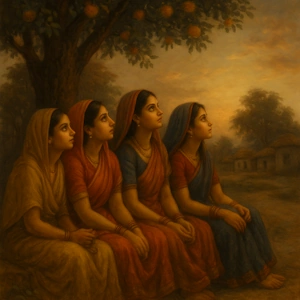
Once the gopikas asked Bhumi Devi. The plants and trees on the surface of earth are considered to be her hair. Her hair are all standing up, like she has got goose bumps. She is excited about something. That’s why she has got those goose bumps. Gopikas are asking – is it because the pada kamala of our Nanda Nandana, our Krishna have touched you that you have got these goose bumps?
Bhumi Devi said – no, your Nanda Nandana was just born. These trees have been there from long ago. Oh, then we got it. It is because he measured you with three feet when he had come earlier as Vamana. Oh, even earlier than that. He lifted you up. That’s when you touched you first. From that time you must be having this romancha, goose bumps. But what tapas have you done. It doesn’t happen just like that. You must have done some real intense tapas even before that, because of which you have been blessed with his touch.
किं ते तपः क्षिति कृतं बत केशवाङ्घ्रिस्पर्शोत्सवोत्पुलकिताङ्गरुहैर्विभासि
अप्यङ्घ्रिसम्भव उरुक्रमविक्रमाद्वा आहो वराहवपुषः परिरम्भणेन
Gopikas are asking the lightning.
तडितः पुण्यशालिन्यो याः सदा घनजीवनाः
तेन सार्द्धं व्यदृश्यन्त न दृश्यन्त च तं विना
These lightnings, they must have also acquired some real punya. Always seen with Ghana Shyama, adorning his chest, always finding place on his chest. The rain clouds are what they are talking about, resembling the Lord due to their color. These lightnings you will never see them alone, without him. Always with him. Wherever he is there, they are also seen. So much is their proximity to the Lord. How did they get it. What punya, what tapas could they have done?
Gopikas are getting jealous, on Bhumi Devi, on lightning.
-
Why do natural things like earth and lightning feel closer to Hari than I do?
Because they obey without argument. Nama japa trains you to respond like nature: quick, steady, uncomplaining. Start with 108 of ‘Om Namo Narayanaya’; match each bead to one calm exhale. -
How can jealousy be redirected into bhakti instead of becoming bitterness?
Convert the emotion into effort. For seven days, whenever jealousy arises, chant one mala immediately. Write one kind act you did that hour. Jealousy melts when it is put to work. -
What is the practical way to ‘touch his feet’ every day?
Touch the floor at dawn, then chant 11 names aloud with palms together. The body bows, the breath settles, the mind follows. Small, daily, physical anchors matter. -
How do I make japa feel alive instead of mechanical?
Pick one name and pair it with one memory of grace. On each bead, recall the same memory for one breath. Meaning saturates repetition. -
Can chanting actually change my stress physiology?
Yes. Slow, even recitation lengthens exhale, steadies heart rhythm, and lowers evening cortisol spikes. Track breath count per minute for two weeks; you will see the curve drop. -
I compare my devotion with others and feel small. What now?
Do ‘hidden japa’: 3 micro-sets of 27 beads during commute, queue, or walk. No announcements, just rhythm. Quiet practice builds quiet strength. -
How does nama japa translate into courage in daily decisions?
Before a tough call, chant 12 times and ask: does this choice protect, preserve, and reduce harm. If not, revise. Names become a moral compass. -
What is a family routine that avoids lecturing yet builds devotion?
7-minute night ritual: one lamp, 5 names aloud together, one-line meaning by a child, one gratitude by an elder. Keep it short; keep it daily. -
How do I deal with old mistakes that keep returning during chanting?
Use a two-mala protocol: first mala for acceptance and restitution, second mala for gratitude. Close with one small corrective action that day. Action completes atonement. -
What if I feel nothing while chanting?
Keep tongue, breath, and bead moving in sync. Emotion follows discipline. Note one tiny gain nightly: calmer tone, better sleep onset, fewer impulses. -
Is there a way to link the names to better sleep and pain control?
Yes. After dinner, 54 slow repetitions with dim light. Extend exhale to a count of 6–8. Sleep latency drops; pain perception softens. -
How can couples use sahasranama to reduce friction?
Choose a ‘name of the week’ like ‘Shantakara’. Place it on the fridge. Appreciate whoever lived that name that day. Praise rewires patterns faster than debate. -
How do I ground myself during sudden anxiety surges?
Do the ‘9-9-9’: 9 deep exhales with ‘Om Namo’, 9 soft ‘Narayanaya’, 9 seconds of silence. Repeat twice. The surge passes; clarity returns. -
What is the minimum viable practice on hectic days?
Three touchpoints: dawn 11 names, midday 27 beads, bedtime 1 verse aloud. Never miss all three. Momentum is more important than volume. -
How can I measure progress without feeding ego?
Monthly check: fewer snap reactions, quicker recovery after setbacks, kinder words noticed by family, deeper sleep. If pride shows up, offer the day’s merit back through 108 silent japa. -
How do I turn devotion into service at home?
After chanting, do one quiet act that lowers someone’s load: dishes, homework help, a phone call to a lonely relative. Names should end in hands.





English
Vishnu Sahasranama
Click on any topic to open
19


