Godanam - Dos and Don'ts
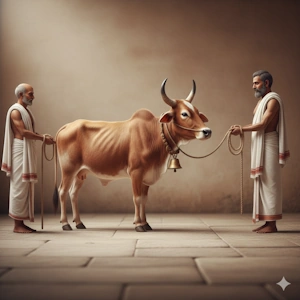
Benefits of Godanam
- By donating even one cow, a person is freed from sins. (Mahabharata, Anushasana Parva, 71.51)
- By donating cows, a person uplifts seven generations of ancestors and seven generations of descendants. (Mahabharata, Anushasana Parva, 74.8)
- A person who donates one cow and one bull attains the fruits of studying the Vedas. By donating cows as per proper rituals, one attains superior worlds. (Mahabharata, Anushasana Parva, 76.20)
- Donating a young cow of noble qualities, covered with fine clothes, to a Brahmin, frees a person from all sins. Such a person does not go to Naraka. (Mahabharata, Anushasana Parva, 77.4-5)
- Cows are called the life (prana) of beings because they give milk. Donating a milk-giving cow is like donating life itself. The Vedic scholars say cows provide shelter to all beings. Hence, donating a cow means providing shelter to all. (Mahabharata, Anushasana Parva, 66)
Cows suitable for danam
- The following cows are considered suitable for donation:
- A cow that gives milk.
- A cow bought with honest wealth.
- A cow received as a gift due to one’s knowledge.
- A cow received from in-laws during marriage.
- A cow freed from suffering and captivity.
- A cow that came for self-sustenance.
Such cows are praiseworthy. Strong, well-behaved, and young fragrant cows are also considered praiseworthy. Among cows, the Kapila (reddish-brown) cow is the best, just as the Ganga is the best among rivers. (Mahabharata, Anushasana Parva, 73.41-42)
- A cow that is gentle, does not cause trouble while milking, has a beautiful calf, and does not run away after breaking the rope is considered ideal for donation. By donating such a cow, the donor enjoys happiness in the afterlife for as many years as there are hairs on the cow's body. (Mahabharata, Anushasana Parva, 73.44)
- A cow suitable for donation should be:
- Gentle in nature.
- Good at grazing on its own.
- Young and with a calf.
- Lawfully obtained.
- A milking cow.
Such cows should be donated to a Brahmin. (Skanda Purana, Prabhasa Khanda, Chapter 208)
Cows unsuitable for danam
- Donating an old cow without proper limbs destroys the donor's enjoyment. A lame, blind in one eye, or deformed cow leads to the donor's downfall and loss. Donating a very weak cow brings ruin to the donor's household. (Atharva Veda 12.4.3)
- Cows that cannot drink water, eat grass, or whose senses are weak, or that do not give milk, lead the donor to unhappy worlds. (Katha Upanishad 1.1.3)
- Donating a cow that:
- Cannot eat grass or drink water.
- Does not give milk.
- Has weak senses due to old age or illness.
Such a donation puts the Brahmin in trouble and sends the donor to terrible hells. (Mahabharata, Anushasana Parva, 77.5-7) - The following cows are unfit for donation:
- Barren cows.
- Sick or disabled cows.
- Ill-tempered cows.
- Old or whose calf has died.
- Illegally obtained cows.
- Distant or weak cows.
Donating such cows brings suffering and misfortune to the donor. (Skanda Purana, Prabhasa Khand, 278.23-25)
- A cow that causes trouble for the receiving Brahmin negates all the donor’s virtues. Such a donor cannot attain higher worlds. (Mahabharata, Anushasana Parva, 66)
Qualities of the recipient
- Donating ten cows to a Brahmin who is learned, has many children, and performs Agnihotra rituals leads to the donor attaining excellent worlds. (Mahabharata, Anushasana Parva, 69.16)
- A Brahmin is considered a suitable recipient of godanam if he is:
- Knowledgeable in Vedas.
- Of pure lineage.
- Calm and devoted to rituals.
- Fearful of sins and compassionate towards cows.
- Gentle, hospitable, and righteous.
A Brahmin who suffers without resources and needs a cow for farming, yajnas, nursing a woman, or caring for children should be given a milk-giving cow, even in ordinary circumstances. (Mahabharata, Anushasana Parva, 73.39-40) - Donations like cows, land, sesame, and gold must be given only to deserving Brahmins, not to undeserving ones. (Yajnavalkya Smriti)
- Instead of donating to ignorant Brahmins nearby, it is better to call a learned Brahmin from far away and donate to them. (Katyayana Smriti)
- A cow should never be given to:
- A sinful, greedy, or deceitful Brahmin.
- A Brahmin who neglects yajnas and shraddha.
- A person who asks for a cow to slaughter or for trade. Such donations lead the donor to great suffering. (Mahabharata, Anushasana Parva, 69.15; 66)
- Just as milk, curd, and ghee spoil in an unbaked pot, donating valuable items like cows, gold, or grains to an ignorant Brahmin destroys both the recipient and the merits of the donor. (Brihaspati Smriti)
- A Brahmin without penance or Vedic study drowns himself and the donor, just as a stone boat sinks with its passenger. (Manusmriti, Chapter 4.190)
Godana vidhi
- The donor should observe fasting before godanam.
- On the first day, invite a Brahmin and inform them about donating a cow the next morning.
- On the second day, arrange for a cow and say -
गौ मे माता वृषभः पिता मे दिवं शर्म जगती मे प्रतिष्ठा ।
'Cow is my mother; the bull is my father. May they bless me with happiness in this life and beyond.'
- Place the cow to be donated (along with its calf, if any) facing east.
- The donor should bathe, and stand near the cow's tail.
- The Brahmin receiving the donation should face north.
- Hold the cow's tail along with a vessel containing ghee and a piece of gold and chant:
यज्ञसाधनभूता या विश्वस्याघप्रणाशिनी । विश्वरूपः परो देवः प्रीयतामनया गवा ॥
'The divine cow, source of yajnas, destroyer of sins, and representing the Supreme, may it please Lord Vishnu.'
- Pour water on the right palm of the recipient and say prayers to the cows.
'Cows are life-giving, wise, and providers of immortality. They ensure prosperity and uphold the world's balance. May these divine beings destroy my sins and help me attain higher worlds.'
'Cows, like mothers, protect us. May their grace give me more than I ask for.'
'Cows bless those who serve them by curing diseases and breaking the bonds of worldly life. Be pleased, O cows, and grant me the ultimate path.'
Final Rituals
- The donor declares:
या वै यूयं सोऽहमद्यैव भावो युष्मान् दत्वा चाहमात्मप्रदाता ।
'O cow, you and I are one. By donating you, I have donated myself.'
- The recipient Brahmin responds:
मनश्च्युता मन एवोपपन्ना:सन्धुक्षध्वम् सौम्यरुपोग्ररुपा: ।
'Now you are mine. May these cows bless both the donor and me.'
- While taking the cows away, chant the Gomati Mantra as follows:
गावः सुरभवो नित्यं गावो गुग्गुलगन्धिकाः ।
गावः प्रतिष्ठा भूतानां गावः स्वस्त्ययनं महत् ॥
- Cows are always sacred and fragrant like incense.
- Cows are the foundation of all beings and bring great welfare.
अन्नमेव परं गावो देवानां हविरुत्तमम् ।
पावनं सर्वभूतानां रक्षन्ति च वहन्ति च ॥
- Cows provide the supreme food and the best offerings to the gods.
- They purify all beings, protect, and also serve.
हविषा मन्त्रपूतेन तर्पयन्त्यमरान् दिवि ।
ऋषीणामग्निहोतॄणां गावो होमप्रतिष्ठिकाः ॥
- With sacred offerings, cows satisfy the gods in heaven.
- For sages and those performing agnihotra, cows are the basis of oblations.
सर्वेषामेव भूतानां गावः शरणमुत्तमम् ।
गावः पवित्रं परमं गावो मङ्गलमुत्तमम् ॥
- For all beings, cows are the supreme refuge.
- Cows are the purest, highest, and most auspicious beings.
गावः सर्वस्य लोकस्य गावो धन्याः सुखावहाः ।
नमो गोभ्यः श्रीमतीभ्यः सौरभेयीभ्य एव च ॥
- Cows bless the whole world and bring happiness.
- Salutations to the cows, who are divine and fragrant.
नमो ब्रह्मसुताभ्यक्ष पवित्राभ्यो नमो नमः ।
ब्राह्मणाश्चैव गावश्च कुलमेकं द्विधाकृतम् ॥
एकत्र मन्त्रास्तिष्ठन्ति हविरेकत्र तिष्ठति ।
- Salutations to the daughters of Brahma, who are sacred and pure.
- Brahmanas and cows are one family, divided into two forms.
- In one, mantras reside, and in the other, offerings dwell.
After the donation, the donor must:
- Observe fasting for 3 more days.
- Spend one night in the cowshed.
- What is the profound, hidden metaphysical connection between the donor and the cow revealed during the final rituals of Godanam?
The deepest spiritual secret of Godanam is that it is not merely the parting with a material possession, but an act of complete self-surrender. In the final rituals, the donor declares, You and I are one. By donating you, I have donated myself. This reveals that the cow is a physical manifestation of the donor's own soul and vital energy. By giving away the cow, the donor is symbolically sacrificing their own ego and offering themselves to the Divine, which is why the act has the power to completely free a person from sins and the cycle of lower worlds. - Why does the text state that Brahmanas and cows are one family divided into two forms, and how do they complement each other?
The text reveals a mysterious cosmic unity between the recipient and the gift: Brahmanas and cows are one single family split into two physical forms. They represent the two pillars of cosmic order and spiritual sustenance. In the Brahmana, the sacred mantras reside, while in the cow, the sacred offerings or hapis like milk, curd, and ghee dwell. A proper Godanam brings these two halves back together. When the mantra meets the offering through a righteous recipient, it satisfies the gods in heaven, purifies all beings, and maintains the spiritual balance of the entire universe. - The text mentions that cows are the life or prana of beings because they give milk. How does this elevate the act of donating a milk-giving cow beyond a simple charitable gesture?
Donating a milk-giving cow is described as donating life itself. Because milk sustains life, provides nourishment, and is transformed into ghee for sacred rituals that keep the universe functioning, the cow is the ultimate source of shelter and sustenance for all creation. Therefore, when a person performs Godanam of a healthy, milking cow, they are not just giving an animal; they are actively sustaining the cosmic life force and providing protective shelter to the entire ecosystem of living beings. - What severe, overlooked spiritual dangers exist for a person who donates an old, disabled, or sick cow?
A highly overlooked warning in the scriptures is that donating a cow out of convenience, such as one that is old, weak, barren, blind, or unable to eat and drink, is completely counterproductive. Instead of earning merit, donating a deformed or suffering cow destroys the donor's own enjoyment, brings ruin to their household, causes trouble for the receiving Brahmin, and leads the donor directly to unhappy worlds and terrible hells. The gift must represent value, life, and health, not a way for the donor to discard a burden. - Why does the spiritual caliber and actual need of the recipient Brahmin matter so critically to the success of Godanam?
The text compares an ignorant or sinful Brahmin to an unbaked clay pot or a stone boat. If you pour valuable milk into an unbaked pot, the pot breaks and the milk spoils. Similarly, if a passenger steps into a boat made of stone, both the boat and the passenger drown. Giving a cow to an unworthy, greedy, or deceitful person, or someone who wants to trade or slaughter the animal, completely negates the donor's virtues. The recipient must be pure, knowledgeable, compassionate to cows, and genuinely in need of the cow for livelihood, family care, or sacred rituals to anchor the massive spiritual merits of the donation. - What is the significance of the Kapila cow in Godanam, and what analogy is used to describe its status?
Among all cows, the Kapila, which is a reddish-brown cow, is considered the absolute best and most sacred for donation. The text uses the beautiful analogy of the sacred river Ganga, stating that the Kapila cow is the best among cows just as the Ganga is the supreme and most purifying among all rivers. Donating a young, fragrant, and gentle Kapila cow carries the highest spiritual praise and merit. - How does a proper Godanam impact the donor's ancestral lineage, both past and future?
The spiritual merit of a correctly performed Godanam is so expansive that its purifying energy radiates across time. According to the Mahabharata, the act does not just benefit the individual donor in their current life; it actively uplifts seven generations of ancestors who came before them, and seven generations of descendants who will come after them, securing spiritual welfare for the entire lineage. - What are the physical and behavioral traits of an ideal cow suitable for Godanam, according to the Skanda Purana and Mahabharata?
An ideal cow must be young, strong, well-behaved, fragrant, and accompanied by a beautiful calf. Spiritually and practically, it must be gentle in nature, good at grazing on its own, easily milked without causing trouble, and peaceful enough that it does not run away after breaking its rope. Most importantly, it must be lawfully obtained through honest wealth, inheritance, or as a righteous reward, ensuring no negative energy or sin is attached to its acquisition. - What are the hidden procedural duties required of the donor immediately after the physical handover of the cow is complete?
An often-missed aspect of the Godana vidhi is that the ritual does not end when the Brahmin walks away with the cow. To fully integrate the spiritual energy and discipline of the sacrifice, the donor must observe a strict fast for three additional days following the donation. Furthermore, the donor must spend one full night sleeping inside the cowshed, completely immersing themselves in the sacred environment of the animals they honored. - How does the Gomati Mantra summarize the cosmic importance of cows in the universe?
The Gomati Mantra reveals that cows are the very foundation of all living beings and the supreme refuge of the world. They are inherently sacred, carrying a natural fragrance like incense. They provide the ultimate food for humans and the best sacrificial offerings for the gods. By satisfying the deities through rituals and providing daily sustenance to sages and families, cows protect, serve, purify, and bring unparalleled auspiciousness and happiness to the entire world.






English
Rituals
Click on any topic to open
7
30
Astrology
Bhagavad Gita
Bhagavatam
Bharat Matha
Devi
Devi Mahatmyam
Ganapathy
Garuda Puranam
Glory of Venkatesha
Hanuman
Kathopanishad
Mahabharatam
Mantra Shastra
Mystique
Practical Wisdom
Purana Stories
Radhe Radhe
Ramayana
Rare Topics
Rigveda Explained
Rituals
Sages and Saints
Shiva
Spiritual books
Sri Suktam
Story of Sri Yantra
Temples
Vedas
Vishnu Sahasranama
Yoga Vasishta
26
17
10
0


