From Brother to Butcher
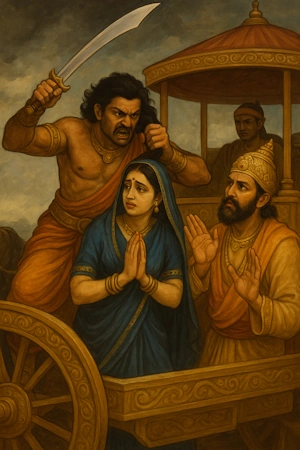
Bhumi Devi, trembling under the weight of wicked kings, rose to the heavens in sorrow. Her cry pierced the heart of the cosmos. The gods turned to Bhagavan. He heard. He decided. The Supreme Purusha would incarnate — not in wrath, but in compassion. Ananta, the thousand-headed Adishesha, would go before Him, preparing the ground. His Maya, the enchantress who veils and unveils truth, would descend too — not to delude, but to orchestrate His divine play. Thus began the sacred descent, where every step, every birth, was part of a plan to restore dharma and awaken forgotten faith.
Srimad Bhagavata 10.1.1.26 onwards -
श्रीशुक उवाच
इत्यादिश्यामरगणान् प्रजापतिपतिर्विभुः ।
आश्वास्य च महीं गीर्भिः स्वधाम परमं ययौ ॥
Bhagavan, Lord of creation, gave His word.
The devas stood assured.
The earth, consoled by His voice, breathed again.
His promise was enough.
No army, no sword — just His word.
Then, like dawn folding back into night,
Bhagavan returned to His supreme abode.
But the leela had already begun.
शूरसेनो यदुपतिर्मथुरामावसन् पुरीम् ।
माथुराञ्छूरसेनांश्च विषयान् बुभुजे पुरा ॥
Shurasena, lord of the Yadus, ruled from Mathura.
The sacred city breathed royalty and tradition.
He held sway over Mathura and its lands —
once vibrant with dharma, now shadowed by change.
It was here that the tale would take root.
In this royal soil, Bhagavan’s leela would blossom.
राजधानी ततः साभूत्सर्वयादवभूभुजाम् ।
मथुरा भगवान् यत्र नित्यं सन्निहितो हरिः ॥
Mathura became the royal seat of all Yadava kings.
But it was more than power and palace.
This was the city where Bhagavan Hari dwelled —
always near, never absent.
Not by shrine, but by presence.
Every stone held His silence.
Every wind whispered His name.
This was no ordinary ground.
तस्यां तु कर्हिचिच्छौरिर्वसुदेवः कृतोद्वहः ।
देवक्या सूर्यया सार्धं प्रयाणे रथमारुहत् ॥
In that sacred city, on an auspicious day,
Vasudeva, son of Shurasna, wed Devaki.
He mounted the chariot beside her,
unaware of what the skies already knew.
The sun bore witness.
The winds paused.
For this ride, simple in form,
carried the weight of Bhagavan’s coming.
Shurasena and Ugrasena belonged to the Yadava dynasty, but they came from different branches of the family.
Here’s the relationship clearly:
- Shurasena was an elder prince of the Yadu lineage and the father of Vasudeva (Krishna’s father).
- Ugrasena was also from the same broader Yadava clan but ruled a different part — he was the king of Mathura and the father of Kamsa.
They were cousins or parallel royals from different lines within the Yadava race. This kind of split in royal lineages was common in the Mahabharata period — multiple Yadava chiefs ruled different regions but all traced their ancestry to Yadu, son of Yayati.
Devaki is not Kamsa’s biological sister — she is his cousin.
But in ancient Indian tradition, especially among royal families, cousins were often addressed as ‘brother’ and ‘sister’, especially when they were raised closely together in the same household or lineage.
In this case:
- Devaka (Devaki’s father) and Ugrasena (Kamsa’s father) were brothers.
- That makes Devaki and Kamsa cousins by blood.
- But culturally and emotionally, Kamsa treated Devaki as his sister — likely because of their closeness or upbringing in the same extended royal family.
So when the Bhagavatam calls Devaki svasaa (sister), it's in the social and affectionate sense, not strict genealogy.
चतुःशतं पारिबर्हं गजानां हेममालिनाम् ।
अश्वानामयुतं सार्धं रथानां च त्रिषट्शतम् ॥
Four hundred elephants, decked in gold.
Over ten thousand horses, proud and swift.
Six hundred chariots, gleaming under the sun.
The wedding blazed with wealth.
But no one saw the shadow.
Even glory can be hollow,
when fate wraps its hand
around the reins of celebration.
दासीनां सुकुमारीणां द्वे शते समलङ्कृते ।
दुहित्रे देवकः प्रादाद्याने दुहितृवत्सलः ॥
Two hundred maidens, soft and adorned,
gifted as attendants to his daughter.
Devaka gave freely — not just jewels, but love.
A father’s heart overflowed.
He gave as one who cherished,
not out of duty, but tenderness.
Yet the chariot ahead carried more
than just a bride and her dowry.
शङ्खतूर्यमृदङ्गाश्च नेदुर्दुन्दुभयः समम् ।
प्रयाणप्रक्रमे तावद्वरवध्वोः सुमङ्गलम् ॥
Conchs roared.
Drums thundered.
Cymbals clashed.
The earth danced to wedding music.
Auspiciousness filled the skies.
Bride and groom began their journey,
surrounded by sound and splendour.
But fate had no rhythm.
Even the sweetest music
can walk beside silence —
the silence before a storm.
पथि प्रग्रहिणं कंसमाभाष्याहाशरीरवाक् ।
अस्यास्त्वामष्टमो गर्भो हन्ता यां वहसेऽबुध ॥
As Kamsa held the reins,
a voice rang from the sky — bodiless, clear, final.
'O fool! The bride you honor
will bear your end.
Her eighth child shall kill you.
You drive the chariot,
but death now rides with you.'
The music stopped.
Kamsa froze.
The leela turned.
इत्युक्तः स खलः पापो भोजानां कुलपांसनः ।
भगिनीं हन्तुमारब्धः खड्गपाणिः कचेऽग्रहीत् ॥
The words struck deep.
Kamsa, heart poisoned by fear,
turned wicked in a breath.
He, the shame of the Bhoja race,
seized his sister's hair — sword in hand.
No thought. No mercy.
He rose to kill her —
the very bride he had just celebrated.
This was no man. This was panic, incarnate.
तं जुगुप्सितकर्माणं नृशंसं निरपत्रपम् ।
वसुदेवो महाभाग उवाच परिसान्त्वयन् ॥
There he stood — Kamsa, shameless, savage, beyond reason.
Ready to stain his hands with his sister’s blood.
But Vasudeva, blessed among men,
rose with grace, not fear.
No rage. No panic.
Just words — steady as dharma.
He spoke to soothe the beast.
Not to escape, but to protect.
वसुदेव उवाच
श्लाघनीयगुणः शूरैर्भवान् भोजयशस्करः ।
स कथं भगिनीं हन्यात्स्त्रियमुद्वाहपर्वणि ॥
Vasudeva spoke — calm, unwavering.
'O Kamsa, praised for your courage,
honor of the Bhojas, glory among warriors —
will you now kill your sister?
A woman?
And that too, on her wedding day?'
His words weren’t flattery.
They were a mirror —
held up to a soul unraveling.
मृत्युर्जन्मवतां वीर देहेन सह जायते ।
अद्य वाब्दशतान्ते वा मृत्युर्वै प्राणिनां ध्रुवः ॥
'O mighty one,' said Vasudeva,
'Death is born the moment we are.
With the body comes its end —
like shadow with light.
Whether today or a hundred years later,
death will come.
It’s not a curse.
It’s truth.
Why stain your hands out of fear of what no one escapes?'
देहे पञ्चत्वमापन्ने देही कर्मानुगोऽवशः ।
देहान्तरमनुप्राप्य प्राक्तनं त्यजते वपुः ॥
'When this body falls to the five — earth, water, fire, air, and space —
the soul does not end.
It moves on, bound by karma,
helpless, silent, unseen.
It enters a new form.
What you see now, it has worn before.
What it wears next — you cannot stop, nor force.'
व्रजंस्तिष्ठन् पदैकेन यथैवैकेन गच्छति ।
यथा तृणजलूकैवं देही कर्मगतिं गतः ॥
'Just as a cow walks — lifting one foot, placing the next —
or as a leech leaves one blade of grass for another,
so does the soul move.
Leaving one body, taking the next.
Step by step, form by form.
All driven by karma.
Nothing random. Nothing yours to stop.'
स्वप्ने यथा पश्यति देहमीदृशं
मनोरथेनाभिनिविष्टचेतनः ।
दृष्टश्रुताभ्यां मनसानुचिन्तयन्
प्रपद्यते तत्किमपि ह्यपस्मृतिः ॥
'In dreams, one sees a body —
just like this one —
and lives within it, chasing desires.
The mind clings to what it’s seen,
heard, imagined.
And yet, on waking, it vanishes.
So too in life — the soul enters, forgets, believes.
But none of this stays.
Not even the fear.'
यतो यतो धावति दैवचोदितं
मनो विकारात्मकमाप पञ्चसु ।
गुणेषु मायारचितेषु देह्यसौ
प्रपद्यमानः सह तेन जायते ॥
Wherever the mind runs —
driven by maya, twisted by desires —
the soul follows.
Maya weaves bodies from the three gunas,
and the soul, bound to the mind, enters again.
Birth after birth, pulled like a puppet,
never knowing it's the mind
wearing costumes made by illusion.
ज्योतिर्यथैवोदकपार्थिवेष्वदः
समीरवेगानुगतं विभाव्यते ।
एवं स्वमायारचितेष्वसौ पुमान्
गुणेषु रागानुगतो विमुह्यति ॥
As light dances on wind-blown water,
it seems to move — but doesn’t.
So too, the soul, reflected in body and mind,
believes it lives there.
Maya builds the stage.
Gunas paint the scene.
The soul clings with love,
and loses its way —
not in truth, but in illusion.
तस्मान्न कस्यचिद्द्रोहमाचरेत्स तथाविधः ।
आत्मनः क्षेममन्विच्छन् द्रोग्धुर्वै परतो भयम् ॥
So — let no one harm another.
Not out of goodness. Out of sense.
The one who hurts another
digs a pit for himself.
Peace comes to the one
who walks without cruelty.
To injure another
is to summon fear —
for the blade you raise
always turns back.
एषा तवानुजा बाला कृपणा पुत्रिकोपमा ।
हन्तुं नार्हसि कल्याणीमिमां त्वं दीनवत्सलः ॥
She is your younger sister —
a girl, helpless, innocent.
Like a daughter in your care.
Why stain your hands with her blood?
She is blessed. She is kind.
You, who claim to protect the weak —
will you slay the one
who looked to you for safety?
श्रीशुक उवाच
एवं स सामभिर्भेदैर्बोध्यमानोऽपि दारुणः ।
न न्यवर्तत कौरव्य पुरुषादाननुव्रतः ॥
Shuka said—
Though Vasudeva tried with calm words and piercing truths,
Kamsa remained stone.
Heart hard, ears closed.
He had given himself to the path of the man-eater —
the one who devours children, one by one.
This was no king now.
Just fear, walking in human form.
निर्बन्धं तस्य तं ज्ञात्वा विचिन्त्यानकदुन्दुभिः ।
प्राप्तं कालं प्रतिव्योढुमिदं तत्रान्वपद्यत ॥
Vasudeva saw the storm would not pass.
Kamsa’s grip would not loosen.
So he bowed — not to fear, but to time.
He knew the hour had come,
not to resist,
but to endure.
And so he chose —
not fight, but sacrifice,
to shield what must one day rise.
मृत्युर्बुद्धिमतापोह्यो यावद्बुद्धिबलोदयम् ।
यद्यसौ न निवर्तेत नापराधोऽस्ति देहिनः ॥
Death must be outthought —
until wisdom gains its full strength.
Till then, we wait. We bend.
And if death still strikes,
it is no one's crime.
Not hers. Not mine.
The body dies —
but the soul carries no guilt
for what was never truly its own.
प्रदाय मृत्यवे पुत्रान् मोचये कृपणामिमाम् ।
सुता मे यदि जायेरन् मृत्युर्वा न म्रियेत चेत् ॥
'I will give you each son at birth —
hand them over to death itself.
But spare this helpless woman.
If sons are born,
and if death still demands,
let it take them.
But let her live.
Let her breathe.
Let her hope —
even if I must break.'
विपर्ययो वा किं न स्याद्गतिर्धातुर्दुरत्यया ।
उपस्थितो निवर्तेत निवृत्तः पुनरापतेत् ॥
'Why not a reversal?
Who can defy the course set by Bhagavan?
What must come, may turn away.
What turns away, may return again.
Who can predict His ways?
Our part is to endure.
His will walks its path —
seen or unseen, delayed or swift.'
अग्नेर्यथा दारुवियोगयोगयोः
अदृष्टतोऽन्यन्न निमित्तमस्ति ।
एवं हि जन्तोरपि दुर्विभाव्यः
शरीरसंयोगवियोगहेतुः ॥
As fire meets wood, then leaves —
not by choice, but by unseen design —
so too the soul enters and exits the body.
Who can grasp the cause?
The reason is hidden,
held in Bhagavan's will.
We think we act,
but we are sparks in His wind.
एवं विमृश्य तं पापं यावदात्मनिदर्शनम् ।
पूजयामास वै शौरिर्बहुमानपुरःसरम् ॥
Having seen Kamsa quiet —
even if only for now —
Vasudeva treated him with honor.
Not out of love, but out of wisdom.
He bowed, with words and gesture,
to the one who nearly killed his bride.
For even poison must be handled
with steady hands.
प्रसन्नवदनाम्भोजो नृशंसं निरपत्रपम् ।
मनसा दूयमानेन विहसन्निदमब्रवीत् ॥
His face glowed, calm as a lotus.
But inside, pain churned.
Before him stood the cruel, unashamed Kamsa.
Yet Vasudeva smiled — not for show,
but for peace.
He hid his sorrow behind gentleness,
and spoke not with hatred,
but with the dignity of one
who knows Bhagavan’s plan is unfolding.
वसुदेव उवाच
न ह्यस्यास्ते भयं सौम्य यद्वागाहाशरीरिणी ।
पुत्रान् समर्पयिष्येऽस्या यतस्ते भयमुत्थितम् ॥
'O gentle one,' said Vasudeva,
'This woman bears you no threat.
The voice spoke of her son, not her.
So spare her life.
I will give you each child she bears.
You fear her womb — not her.
Let her live.
Let me bear the burden that time has placed.'
श्रीशुक उवाच
स्वसुर्वधान्निववृते कंसस्तद्वाक्यसारवित् ।
वसुदेवोऽपि तं प्रीतः प्रशस्य प्राविशद्गृहम् ॥
Shuka said—
Kamsa withdrew. The sword stayed.
Vasudeva’s words had struck some chord —
not of virtue, but of caution.
Kamsa stepped back from killing his own sister.
Vasudeva, relieved yet heavy, praised him calmly
and returned home —
not in triumph,
but with the weight of a promise in his heart.
अथ काल उपावृत्ते देवकी सर्वदेवता ।
पुत्रान् प्रसुषुवे चाष्टौ कन्यां चैवानुवत्सरम् ॥
Time ripened. The seasons bowed.
Devaki, jewel among women,
bore sons — eight in number,
each a spark of the gods.
Year after year, they came,
soft cries in a house wrapped in chains.
And after them, a daughter too —
as if leela had left a secret
for the end.
कीर्तिमन्तं प्रथमजं कंसायानकदुन्दुभिः ।
अर्पयामास कृच्छ्रेण सोऽनृतादतिविह्वलः ॥
His firstborn — Kiirtiman — radiant with life.
Vasudeva held him close… then let him go.
He walked to Kamsa, trembling not with fear,
but with the weight of a promise.
Truth burned in his chest.
Tears unseen, voice unbroken —
he gave his child to the killer,
choking on the silence between vows and love.
किं दुःसहं नु साधूनां विदुषां किमपेक्षितम् ।
किमकार्यं कदर्याणां दुस्त्यजं किं धृतात्मनाम् ॥
What can saints not endure?
What do the wise truly crave?
What will the miser not stoop to?
What can the self-controlled not renounce?
This world tests all —
but the noble rise through pain,
the crooked drown in greed,
and the steadfast shine by what they let go.
दृष्ट्वा समत्वं तच्छौरेः सत्ये चैव व्यवस्थितिम् ।
कंसस्तुष्टमना राजन् प्रहसन्निदमब्रवीत् ॥
Kamsa saw Vasudeva — calm like a still flame,
faithful even when truth burned.
Something stirred in him.
A twisted admiration.
A fleeting satisfaction.
And smiling — that dangerous, coiled smile —
he spoke.
Not from grace.
But because cruelty sometimes toys
before it strikes again.
प्रतियातु कुमारोऽयं न ह्यस्मादस्ति मे भयम् ।
अष्टमाद्युवयोर्गर्भान्मृत्युर्मे विहितः किल ॥
'Take your child back,' Kamsa said,
smiling with poisoned ease.
'I fear him not —
the threat lies in the eighth, not the first.'
He spoke like a king,
but the venom was curled beneath.
Pride whispered,
‘I have time. Let them live —
until I choose otherwise.’
तथेति सुतमादाय ययावानकदुन्दुभिः ।
नाभ्यनन्दत तद्वाक्यमसतोऽविजितात्मनः ॥
‘So be it,’ said Vasudeva.
He took his son and turned away.
No joy, no celebration.
He did not trust the words
of a man ruled by fear,
unmastered in mind,
loose in dharma.
The child was spared —
but the sword still hovered, unseen.
नन्दाद्या ये व्रजे गोपा याश्चामीषां च योषितः ।
वृष्णयो वसुदेवाद्या देवक्याद्या यदुस्त्रियः ॥
In Gokula, Nanda and the cowherds stirred.
Among them, their wives — simple, sacred, strong.
In Mathura, Vasudeva and the Vrishnis moved in silence.
Devaki and the Yadava women bore the weight of fate.
All lived their lives unaware —
yet each was being drawn
into Bhagavan’s secret design.
सर्वे वै देवताप्राया उभयोरपि भारत ।
ज्ञातयो बन्धुसुहृदो ये च कंसमनुव्रताः ॥
O Bharata — know this:
Most around them were devas in disguise.
Among cowherds and kings,
among friends and kin,
even among Kamsa’s loyalists —
Bhagavan had placed His own.
Leela is never random.
Even darkness is lit
from within the enemy’s walls.
एतत्कंसाय भगवाञ्छशंसाभ्येत्य नारदः ।
भूमेर्भारायमाणानां दैत्यानां च वधोद्यमम् ॥
Then came Narada —
celestial seer, messenger of upheaval.
He revealed all to Kamsa —
Bhagavan’s plan,
the burdened earth,
the coming end of the asuras.
He stirred the fire in Kamsa’s chest,
not to destroy the leela,
but to ensure it unfolded,
exactly as Bhagavan willed.
ऋषेर्विनिर्गमे कंसो यदून् मत्वा सुरानिति ।
देवक्या गर्भसम्भूतं विष्णुं च स्ववधं प्रति ॥
As Narada departed,
Kamsa stood hollow-eyed, burning.
He saw it now —
The Yadus were no mere mortals.
They were devas in disguise.
And in Devaki’s womb…
Vishnu Himself waited.
Not just a child —
but his destroyer.
Fear twisted into fury,
and madness began to bloom.
देवकीं वसुदेवं च निगृह्य निगडैर्गृहे ।
जातं जातमहन् पुत्रं तयोरजनशङ्कया ॥
Kamsa shackled Devaki and Vasudeva,
locked them in iron and silence.
No trial, no crime — only fear.
And then, one by one,
as each child was born,
he killed them —
not because they were enemies,
but because they might be.
The womb had become a battlefield.
मातरं पितरं भ्रातॄन् सर्वांश्च सुहृदस्तथा ।
घ्नन्ति ह्यसुतृपो लुब्धा राजानः प्रायशो भुवि ॥
Blinded by greed,
unsated by power,
kings turn into beasts.
They kill mother, father, brother, friend —
anyone, everyone.
Not for justice.
Not for need.
But because fear whispers louder
than love in their hearts.
Kamsa was not the first.
He was just the next.
आत्मानमिह सञ्जातं जानन् प्राग्विष्णुना हतम् ।
महासुरं कालनेमिं यदुभिः स व्यरुध्यत ॥
He knew.
In a past life, he was Kalanemi — the asura slain by Vishnu.
Now reborn, hunted again.
Not by chance, but by karma.
And this time, Vishnu would rise from Devaki’s womb.
So Kamsa turned on the Yadus —
the clan of his end,
his fear now full-grown.
उग्रसेनं च पितरं यदुभोजान्धकाधिपम् ।
स्वयं निगृह्य बुभुजे शूरसेनान्महाबलः ॥
He chained his own father — Ugrasena,
king of the Yadus, Bhojas, and Andhakas.
No trial. No shame.
Just raw power.
Kamsa sat on the throne of Shurasena,
his heart dark, his hands stained.
Now fear ruled.
Now adharma wore a crown.
The leela moved into its darkest act.
And so, the world sinks into a hush before the storm. Chains rattle, blood spills, and the throne of dharma stands empty — yet all of it is part of something far greater. Kamsa thinks he rules, but he is only moving where Bhagavan allows. Devaki weeps in silence. Vasudeva walks the path of sacrifice. The devas wait. Every act of cruelty tightens the net of leela. For the child who is yet to be born is not just a son — He is the end of fear, the rebirth of hope, and the smile of Bhagavan hidden in the womb.





English
Bhagavatam
Click on any topic to open
7
30
Astrology
Bhagavad Gita
Bhagavatam
Bharat Matha
Devi
Devi Mahatmyam
Ganapathy
Garuda Puranam
Glory of Venkatesha
Hanuman
Kathopanishad
Mahabharatam
Mantra Shastra
Mystique
Practical Wisdom
Purana Stories
Radhe Radhe
Ramayana
Rare Topics
Rigveda Explained
Rituals
Sages and Saints
Shiva
Spiritual books
Sri Suktam
Story of Sri Yantra
Temples
Vedas
Vishnu Sahasranama
Yoga Vasishta
26
17
10
0


