Eight Kinds of Wealth and How Long Each One Lasts
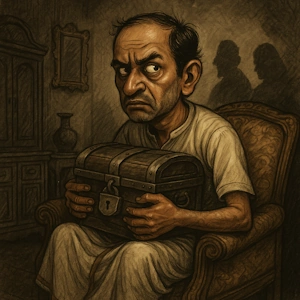
The wealth science as per our scriptures is called Padmini Vidya.
Padmini Vidya describes eight kinds of wealth, their nature, and how they affect and impact persons in possession of such wealth.
These eight kinds of wealth are called:
Padma, Maha Padma, Makara, Kacchapa, Mukunda, Nandaka, Neela, and Shankha.
1. Padma
The wealth called Padma is satwik by nature. It is connected with precious metals like gold and silver.
People in possession of this wealth will be constantly engaged in pujas, havans, and other dharmic activities. They contribute towards the construction of temples.
2. Maha Padma
The second kind of wealth, called Maha Padma, is also satwik by nature. Rather than precious metals, this kind of wealth is more connected to gemstones.
People in possession of this kind of wealth will be more inclined towards yogis, sadhus, and sanyasis. They render service to them and help in building ashramas for them.
Eventually, they also become like them. Even their children and grandchildren develop ascetic nature.
Maha Padma stays in the family up to seven generations.
3. Makara
The third kind of wealth is called Makara. It is tamasic.
Even a satwik person who comes into possession of Makara will turn tamasic in some time.
In general, you will find that these people are engaged in collecting and displaying weapons.
They also deal in objects, articles, and services harmful to people. Arms dealers belong to this group.
They maintain relationships with people in powerful positions—they like to do that—and boast about it.
This kind of wealth never goes beyond one generation.
Children don’t get to enjoy this wealth. Since it comes from activity that harms people or lives, it cannot sustain.
4. Kacchapa
The fourth kind of wealth is Kacchapa. This is also tamasic.
Its mode of acquisition is straightforward, through fair means. But the owner of this kind of wealth is always miserly.
They suspect everyone, are always worried about losing their wealth, and don’t spend.
When you see such a person, you can be sure that he is in possession of Kacchapa wealth.
This wealth also doesn’t last beyond one generation.
Money should be employed in righteous activities.
Artha is meant for performing dharma as well as attaining desires—righteous by nature, dharmic by nature—not for hoarding.
Money, wealth, has value only if you spend.
5. Mukunda
The fifth kind of wealth is Mukunda—this is rajasic by nature.
It is earned through professions of entertainment, self-indulgence, where the indriyas of people are pampered, or through gambling.
Such wealth makes the person a reckless spendthrift who indulges more and more in sensory pleasures.
This kind of wealth also does not last beyond one generation.
6. Nandaka
The sixth kind of wealth, Nandaka, is a combination of satwa and tamas.
People in possession of this wealth are generous and support a lot of people,
but they are easily influenced by those who praise them, and easily offended if anything is spoken against them.
They don’t believe in paraloka (life after death).
There’s another peculiarity: they don’t like their immediate relatives—wife, children, family.
They are there for others, for strangers, not for immediate family.
They also keep on abandoning old friends and making new ones.
When you see such people, you should understand that this is the influence of the wealth they possess.
7. Neela
The seventh kind of wealth is Neela—a combination of satwik and rajasic qualities.
This wealth comes from regular professions and one’s own effort.
Such people are humanitarian, they help others, contribute to society, and care for nature.
This kind of wealth is enjoyed by three generations.
8. Shankha
The eighth kind of wealth is Shankha—a combination of rajoguna and tamoguna.
Those who possess this kind of wealth never share with others—not even with wife, children, brother, or sister.
They are absolutely selfish and self-centred.
So, we have to be mindful about how wealth is acquired.
Because wealth can change your character.
How wealth is acquired, and what kind of wealth is acquired, can have a bearing on your personality and behaviour.





English
Rare Topics
Click on any topic to open
7
30
Astrology
Bhagavad Gita
Bhagavatam
Bharat Matha
Devi
Devi Mahatmyam
Ganapathy
Garuda Puranam
Glory of Venkatesha
Hanuman
Kathopanishad
Mahabharatam
Mantra Shastra
Mystique
Practical Wisdom
Purana Stories
Radhe Radhe
Ramayana
Rare Topics
Rigveda Explained
Rituals
Sages and Saints
Shiva
Spiritual books
Sri Suktam
Story of Sri Yantra
Temples
Vedas
Vishnu Sahasranama
Yoga Vasishta
26
17
10
0


