How The Sensory Organs Work From A Spiritual Perspective
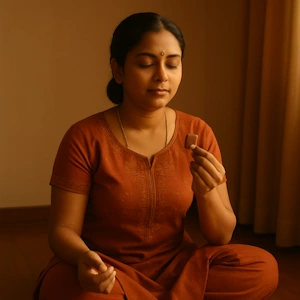
Even if you don’t understand how the universe functions or get Tatva Jnana or Brahma Jnana, at least understand how your body functions.
Put a piece of chocolate or sweet or whatever you like in your mouth. Look inside, see what happens. Observe why and how it is giving you pleasure. This is like one of those science experiments that you did in school. Sit in a calm and quiet place and do that. See what happens. What does that piece of chocolate do to you? What does it do to your tongue? Why do you enjoy it? Is the enjoyment at the tongue or elsewhere? How and where do you feel the pleasure? Is the pleasure at the tongue or elsewhere, like your brain or heart or your whole body? Can the same pleasure come when you simply think about chocolate?
I am not going to tell you how it works. Find out for yourself. This much of understanding you should have about your own body. If you can understand how these sensory organs work, that will make a lot of difference to your life. Before you can control anything, you should know how it works. Simply suppressing your senses won’t work. You should first know how your senses work before you can control them.
Some stimulus comes in contact with the sensory organ. It is transmitted into some other part of the body, and a likeable pleasurable sensation develops there. Once the stimulus is withdrawn, the pleasure also stops. But then you want more of it. You liked it. Enjoyed it. You want more of it. You start craving for it. You start looking around for it. You are willing to pay for it. You are willing to dedicate 10 or 12 hours of every day of yours working, to earn and pay for that stimulus which gives you pleasure for a few seconds or minutes or hours — to satisfy that craving.
Thus you become a slave of this craving. You will start slogging to satisfy it. You become its slave. This sensory craving becomes your master. Satisfying him becomes the whole purpose of your life. Your physical effort, mental effort, intelligence — everything becomes focused on satisfying this master. At least try to understand the nature of this master you have been serving.
This craving is like fire — the more you feed it, the stronger it becomes. The more you have, the more you indulge, the more you want. Satisfaction through indulgence is momentary. After some time, the craving raises its head again. But this is the nature of the indriyas, the sensory organs. You can only satisfy them through indulgence.
This indulgence is often compared to scabies — the skin infection that children mostly get — or a ringworm infection. If you scratch, it is comfortable for some time. There is even pleasure in that scratching. But the more you scratch, every time you scratch, it becomes more and more raw. The scratching which gives momentary pleasure actually is aggravating the infection.
-
What is the point of this exercise? — To watch a simple sensation turn into liking, wanting, and habit, so you see the chain clearly.
-
Where does pleasure actually happen? — Not on the tongue alone; perception, memory, and meaning in the mind complete the experience.
-
Why notice body signals? — Heart rate, salivation, and breathing reveal the urge rising; awareness breaks autopilot.
-
Is enjoyment wrong? — No. The aim is freedom from compulsion, not denial of joy.
-
Why does suppression fail? — Forcing a ‘no’ without understanding drives rebound urges and secret fixes.
-
What is the real master here? — The habit loop: cue, contact, sensation, liking, wanting, seeking, repeating.
-
How do I run the experiment? — Sit quietly, take one small bite, track the timeline, pause, and observe the urge crest and fall.
-
How do I break the loop? — Insert a pause, breathe slowly, label sensations, make a deliberate choice, and stop at ‘enough’.
-
Does this apply beyond taste? — Yes; sight, sound, smell, touch, and thought follow the same mechanism.
-
What does the fire metaphor teach? — Feeding urges grows them; leaving them unfed weakens them.
-
Why the itch analogy? — Scratching soothes briefly but worsens the wound; indulgence comforts then intensifies craving.
-
Is craving always harmful? — Craving is natural; slavery to craving is the problem.
-
How do I enjoy without losing control? — Set a pre-limit, go slow, notice the peak, finish early, and move on.
-
What if sweets are not my trigger? — Use coffee, snacks, screens, shopping, or praise; the pattern holds.
-
How do I measure progress? — Urges feel lighter, pauses feel easy, stopping mid-pleasure feels calm, and seeking reduces.
-
What daily practices help? — Pre-eat pause, single-task eating, gratitude, sleep hygiene, and keeping triggers out of sight.
-
When should I get help? — When urges hit health, work, or safety; consult a qualified professional.
-
What is the end goal? — Mastery: enjoy cleanly, choose freely, and stay free.






English
Vishnu Sahasranama
Click on any topic to open
7
30
Astrology
Bhagavad Gita
Bhagavatam
Bharat Matha
Devi
Devi Mahatmyam
Ganapathy
Garuda Puranam
Glory of Venkatesha
Hanuman
Kathopanishad
Mahabharatam
Mantra Shastra
Mystique
Practical Wisdom
Purana Stories
Radhe Radhe
Ramayana
Rare Topics
Rigveda Explained
Rituals
Sages and Saints
Shiva
Spiritual books
Sri Suktam
Story of Sri Yantra
Temples
Vedas
Vishnu Sahasranama
Yoga Vasishta
26
17
10
0


