Chanakya's Doctrine of Punishment
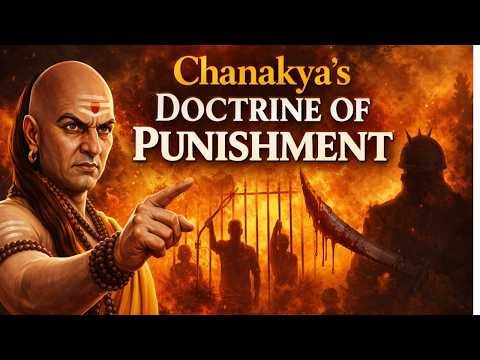
A famous saying on punishments is that -
'सर्वो दण्डजितो लोको दुर्लभो हि शुचिः क्वचित्।
दण्डस्य हि भयात् कृत्स्नं जगत् भोगाय कल्पते॥'
'People who are good, nice, and righteous by themselves are very rare.
The world is in order; order is maintained in the world by the fear of punishment.
It is due to the fear of punishment that people get to enjoy what is due to them.
This applies not only to men.'
'देवदानवगन्धर्वा रक्षांसि पतगोरगाः।
तेऽपि भोगाय कल्पन्ते दण्डेनैव निपीडिताः॥'
'Devas, Danavas, Gandharvas, birds, reptiles, they all are engaged in their own functions properly because of the fear of punishment.'
'भीषास्माद्वातः पवते भीषादेति सूर्यः।
भीषास्मादग्निश्चेन्द्रश्च मृत्युर्धावति पञ्चमः॥'
'Says Taittiriya Upanishad.
It is in fear of him, fear of him as the ruler/commander that the sun lights up, wind blows, fire burns, Indra causes rains, and Mrutyu takes away lives. They all function under his command only. They all function because of fear of him as the universal ruler/commander.
So even the sun, wind, they all function under fear, fear that if they don’t function as ordained, they will be punished.'
'Punishment is called danda. Tasya neetihi dandaneetihi. The science of punishment is called dandaneeithi. How to punish, that is dandaneetithi.'
'दण्डनीतिः अलब्धलाभार्था लब्धपरिरक्षणी रक्षितविवर्धनी।
Dandaneeti is a means to make acquisitions, to get one what is rightfully due to him. To protect assets and to improve upon them, to increase them.
Acquisition of assets, their protection, their increase.
And also to make these assets available for righteous utilization.'
'तस्यामायत्ता लोकयात्रा।
Worldly progress depends on dandaneeti, how well dandaneeti is implemented.'
'तस्माल्लोकयात्रार्थी नित्यमुद्यतदण्डः स्यात्।
So the principle of governance by the fear of punishment should be upheld if the ruler is desirous of the progress of his kingdom.'
'नह्येवंविधं वशोपनयनमस्ति भूतानां यथा दण्ड इत्याचार्याः।
Acharyas say that there is no better method to control people than the fear of punishment.'
'नेति कौटिल्यः – No, says Chanakya, Kautilya.
तीक्ष्णदण्डो हि भूतानामुद्वेजनीयः। – The ruler who metes out severe punishment is hated; he becomes repulsive.
मृदुदण्डः परिभूयते। – The ruler whose punishments are mild is not taken seriously.
यथार्हदण्डः पूज्यः। – The ruler whose punishment is balanced, as is necessary, as someone deserves – he is respected.'
'सुविज्ञातप्रणीतो हि दण्डः प्रजा धर्मार्थकामैर्योजयति।
When punishment is given with due consideration, thoughtfully, as much is necessary, as much only as is necessary then that makes people righteous.'
'दुष्प्रणीतः कामक्रोधाभ्याम् अज्ञानात् वानप्रस्थपरिव्राजकानपि कोपयति।
Punishment, when meted out to satisfy anger, out of anger, or with any other motive, to achieve some other motive, will cause agitation even among ascetics, sanyasis - then what to speak of normal householders?'
'अप्रणीतो हि मात्स्यन्यायमुद्भावयति।
If the wicked are not punished properly and in time, it will create matsya nyaya, a situation where the big fish eat the small fish.
Where might becomes right, the strong and powerful take advantage of the weak.
This is not desirable.'
'बलीयानवल्ं हि ग्रसते दण्डधराभावे।
The ruler is the protector of the weak. It is his duty to protect the weak. The weak can resist the strong and progress only under the protection of the ruler and the fear that he instills in the strong.'
Question 1: Why is the fear of punishment considered the foundation of a stable society rather than inherent human goodness?
The ancient wisdom suggests that individuals who are naturally righteous and virtuous by their own choice are extremely rare. Most people observe order and respect the rights of others primarily because they fear the consequences of breaking the law. Without this systemic fear, the structure of society would collapse, and individuals would be unable to enjoy the possessions or rights that belong to them.
Question 2: How do these principles explain the orderly movement of the natural universe and celestial bodies?
There is a mysterious cosmic dimension to this principle which suggests that even the sun, wind, and fire follow their paths out of a sense of duty enforced by a higher command. This implies that the entire universe operates under a grand system of discipline. If the sun or wind ceased to perform their functions as ordained, the universal order would fail, suggesting that even the most powerful natural forces are subject to a supreme governing law.
Question 3: What is the hidden connection between the science of punishment and the creation of national wealth?
The science of punishment is not merely about discipline but is also a vital tool for economic growth. It serves four secret purposes: it helps in acquiring resources that have not yet been gained, protects assets that have already been earned, increases those protected assets through growth, and ensures that these resources are used for the rightful benefit of society. Therefore, the prosperity of a kingdom is directly tied to how effectively its laws are enforced.
Question 4: Why does the progress of the entire world depend on the implementation of these governing principles?
Worldly progress is not accidental but depends on the implementation of a structured system of justice. A ruler who is constantly ready to apply the law ensures that there is no stagnation. When people know that the law is active and alert, they feel secure enough to innovate, trade, and build, which leads to the overall advancement of civilization.
Question 5: What is the danger of a ruler being too harsh or too severe in his punishments?
Chanakya warns that a ruler who metes out overly severe or cruel punishments becomes repulsive and hated by his subjects. Instead of creating order, excessive severity creates hidden resentment and instability, eventually leading to the downfall of the leadership because the people no longer feel a sense of loyalty or protection.
Question 6: Why is a lenient or soft approach to law considered a failure in governance?
When punishments are too mild or inconsistent, the ruler and the law are no longer taken seriously. This lack of respect for authority leads to a breakdown in discipline where the wicked feel empowered to ignore the rules. A soft approach effectively invites chaos because it fails to provide a sufficient deterrent against wrongdoing.
Question 7: What is the secret to becoming a respected and enlightened ruler?
Respect is earned through the principle of balanced justice. A ruler who punishes only as much as is deserved, based on careful thought and objective facts, is honored by the people. This middle path ensures that the law is seen as a fair guide rather than an instrument of terror or a sign of weakness.
Question 8: How can the improper application of law affect even the most peaceful and spiritual members of society?
If punishment is driven by the personal anger, greed, or ignorance of the ruler, it creates such deep unrest that even forest-dwelling ascetics and monks become agitated. This highlights a mysterious truth: the vibration of injustice is so powerful that it disturbs the peace of even those who have renounced the world, proving that a corrupt legal system poisons the entire spiritual atmosphere of a land.
Question 9: What is the Law of the Fish and how does the science of punishment prevent it?
The Law of the Fish describes a state of total anarchy where the strong and powerful consume the weak, just as large fish eat small fish in the ocean. The primary duty of the ruler and the law is to prevent this natural predatory behavior. By instilling fear in the strong, the law provides a shield for the weak, allowing them to survive and thrive despite their lack of physical power.
Question 10: How does the thoughtful application of the law lead to the moral and spiritual elevation of the public?
When the law is applied with deep consideration and wisdom, it does more than just stop crime; it aligns the people with their higher duties and goals. It encourages a life of balance where people can pursue their desires and wealth within the framework of righteousness. Thus, the ultimate secret of punishment is that it is a tool for the moral evolution of humanity, guiding them toward a more disciplined and meaningful existence.





English
Practical Wisdom
Click on any topic to open
7
30
Astrology
Bhagavad Gita
Bhagavatam
Bharat Matha
Devi
Devi Mahatmyam
Ganapathy
Garuda Puranam
Glory of Venkatesha
Hanuman
Kathopanishad
Mahabharatam
Mantra Shastra
Mystique
Practical Wisdom
Purana Stories
Radhe Radhe
Ramayana
Rare Topics
Rigveda Explained
Rituals
Sages and Saints
Shiva
Spiritual books
Sri Suktam
Story of Sri Yantra
Temples
Vedas
Vishnu Sahasranama
Yoga Vasishta
26
17
10
0


