Bhrajishnu
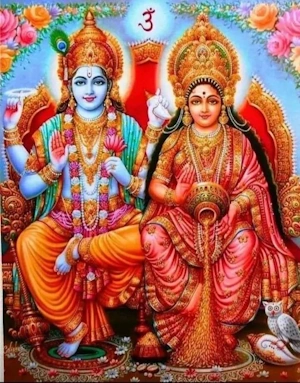
Let’s look at the meaning of the 143rd divya nama of Vishnu Shasranama - Bhrajishnu (भ्राजिष्णुः) from -
भ्राजिष्णुर्भोजनं भोक्ता सहिष्णुर्जगदादिजः ।
अनघो विजयो जेता विश्वयोनिः पुनर्वसुः ॥
bhrajishnurbhojanam bhokta sahishnurjagadadijah .
anagho vijayo jeta vishvayonih punarvasuh ..
Meaning 1 -
It is Bhagavan's nature to reveal himself to his true devotees. Starting from Swayambhuva Manu, there are many examples of this divine nature. Devotees perform deep tapas, and out of his grace, he reveals himself. His presence is beyond ordinary perception. Only those with deep devotion and purity in heart can experience him. Non-devotees cannot see him as they lack the spiritual connection. Bhagavan is not like physical objects that reflect light; he is beyond material vision. Only through bhakti does the inner eye open, allowing one to witness the divine.
- Bhagavan chooses when to reveal himself. His revelation is not automatic but a response to devotion and surrender.
- Bhagavan exists beyond the limitations of time and space. Therefore, his form is beyond normal vision.
- Only a pure heart can witness Bhagavan. As darkness cannot coexist with light, ignorance cannot coexist with divine vision.
- Non-devotees are veiled by Maya. The illusions of the material world prevent them from perceiving the divine presence.
Meaning 2 -
Bhagavan is the source of all brilliance. The Sun, Moon, and stars derive their light from him. His radiance surpasses the brightness of any celestial body. His brilliance is not just physical but spiritual, illuminating hearts with knowledge and wisdom. He is the light that guides souls toward liberation.
- Bhagavan's brilliance represents divine wisdom. His light dispels the darkness of ignorance and guides souls toward moksha.
- The Sun and stars are temporary; HIS light is eternal. Celestial bodies fade over time, but his radiance is forever.
- HE is the inner light within all beings. Not only does Bhagavan light the cosmos, but he also shines within every living soul.
- Bhagavan's brilliance is both physical and metaphysical. It is not just visible light but also the essence of consciousness and truth.
-
Why do only some people feel the presence of Bhagavan while others remain blind to it?
Because devotion opens the inner eye. Chanting any nama from the Vishnu Sahasranama steadily, either the whole text slowly or a single nama 108 times, clears the veil of maya. This purity allows the heart to receive his revelation. Even in family life, keeping up such japa together builds shared faith and deeper trust. -
If Bhagavan is everywhere, why does he still choose when to reveal himself?
His presence is constant, but awareness of it is a gift that responds to surrender. Regular nama japa aligns the mind, just like steady exercise strengthens the body. This discipline makes the seeker ready. In the same way that families thrive when timing and patience guide decisions, the divine also reveals at the right moment. -
How is his brilliance different from sunlight or firelight that we already see?
Sunlight and fire are temporary, fading with time. Bhagavan’s brilliance is eternal and not dependent on fuel. Repeating any nama from the Vishnu Sahasranama 11 times daily keeps this truth alive within. Just as a lamp brightens a home, his light brightens the mind, bringing clarity and peace in relationships. -
What does it mean when we say his light is inside us as well as outside in the cosmos?
It means Bhagavan is both the cosmic guide and the soul’s witness. Chanting the Sahasranama slowly lets this inner light shine stronger. When the mind is settled, one naturally becomes calmer at home, more understanding with children, and more patient in health challenges. -
If non-devotees cannot see him, does that mean they are permanently cut off?
No. The moment one turns to Bhagavan with sincerity, the path opens. Even 11 repetitions of any nama can start breaking ignorance. Just as unhealthy habits can be corrected with small lifestyle changes, spiritual blindness can be reversed with a single step towards devotion. Families who encourage such steps together grow stronger in unity.
-
If your deity is real, why can't everyone see him openly instead of only devotees?
Because this is not about physical eyesight but about consciousness. A stone exists even if a blind man cannot see it. In the same way, Bhagavan exists, but the inner faculty to perceive him awakens only through purity and devotion. Without that, the mind is clouded by illusion. -
You claim he 'reveals himself' at will. How is that different from imagination or hallucination?
A hallucination is private and inconsistent, different for each person. The revelation of Bhagavan is consistent across scriptures and saints through centuries, matching in form, nature, and effect. Such uniform testimony across ages points to reality, not random imagination. -
Why say he is the source of light when physics explains sunlight and starlight?
Physics explains the mechanism, not the origin of the law itself. Nuclear fusion happens because laws exist that allow it. Those laws, the order behind them, and the consciousness that sustains them are what we call Bhagavan's radiance. -
How can you prove his brilliance is more than physical light?
Physical light fades; stars burn out. Yet the capacity of humans to know truth and experience consciousness does not arise from sunlight. That inner awareness, the light by which we even know light exists, is a deeper brilliance. That is what is meant by his eternal radiance. -
Isn't it just poetic exaggeration to say he shines within all beings?
No, it points to a simple fact: every human has an inner sense of awareness that is not dependent on external light. Close your eyes in darkness, yet you still know you exist. That self-shining awareness is what is meant by Bhagavan shining inside every being.





English
Vishnu Sahasranama
Click on any topic to open
7
30
Astrology
Bhagavad Gita
Bhagavatam
Bharat Matha
Devi
Devi Mahatmyam
Ganapathy
Garuda Puranam
Glory of Venkatesha
Hanuman
Kathopanishad
Mahabharatam
Mantra Shastra
Mystique
Practical Wisdom
Purana Stories
Radhe Radhe
Ramayana
Rare Topics
Rigveda Explained
Rituals
Sages and Saints
Shiva
Spiritual books
Sri Suktam
Story of Sri Yantra
Temples
Vedas
Vishnu Sahasranama
Yoga Vasishta
26
17
10
0


