Anagha

Let’s look at the meaning of the 148th divya nama of Vishnu Sahasranama - अनघः (Anagha) from -
भ्राजिष्णुर्भोजनं भोक्ता सहिष्णुर्जगदादिजः ।
अनघो विजयो जेता विश्वयोनिः पुनर्वसुः ॥
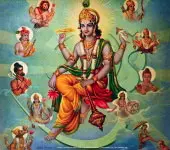
The divine name Anagha, meaning 'sinless' or 'uncontaminated,' is a profound attribute of Lord Vishnu.
Uncontaminated by Actions
Even though Lord Vishnu takes incarnations (avataras) and engages in worldly actions, He remains completely free from the effects of those actions. In our world, actions typically result in karma (both good and bad). However, Vishnu is above the law of karma because:
- He acts without selfish desires or attachments.
- His actions are solely for the welfare of the universe.
For example:
- When He slays demons, it is not out of anger or hatred but to protect dharma (righteousness).
- When He blesses devotees, it is out of divine compassion, not for any personal gain.
Beyond Dualities
The Kaivalya Upanishad (22) says, 'na puṇya pāpe mama' – meaning, 'Virtue and sin do not affect Me.' Unlike humans who are bound by the dualities of right and wrong, Lord Vishnu transcends them. His purity is inherent and unchanging, regardless of His role or circumstances.
Examples from Incarnations
- In the Rama avatar, Lord Vishnu lived among humans, faced challenges, and fought battles. Yet, He remained untainted by the violence or grief of the world.
- In the Krishna avatar, He participated in the Mahabharata war, guiding Arjuna. Despite being involved in the conflict, He remained untouched by sin because His purpose was to uphold dharma.
Scriptural Support
- Yajurveda (40.8): 'śuddham apāpaviddham' – This describes the Supreme Being as eternally pure and unaffected by any impurity or flaw.
- Bhagavad Gita (4.14): 'na māṁ karmāṇi limpanti' – 'Actions do not taint Me.'
Unattached Nature
Bhagavan's detachment (vairagya) ensures that He is not influenced by worldly outcomes. For example, He resides in samsara (the material world) during His incarnations but remains above its binding nature, like a lotus in muddy water.
What does 'Anagha' teach us about human actions?
'Anagha' reminds us to act selflessly and without attachment. Just as Lord Vishnu’s actions are free from selfish motives, humans should aim to perform their duties without expecting rewards.
How can one develop detachment like Lord Vishnu?
Detachment can be developed by understanding the temporary nature of the world and focusing on actions for the welfare of others. Practicing devotion and meditation also helps reduce attachment to results.
Why is purity important in spiritual practices?
Purity helps align the mind with higher goals. When the mind is free from negative thoughts, it becomes easier to connect with the divine and progress spiritually.
How does Lord Vishnu's nature inspire us in facing challenges?
Lord Vishnu’s ability to remain untouched by dualities, even in difficult situations, inspires us to stay calm and focused during challenges. By acting for a higher purpose, we can overcome difficulties without losing inner peace.
-
If actions usually bind people, why do they not bind Vishnu?
Because His actions are without selfish desire. He acts for the welfare of all, not for personal gain. Chanting any nama from the Vishnu Sahasranama helps us mirror this attitude, making our work lighter and our minds calmer. -
What does it mean to live untouched by sin while being active in the world?
It means to do your duties without being trapped by pride, anger, or greed. Sahasranama japa, even 11 times daily, trains the mind to release attachment to results. This balance improves both family harmony and health. -
How can humans apply the idea of being 'Anagha' in daily life?
By acting with fairness, compassion, and no hidden agenda. Chanting the full Sahasranama slowly makes one more aware of intentions behind actions. This awareness reduces stress and builds trust in relationships. -
Why is purity central to spiritual growth?
A pure mind does not get clouded by jealousy or fear. Japa of any nama from the Sahasranama clears mental clutter like daily exercise clears toxins from the body. Both inner clarity and outer health improve together. -
How does detachment protect us during difficulties?
When the mind is not tied to outcomes, struggles do not crush it. Nama japa, especially 108 repetitions of any nama, strengthens this inner shield. This steadiness allows a person to support family members without breaking down themselves. -
What practical strength does this teaching give in today’s challenges?
It gives the courage to act without being drained by guilt or over-excitement. Repetition of the Sahasranama works like a steady rhythm that resets the mind. This rhythm supports patience at work and peace at home.
-
If Vishnu takes part in battles and killings, how can you call him sinless?
Because intent defines sin, not the act alone. He acts to protect order, not for revenge or greed. A judge sentencing a criminal is not guilty of murder; in the same way, His actions uphold justice without staining Him. -
Why say he is beyond karma when everyone else is bound by it?
Karma binds only when desire and attachment drive action. Vishnu acts without either, so no residue sticks. Fire burns others, but remains untouched by its own heat; His case is the same. -
How do you prove he is above good and bad, when morality is universal?
Morality is for those who are bound by choices and consequences. Vishnu is the source of morality itself, so rules cannot apply to Him. The lawmaker is not judged by the law he creates for others. -
If he lived as Rama and Krishna, did he not suffer like humans?
He experienced events but was not trapped by them. Grief and struggle passed through him without binding. Like a lotus in muddy water, his essence stayed pure while engaging fully with the world. -
How can purity be permanent when actions always leave traces?
Purity is his nature, not a state earned or lost. Just as the sun remains bright despite clouds, Vishnu’s essence is untouched by what surrounds Him. Actions dissolve in that unchanging purity. -
Why use words like sinless if he already stands beyond human categories?
Because human minds need familiar terms to grasp the difference. 'Sinless' signals that his being cannot be corrupted by actions the way ours can. It draws a line between conditioned life and his absolute freedom.





English
Vishnu Sahasranama
Click on any topic to open
7
30
Astrology
Bhagavad Gita
Bhagavatam
Bharat Matha
Devi
Devi Mahatmyam
Ganapathy
Garuda Puranam
Glory of Venkatesha
Hanuman
Kathopanishad
Mahabharatam
Mantra Shastra
Mystique
Practical Wisdom
Purana Stories
Radhe Radhe
Ramayana
Rare Topics
Rigveda Explained
Rituals
Sages and Saints
Shiva
Spiritual books
Sri Suktam
Story of Sri Yantra
Temples
Vedas
Vishnu Sahasranama
Yoga Vasishta
26
17
10
0


