Akshardham Temple, Delhi
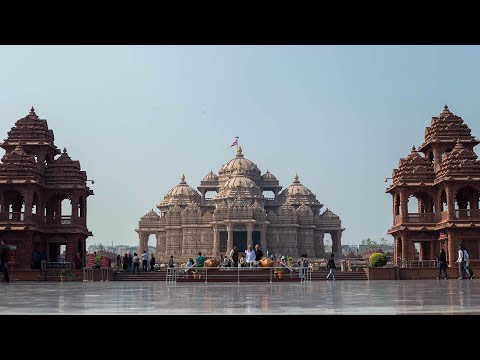
1. What It Is
- A massive spiritual and cultural campus dedicated to Bhagwan Swaminarayan, built by the BAPS organisation.
- Home to the Akshardham Mandir, often called ‘the abode of the divine’, it’s a peaceful yet awe‑inspiring escape on the banks of the Yamuna River.
2. Size & Records
- At 86,342 sq ft (≈8,000 m²), it used to hold the Guinness title for world’s largest comprehensive Hindu temple.
- The Mandir itself is roughly 141 ft tall, spans 316 ft in width, and 356 ft long — all carved out of pink Rajasthani sandstone and white Italian Carrara marble, with zero steel or concrete.
3. Intricate Architecture
- 234 pillars, 9 domes, 20 quadrangular spires, and around 20,000 statues including deities, saints and elephants — all intricately hand‑carved.
- The base plinth, Gajendra Pith, features 148 life‑size elephant sculptures weighing a total of 3,000 tonnes.
- Under the central dome in the inner sanctum is an 11 ft (3.4 m) high gilded murti of Swaminarayan in traditional posture, surrounded by other figures made of five‑metal alloy (panchadhatu).
4. Exhibits & Shows
- Sahajanand Darshan (Hall of Values): animatronic‑based dioramas that dramatise the life and teachings of Swaminarayan and Hindu values like service, humility, peace and vegetarianism.
- Neelkanth Darshan: a giant‑screen film (IMAX‑like), 40 mins long, about the teenage yogi’s journey across India.
- Sanskruti Darshan: a 12‑minute boat ride through 10,000 years of Indian history and civilizational achievements with life‑size figures and robotics.
- Sahaj Anand Water Show at Yagnapurush Kund: a grand multimedia fountain event combining lasers, projections, fire‑jets, sound and live actors, staged in a traditional step‑well setting.
5. Gardens & Surroundings
- The Garden of India (Bharat Upavan) showcases bronze statues of Indian icons — freedom fighters, reformers, artists — set in manicured lawns reflecting national pride.
- The Narayan Sarovar is the sacred water body encircling the main Mandir, believed to hold holy waters from 151 rivers and lakes, flowing from 108 symbolic gaumukhs (holy outlets).
6. Construction & Story
- Construction began in 2000, driven by the vision of Yogiji Maharaj and realised by Pramukh Swami Maharaj. It took five years, involving 11,000 artisans and 300 million+ volunteer hours.
- Opened on 6 November 2005, with dignitaries including APJ Abdul Kalam, Manmohan Singh and LK Advani present.
7. Getting There & Entry
- Located in East Delhi (Pandav Nagar / Noida Mor area), next to the Akshardham Metro Station (Blue Line) — just a short walk away.
- Free ground entry, though individual exhibits or the water show require paid tickets; weekend/holiday visitors often need free timed slot reservation.
- Open every day except Tuesday, roughly 10 AM–6:30 PM entry, with closing around 7:30–8 PM depending on show times.
Why It’s a Must-See
- Architecture that shocks — no metal, all stone, all human-powered craft.
- Emotionally engaging — the exhibits feel alive, teaching values through stories and visuals.
- Photogenic and immersive — great for slowing down, soaking it in or simply snapping photos.
- An urban oasis — despite being in Delhi, the vibes are peaceful, meditative and uplifting.
Akshardham isn’t just another temple — it’s a bold statement of culture, craftsmanship and devotion built in modern times. The architecture slays, the storytelling sucks you in, and the gardens give you breathing space. Worth the trip? Absolutely.





English
Temples
Click on any topic to open
7
30
Astrology
Bhagavad Gita
Bhagavatam
Bharat Matha
Devi
Devi Mahatmyam
Ganapathy
Garuda Puranam
Glory of Venkatesha
Hanuman
Kathopanishad
Mahabharatam
Mantra Shastra
Mystique
Practical Wisdom
Purana Stories
Radhe Radhe
Ramayana
Rare Topics
Rigveda Explained
Rituals
Sages and Saints
Shiva
Spiritual books
Sri Suktam
Story of Sri Yantra
Temples
Vedas
Vishnu Sahasranama
Yoga Vasishta
26
17
10
0
Copyright © 2026 | Vedadhara | All Rights Reserved. | Designed & Developed by Claps and Whistles


