Adultery In Hinduism
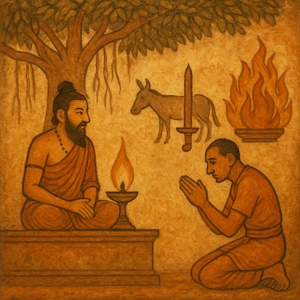
Adultery is considered a grave sin in Hinduism.
Any sexual activity outside the wedlock, both premarital and extramarital are forbidden.
Varahamihiracharya (6th century CE) says that the offense of infidelity is equal for both men and women.
He is of the opinion that women care more about faith in marriage and men if they are caught have no hesitation in denouncing Dharma Shastra.
The unlawful physical union of a man and woman is called Sangrahana in Sanskrit.
Three types of Sangrahana have been defined:
- Rape - Intercourse with a woman - 1. Against her will. 2. When she is mentally unsound. 3. When she is mistaken about the identity of the male. 4. When she protests.
- Deceit - The man gets close to the woman in some pretext and then drugs her so that she is mentally disoriented.
- Out of passion - intercourse triggered by physical passion.
Intercourse out of passion is voluntary.
This is again classified into three types.
- Light - Winking or smiling at a woman, touching her clothes or ornaments, etc.
- Medium - Sending a woman gifts, having secret talks, etc.
- Grave - Physical acts such as kissing and intercourse.
Punishment for rape
- Death sentence.
- Cutting off of penis and testicles and parading on the back of a donkey.
- Attachment of all property.
Punishment for deceit
- Attachment of property.
- Branding the image of female private parts on the forehead.
- Expulsion from the place.
Women are not punished in the above case.
They are required to undergo certain penance to purify themselves.
Punishment for adultery with consent
- Men - death.
- Women - cutting of ears and nose or abandonment.
In the case of adultery with consent, there was a rule that the punishment given to the woman should only be half of what is given to the man.
In the case of intercourse with women such as step-mother, mother’s sister, mother-in-law, paternal or maternal uncle’s wife, father’s sister, sister, daughter-in-law, sister’s friend, friend’s wife, student’s wife, teacher’s wife, daughter, another man’s wife, a woman of the same gotra, woman in authority, ascetic, and someone who has come seeking protection attracts the punishment of cutting off of the penis or a death sentence.
The woman, in this case, may also be sentenced to death.
Another punishment for the man, in this case, was to burn himself in the fire.
If a man makes advances towards a maiden of the same caste and she encourages him, then he will have to marry her in full honor.
There was no punishment for intercourse with prostitutes or those who display their bodies as a profession.






English
Rare Topics
Click on any topic to open
7
30
Astrology
Bhagavad Gita
Bhagavatam
Bharat Matha
Devi
Devi Mahatmyam
Ganapathy
Garuda Puranam
Glory of Venkatesha
Hanuman
Kathopanishad
Mahabharatam
Mantra Shastra
Mystique
Practical Wisdom
Purana Stories
Radhe Radhe
Ramayana
Rare Topics
Rigveda Explained
Rituals
Sages and Saints
Shiva
Spiritual books
Sri Suktam
Story of Sri Yantra
Temples
Vedas
Vishnu Sahasranama
Yoga Vasishta
26
17
10
0


