Actions in Bharata Varsha Alone Earn Punya and Papa

In Brahma Vaivarta Purana, Prakruti Khanda, Dharma Raja explains many aspects of karma to Savitri.
Dharma Raja says, this concept called shubha karma and ashubha karma is not universal. Meaning, karma is generated only in Bharata Varsha. Action is there everywhere. But an action will be called punya karma or papa karma – this is done only when it takes place in Bharata Varsha.
Markandeya Purana also says that seeds of all karma, seeds of all that fructify into good and bad experiences based on the nature of the deeds, they are there in Bharata Varsha alone.
'तदेतद्भारतं वर्षं सर्वबीजं द्विजोत्तम'
This does not mean the karma theory works only in India. It is a universal principle. Bharata Varsha only is karma bhumi. The rest of earth and other parts of universe are all bhoga bhumis.
See, it is like this. If two people punch at each other inside a boxing ring, then it is a game. They get a trophy or reward or appreciation. The same punching, if they do it outside the boxing ring, then it will land them behind the bars. The action is the same, they look the same. Even if you wear shorts and gloves and fight outside the ring, still it is a crime.
This is the difference. Punya and papa are generated only in Bharata, Bharata Varsha.
'भगवन्कथितं त्वेतज्जम्बूद्वीपं समासतः
यदेतत्भवता प्रोक्तं कर्म नान्यत्र पुण्यदम्
पापाय वा महाभाग वर्जयित्वा भारतम्'
You answer a question paper in an exam hall, at the specified time. It can give you a result. It may get you a degree, with which you can work, earn or whatever.
The same question paper — let’s say you are getting it at the same time, the paper has leaked, you are sitting outside the exam hall and answering, at the same time. You are not enrolled for the exam. Will that get you a degree? No, it won’t. Because it is happening outside the specified territory. Action is the same — answering a question paper. But answering it outside the exam hall is not going to get you a degree.
This is the difference. Bharata is like that exam hall.
If you feed a needy person inside Bharata Varsha, it gets you punya. Feeding a person outside Bharata is still a noble act, still a charity, you should do that. But it will not reflect in your progress card. It will not add to your resume.
Do you get it?
Then what happens to the action of the person who is sitting outside the exam hall and answering the question paper? Action is still there. His past karma is making him do that — a futile exercise. Nothing comes out of it.
He might have caused someone else’s effort to go waste. So he also has to do something with no benefit. This is his own karma coming back to him. This is bhoga of his own karma.
The person inside the exam hall is doing something that will get him benefit in the future — a degree which will make him earn. The person outside the hall is being forced to do something because of his past karma, which will get him zero result.
Action inside Bharata is the seed for future results. Action outside Bharata is the fruit — sweet or bitter — of past karma.
This is why everyone wants to take birth in India. Even Devas want to come here.
In earlier days, punya karma outside, such as doing shraadha, were forbidden if you are outside India. Now do you understand why? Because it will not earn any punya. You can still do it. No problem. It is livelihood for a purohita, it is livelihood for people who sell the required materials. If you are doing it in a temple, you will give some donation. But in terms of punya, it will be zero.
This is what shastra says. Not because it is mleccha bhumi or impure. This is the real reason.
Some clarifications for those living abroad — outside India. Please continue doing whatever spiritual practices you are doing, whatever good things you are doing.
There are two kinds of karma — sakama karma and nishkama karma. Sakama is when you do something expecting a particular result — chanting Mahalakshmi Ashtaka seeking blessing for wealth. This is particularly targeted.
The same Mahalakshmi Ashtaka you can chant without keeping that desire in mind. This is called nishkama. But then, what is the point?
As we had seen in another earlier discourse, when you do nishkama sadhana, nishkama karma, that is even more powerful. Devi would take care of you like how a mother would take care of her newborn child.
Does a newborn child ask for anything? All the needs of the newborn are met. Only after the child grows up and says, 'I want this toy, this game,' then only the mother thinks, 'Should I say yes or no?'
Nishkama karma gets you motherly affection from every Goddess, fatherly affection from every God.
The reason you are outside India and still doing puja, sadhana, chanting of shlokas could be because you have reached the level of nishkama karma.
So please continue doing all good things with a nishkama bhavana, attitude.
But for rituals like shraadha, samskaras which are done for specific results, try to come to India and do it. Because these cannot be done with nishkama bhava.
When you do shraadha, you are doing it with the intention that the offerings should reach your own forefathers — it is not a general thing. It is designed in such a way.
When you do namakarana samskara of your child, it is particularly for your child — not for universal welfare. Such rituals, try to do in India.





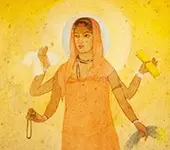
English
Bharat Matha
Click on any topic to open
7
30
Astrology
Bhagavad Gita
Bhagavatam
Bharat Matha
Devi
Devi Mahatmyam
Ganapathy
Garuda Puranam
Glory of Venkatesha
Hanuman
Kathopanishad
Mahabharatam
Mantra Shastra
Mystique
Practical Wisdom
Purana Stories
Radhe Radhe
Ramayana
Rare Topics
Rigveda Explained
Rituals
Sages and Saints
Shiva
Spiritual books
Sri Suktam
Story of Sri Yantra
Temples
Vedas
Vishnu Sahasranama
Yoga Vasishta
26
17
10
0


